
 English
 русский
 Español
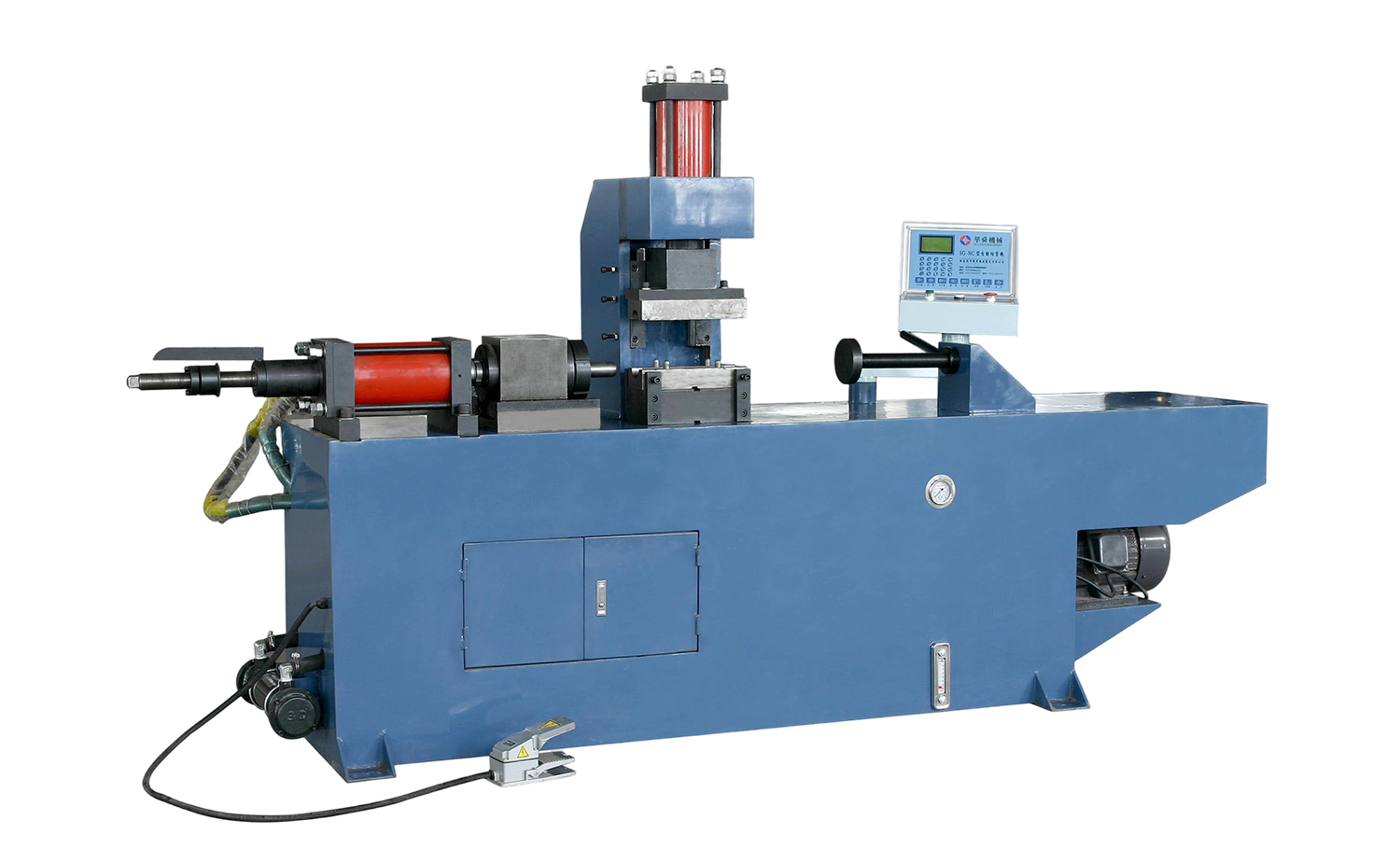
- TM80 Automatic Single Head Tube End Forming Machine
- CNC S Series Fully Automatic Tube Bending Machine with Optional Simulation Function
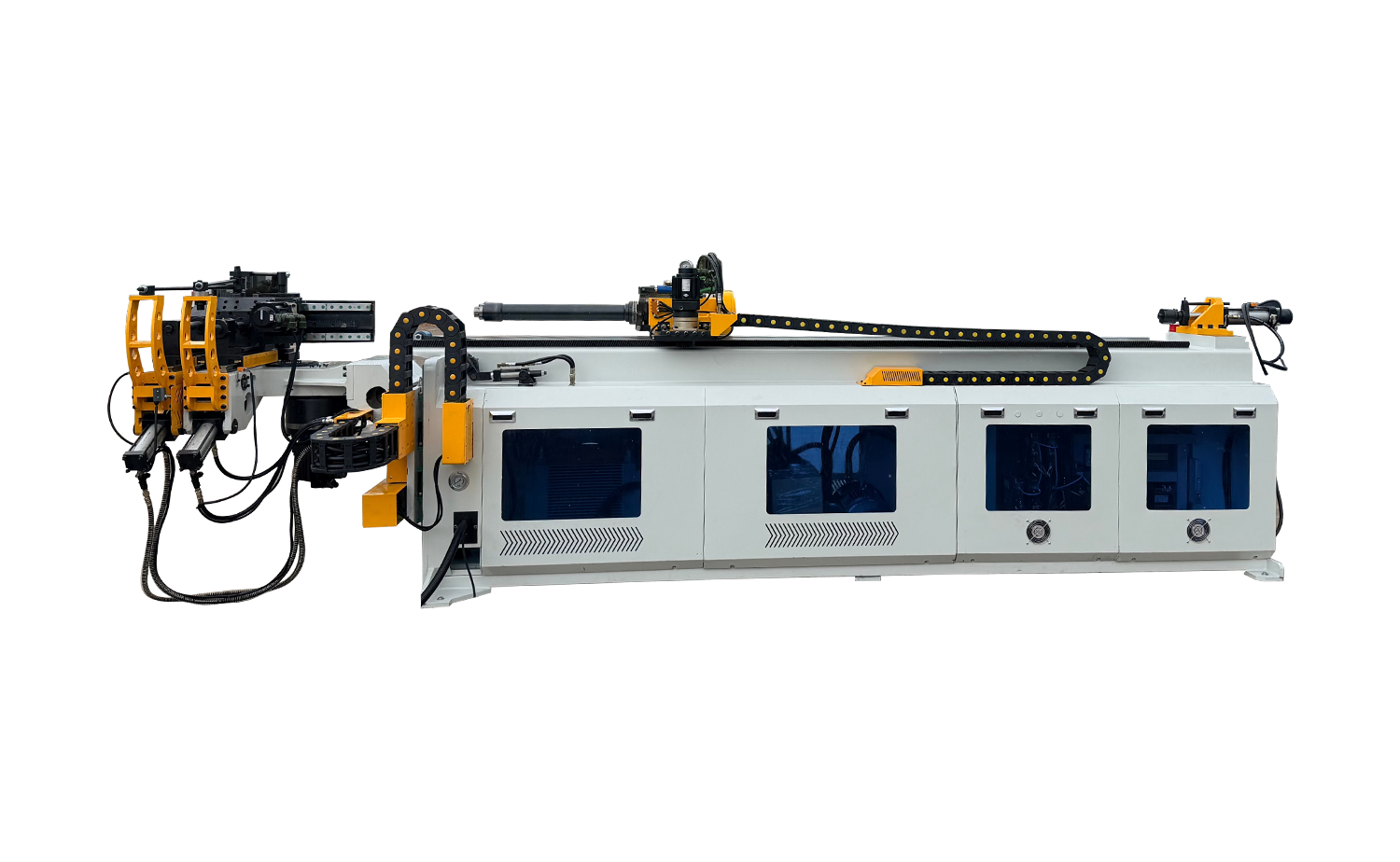
- CNC M Series Fully Automatic Multi-Radius Tube Bending Machine
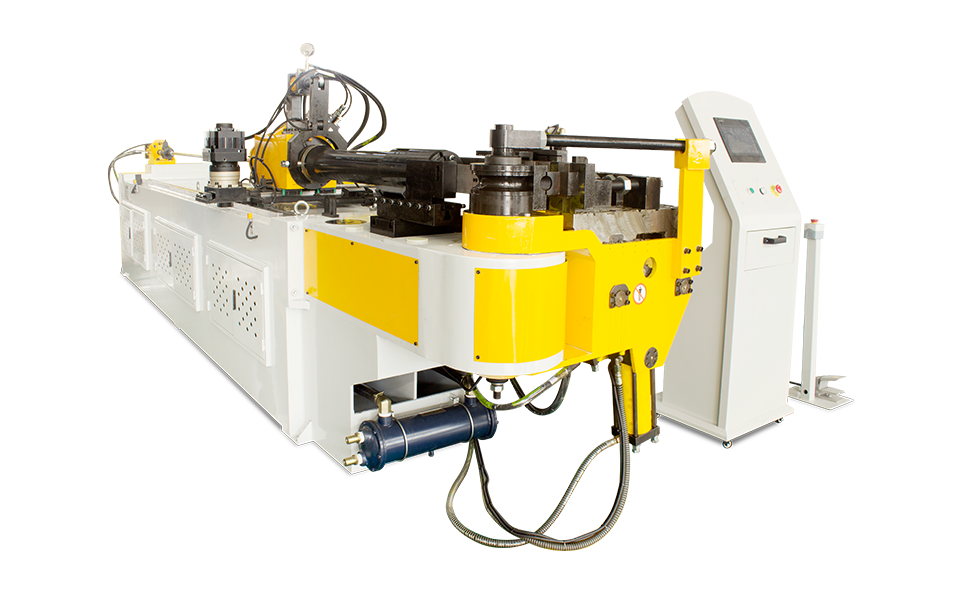
- NC M Series Hydraulic Tube Bending Machine with Mandrel Control
- CNC L Series Fully Automatic Tube Bending Machine with Servo-Hydraulic Control
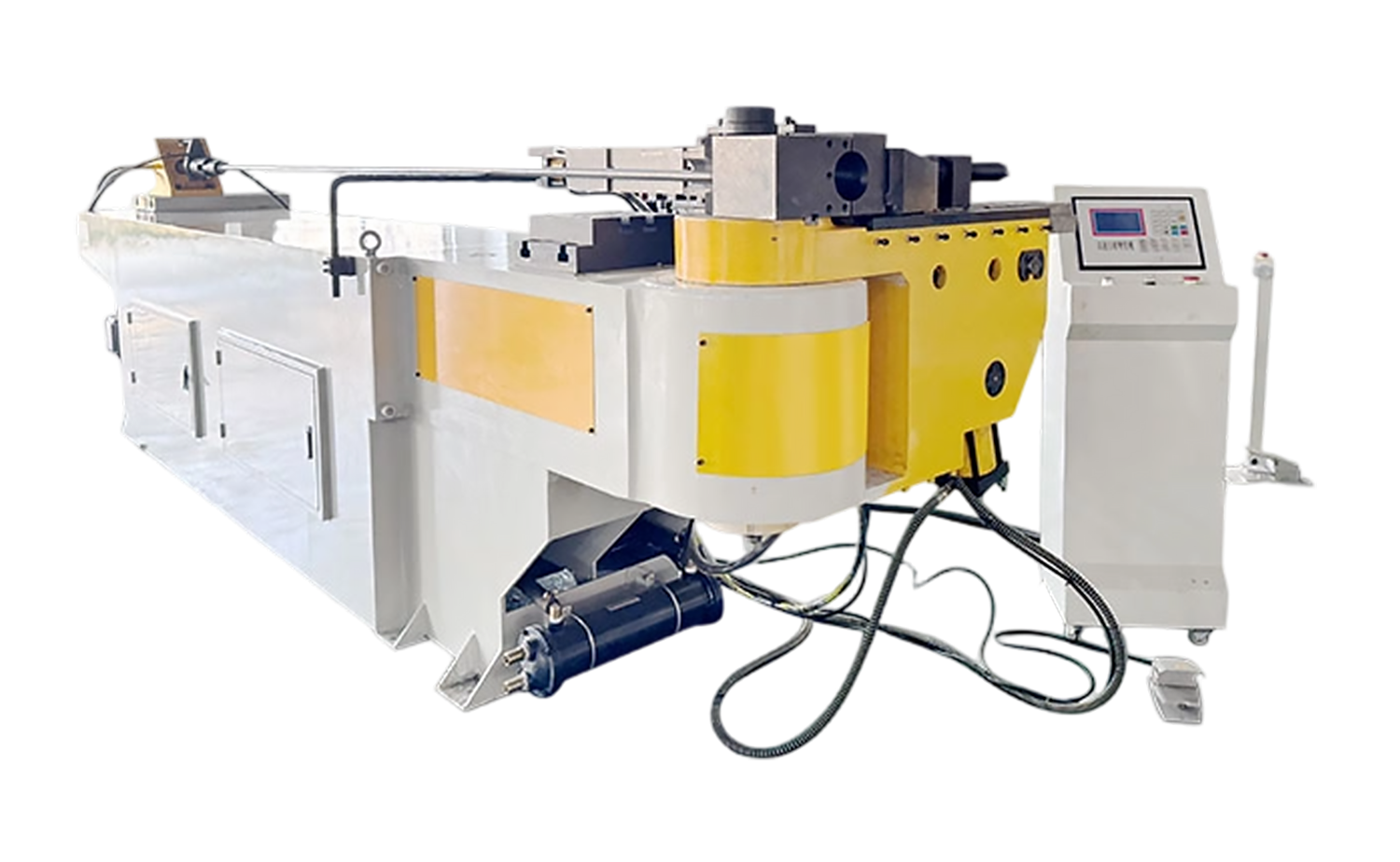
- NC L Series High-performance Hydraulic Pipe/Tube Bending Machine
Why Choosing the NC Semi-Automatic Single Head Tube Bending Machine Matter?
Date:Jul 31, 2026
Content
- 1 Programmable Bend Control Reduces Setup Variance Between Operators
- 2 Mandrel Support Changes What Wall Thicknesses Are Workable
- 3 Servo-Driven Axes Cut Cycle Time Without Adding Operator Load
- 4 Semi-Automatic Design Keeps Operator Judgment in the Loop
- 5 Matching Machine Class to Tube Diameter and Wall Thickness
- 6 Industries Where This Equipment Class Is Common
Programmable Bend Control Reduces Setup Variance Between Operators
An NC semi-automatic single head tube bending machine stores bend angle, rotation, and feed length as programmed values rather than settings read off a dial by hand. A part bent on a morning shift lines up with one bent on a night shift within the same tolerance band, since the numbers come from the controller rather than an operator's eye. On manual equipment, angle drift of 1–2 degrees between setups shows up when dial positions are read visually rather than measured; NC control on a semi-automatic bender holds repeatability within ±0.1 degree on single-head models, a range that falls inside what automotive and HVAC tube specifications call for.
Mandrel Support Changes What Wall Thicknesses Are Workable
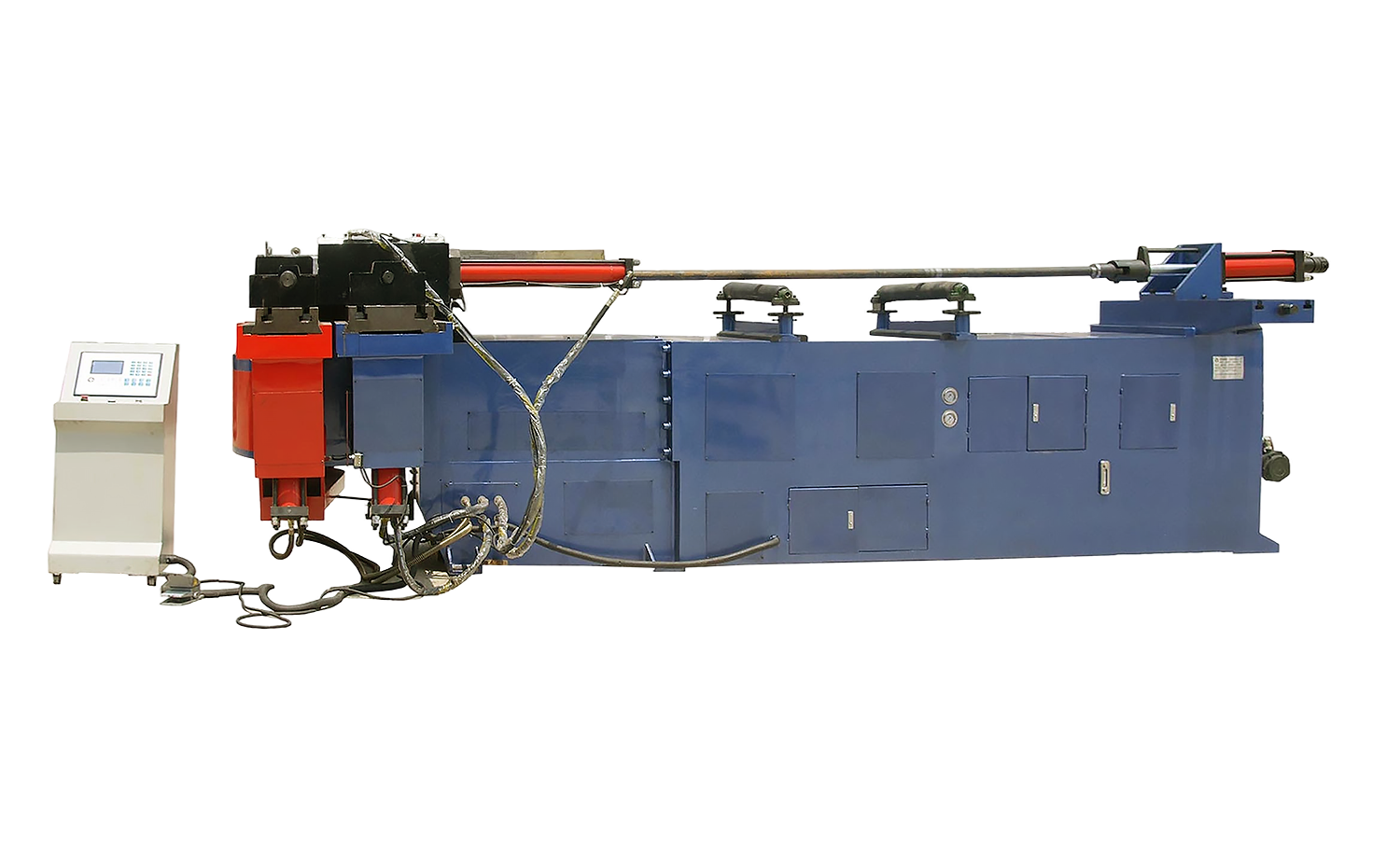
Bending a tube without internal support thins the outer wall and wrinkles the inner wall as the bend radius tightens relative to tube diameter — a ratio the industry tracks as D/t, diameter-to-wall-thickness. Below roughly a 3:1 bend radius-to-diameter ratio, unsupported bending produces visible ovality and wall collapse on thin-wall tube. A mandrel-equipped NC bender, such as the NC S Series Mandrel Hydraulic Tube Bender, holds the tube wall from inside the bend during forming, allowing tighter radii on stainless steel and aluminum tube where non-mandrel equipment would show wall failure.
Wiper Dies and Boost Systems Address a Related Problem
A mandrel supports the tube from inside; a wiper die controls wrinkle formation from outside the bend by pressing against the tangent point during rotation. Some NC models pair both — mandrel and wiper — for tube runs where wall thickness sits near a minimum spec and no further thinning is acceptable, a condition that comes up regularly in fluid-line and hydraulic tubing work.
Servo-Driven Axes Cut Cycle Time Without Adding Operator Load
Older hydraulic benders run on fixed-speed pumps that drive bend, rotate, and clamp motions at a constant rate regardless of material or radius. Servo-driven axes on NC equipment vary speed through the bend cycle — faster on approach, slower near the target angle — shortening cycle time while cutting the mechanical shock that causes springback inconsistency. On a single-head configuration, per-bend time savings compound across a multi-bend tube, since every bend in the part runs through the same head in sequence rather than across separate stations.
| Control Type | Angle Repeatability | Typical Application |
|---|---|---|
| Manual Dial Bender | ±1–2 degrees | Low-volume, non-critical tube |
| NC Semi-Automatic Single Head | ±0.1 degree | Automotive, HVAC, furniture tube |
| Full CNC Multi-Stack | ±0.05 degree | Aerospace, high-volume production |
Semi-Automatic Design Keeps Operator Judgment in the Loop
A fully automatic bending cell removes the operator from tube loading and unloading, a setup that fits long, high-volume runs but adds cost and changeover complexity that many job shops don't need for mixed small-batch work. A semi-automatic NC machine keeps manual load and unload steps while automating the bend sequence itself, so an operator can catch a misfed tube or surface defect before the bend happens instead of after. Tube specs on a mixed production line often change several times per shift, and full automation in that setting can spend more time on fixture reprogramming than on actual bending.
- Operator loads and positions tube manually between cycles
- NC controller executes programmed bend angle, rotation, and feed sequence
- Visual inspection between bends catches surface or fit issues early
- Changeover between part programs runs faster than on fixed automation cells
Matching Machine Class to Tube Diameter and Wall Thickness
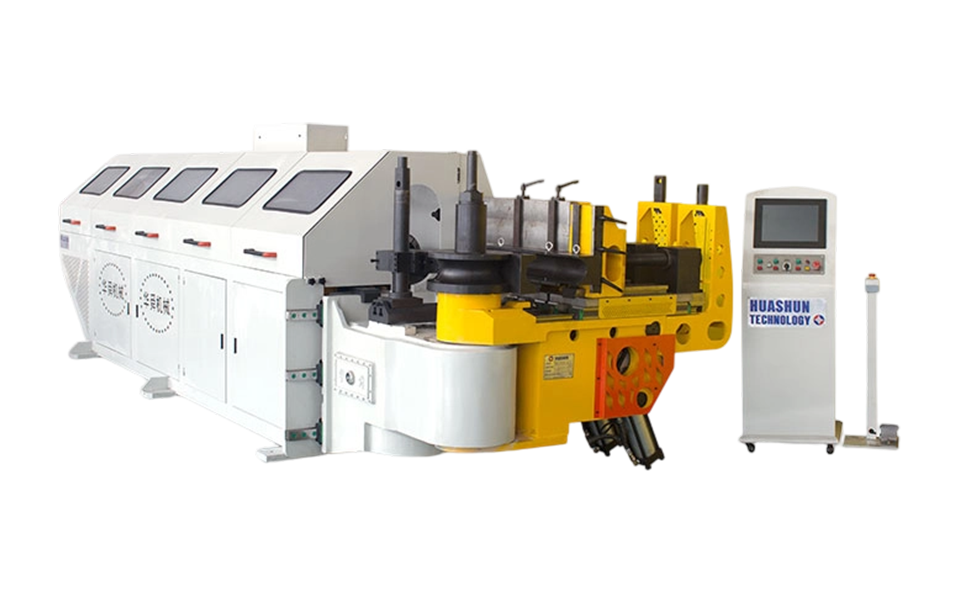
NC single-head benders are sized around bend force capacity and mandrel type, and picking the wrong class shows up quickly as either wasted capacity or an inability to hold tolerance on thicker-wall tube. A machine such as the NC M Series Hydraulic Tube Bending Machine with Mandrel Control is built around mid-range diameters common in HVAC and furniture tube, while a NC L Series high-performance hydraulic pipe bending machine handles heavier wall and larger diameter pipe used in structural or shipbuilding work.
Checking Bend Force Rating Against Tube Specification
Bend force requirement scales with tube outer diameter, wall thickness, and material yield strength together, not diameter on its own — a thin-wall aluminum tube and a thick-wall stainless tube of the same diameter can call for different force ratings entirely. Reviewing a machine's rated bend force against the tube's material and wall spec before purchase avoids under-sizing equipment for the heaviest part running through a production mix.
Industries Where This Equipment Class Is Common
NC semi-automatic single head benders show up across manufacturing sectors where tube geometry needs to hold tight tolerance without the cost of full CNC automation:
- Automotive exhaust, fuel line, and roll cage tube fabrication
- HVAC refrigerant line and ductwork tube bending
- Furniture frame tube bending where finish and radius consistency affect appearance
- Aerospace ground-support and non-flight tube assemblies requiring CE and ISO 9001 traceability
Programmable NC control, mandrel or wiper die support, and servo-driven bend speed each address a separate failure point in tube forming — angle drift, wall thinning, and cycle inconsistency respectively — which is why production floors handling mixed tube specifications tend to keep this machine class on the shop floor rather than swap it for either manual benders or full CNC lines.


Copyright © 2025 Huashun Technology All Rights Reserved.
Custom Precision Tube Forming Machine Manufacturers