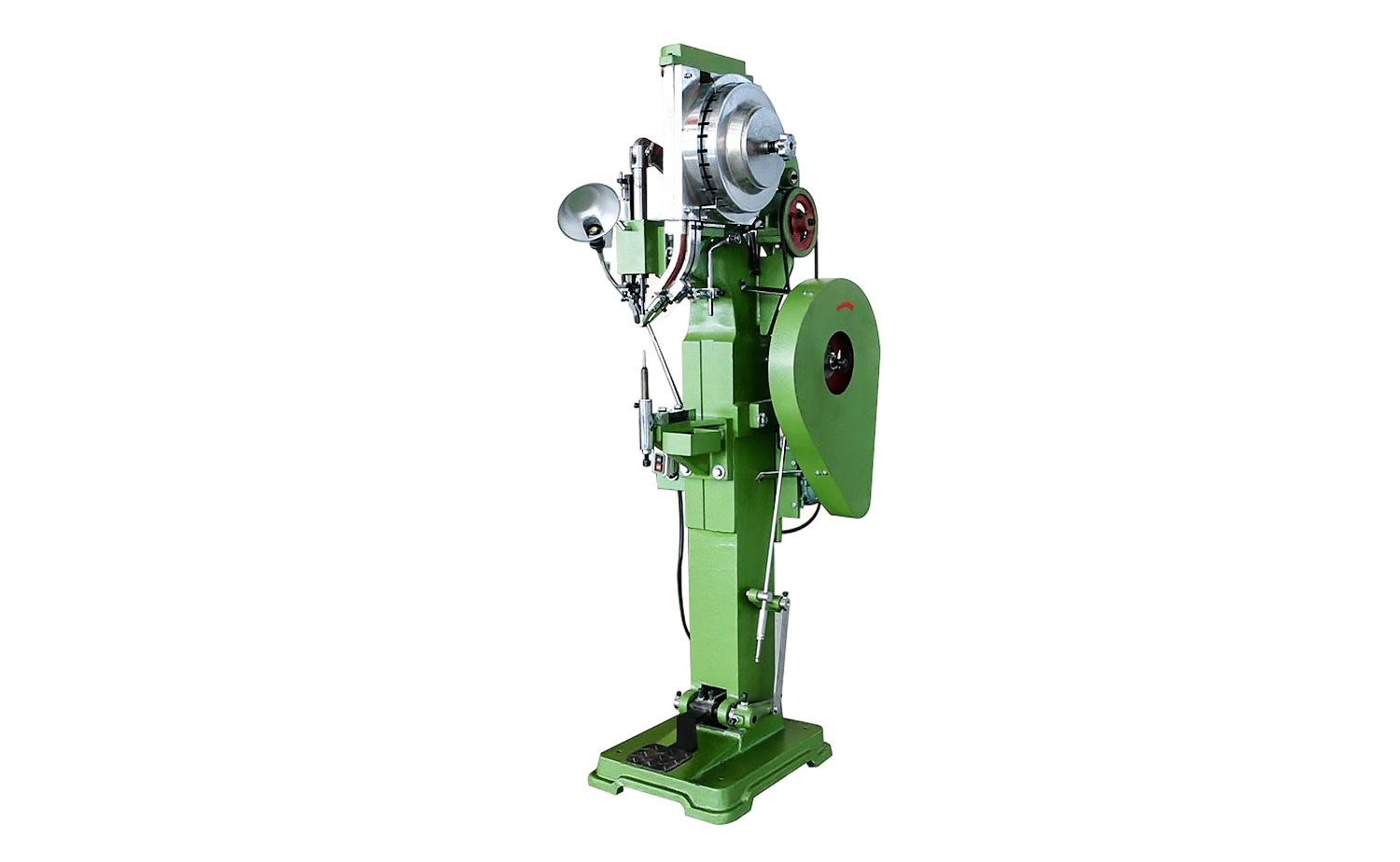
Riveting Machine Industry Knowledge and Applications
Riveting machines are indispensable core equipment in modern manufacturing, widely used in the automotive, aerospace, electronics, heavy machinery, and metal structure industries. In industrial production, riveting machines are responsible for securely joining different materials, ensuring product structural stability and safety. With the development of global manufacturing and advancements in intelligent technology, the technical level of riveting machines has continuously improved, evolving from traditional manual tools to high-precision, high-efficiency automated systems. Modern riveting machines can handle various types of rivets, including blind rivets, solid rivets, and tubular rivets, suitable for different industrial materials such as steel, aluminum, copper, and composites.
Global supply chains and manufacturing industries have seen a growing demand for riveting machines, especially in high-precision, high-output assembly scenarios. Suppliers and manufacturers continuously introduce technologically innovative machines that integrate PLC control, servo drives, automatic feeding, and robotic operations to enhance riveting accuracy, speed, and stability. High-end manufacturers often provide modularly designed equipment, enabling factories to flexibly configure machines according to production needs for manual, semi-automatic, or fully automatic operation, and integrate seamlessly with other production line equipment to achieve intelligent production.
Riveting machines not only require high precision in craftsmanship but also demand durability and stability in design. Quality equipment must maintain consistency during long-term continuous operation and adapt to different environmental conditions. Manufacturers optimize frame structures, control systems, and rivet head materials to improve overall performance and lifespan, while reducing maintenance frequency and failure risks.
Types of Riveting Machines and Core Technologies
Riveting machines can be classified according to power source, operation method, and application scenario, with each type playing a different role in factory production.
- Pneumatic Riveting Machines: Rely on compressed air to provide stable riveting force, suitable for high-volume production lines and light structural parts. They are fast-responding, safe to operate, and easy to maintain, but require high-quality compressed air and system stability.
- Hydraulic Riveting Machines: Use hydraulic pressure to provide higher riveting force, suitable for steel structures and large components. Commonly used in aerospace, heavy machinery, and shipbuilding. Hydraulic systems allow precise force adjustment, suitable for long-term continuous operation.
- Mechanical Riveting Machines: Operate manually or via mechanical leverage, low-cost, suitable for small or medium factories or low-volume production. Simple operation but lower efficiency compared to pneumatic and hydraulic machines.
- Robotic Riveting Machines: Integrate automation and high-precision control, capable of riveting complex or irregular components. Some robotic systems are equipped with visual detection for automatic positioning and quality monitoring, improving efficiency and precision.
The core components of riveting machines include rivet heads, feeding systems, control units, and frame structures. Rivet heads apply force to deform and fix the rivet; feeding systems supply rivets automatically or manually for continuous processing; control units manage the riveting sequence, force, and speed for precise operation; frame structures provide stability and reduce vibration to ensure riveting quality. Manufacturers and factories must consider production pace, riveting materials, and component size when selecting equipment to ensure the core components meet production requirements.
| Category |
Details/Values |
| Industry Experience |
25 years in manufacturing |
| Technical Patents |
75 core technology patents |
| Number of Employees |
180 specialized technicians |
| Production Bases |
4, located in major industrial regions of China |
| Export Markets |
115 countries and regions |
| Available Machine Types |
Pneumatic, hydraulic, mechanical, and robotic riveting machines |
| Customization Capability |
Tailored solutions based on factory production needs |
| Intelligent Technology |
Touchscreen control, data recording, remote monitoring, visual detection |
Applications, Factory Management, and Industry Trends
Riveting machines are widely used in the automotive industry for body panels, chassis, doors, and interior components, ensuring structural strength and safety. In particular, electric vehicles and lightweight body manufacturing use riveting machines to achieve high-precision connections for aluminum, magnesium alloys, and composite materials, meeting lightweight design requirements. In aerospace, riveting machines are essential for assembling aircraft fuselages, wing beams, landing gears, engine mounts, and composite structures, where precision, repeatability, and durability are critical. Electronics manufacturing employs micro riveting machines for batteries, circuit boards, and metal enclosures, achieving fast, precise connections and improving production efficiency and product stability.
In heavy machinery manufacturing, hydraulic riveting machines connect steel structures, machine frames, and large parts, ensuring structural integrity under high loads. Factories often integrate riveting machines with automatic feeding systems, robotic handling, and online inspection systems to form complete intelligent production lines. Suppliers provide customized solutions based on factory layout, production pace, and product specifications to optimize production line efficiency.
From a technological perspective, manufacturers continuously develop intelligent riveting systems that integrate industrial internet, remote monitoring, and data acquisition, allowing real-time production monitoring and quality tracking. Zhangjiagang HuaShun Machinery Manufacture Co.,Ltd. continuously optimizes machine performance, including multi-stage pressure control, automatic feeding and inspection, intelligent alarms, and data recording, enabling global factories to achieve precise production and maximum efficiency.
Manufacturers also focus on energy efficiency, environmental protection, and safety. Optimized hydraulic circuits, reduced air consumption, and vibration control enhance energy efficiency and reduce operational noise. Factories maintain long-term stable operation through standard operating procedures and regular maintenance, minimizing failure rates and extending machine lifespan.
Efficient factory management is critical for high-performance riveting machines. Manufacturers and suppliers provide manuals and training to help factories establish standard operating procedures (SOPs), covering equipment use, cleaning, lubrication, calibration, and safety. Factories typically maintain machine records, tracking usage, maintenance history, and production data to optimize schedules and reduce downtime risks.
Machine maintenance includes hydraulic system inspection, pneumatic pipeline maintenance, electrical control module upgrades, key component replacement, and safety device checks. Manufacturers provide remote technical support, regular inspections, and training services to ensure long-term stable operation. Advanced machines with self-diagnosis and fault alarm systems can monitor equipment status in real time, detecting potential issues and minimizing unplanned downtime.
Globally, Zhangjiagang HuaShun Machinery Manufacture Co.,Ltd. products are exported to Europe, North America, Southeast Asia, the Middle East, and Africa. Suppliers provide technical support, installation, training, and after-sales services through regional centers, ensuring machines operate reliably in diverse production environments.
Industry trends indicate that riveting machines are moving toward automation, intelligence, high precision, and multifunctional integration. Manufacturers integrate artificial intelligence, visual inspection, remote monitoring, and industrial internet technologies, enabling automated production, data management, and traceable quality. Suppliers provide full solutions, enhancing production efficiency and reliability for factories worldwide.
Future development will emphasize environmental sustainability and energy efficiency. Manufacturers optimize hydraulic systems, adopt lightweight materials, and enhance power efficiency. Factories consider adaptability, modularity, and scalability to meet diverse product demands and market changes. Manufacturers and suppliers jointly drive the industry toward intelligent, flexible production, offering high-quality, efficient, and sustainable riveting machine solutions to global factories.
Frequently Asked Questions (FAQ)
Q1: What types of Riveting Machines are available?
A1: The main types include pneumatic, hydraulic, mechanical, and robotic riveting machines, each suitable for different production needs and materials.
Q2: What factors should factories consider when selecting a riveting machine?
A2: Consider production scale, material type, product type, automation needs, production pace, and maintenance convenience.
Q3: What are the advantages of Zhangjiagang HuaShun Machinery Manufacture Co.,Ltd.?
A3: 25 years of industry experience, 75 technology patents, 180 employees, 4 production bases, exports to 115 countries, providing high-quality and customizable riveting machines.
Q4: What are the core components of a riveting machine?
A4: Rivet heads, feeding systems, control units, and frame structures, determining machine precision, efficiency, and stability.
Q5: How to ensure long-term stable operation of a riveting machine?
A5: Implement standard operating procedures, regular maintenance, inspections, component replacement, and data recording to maintain stable operation and extend lifespan.


 English
 русский
 Español