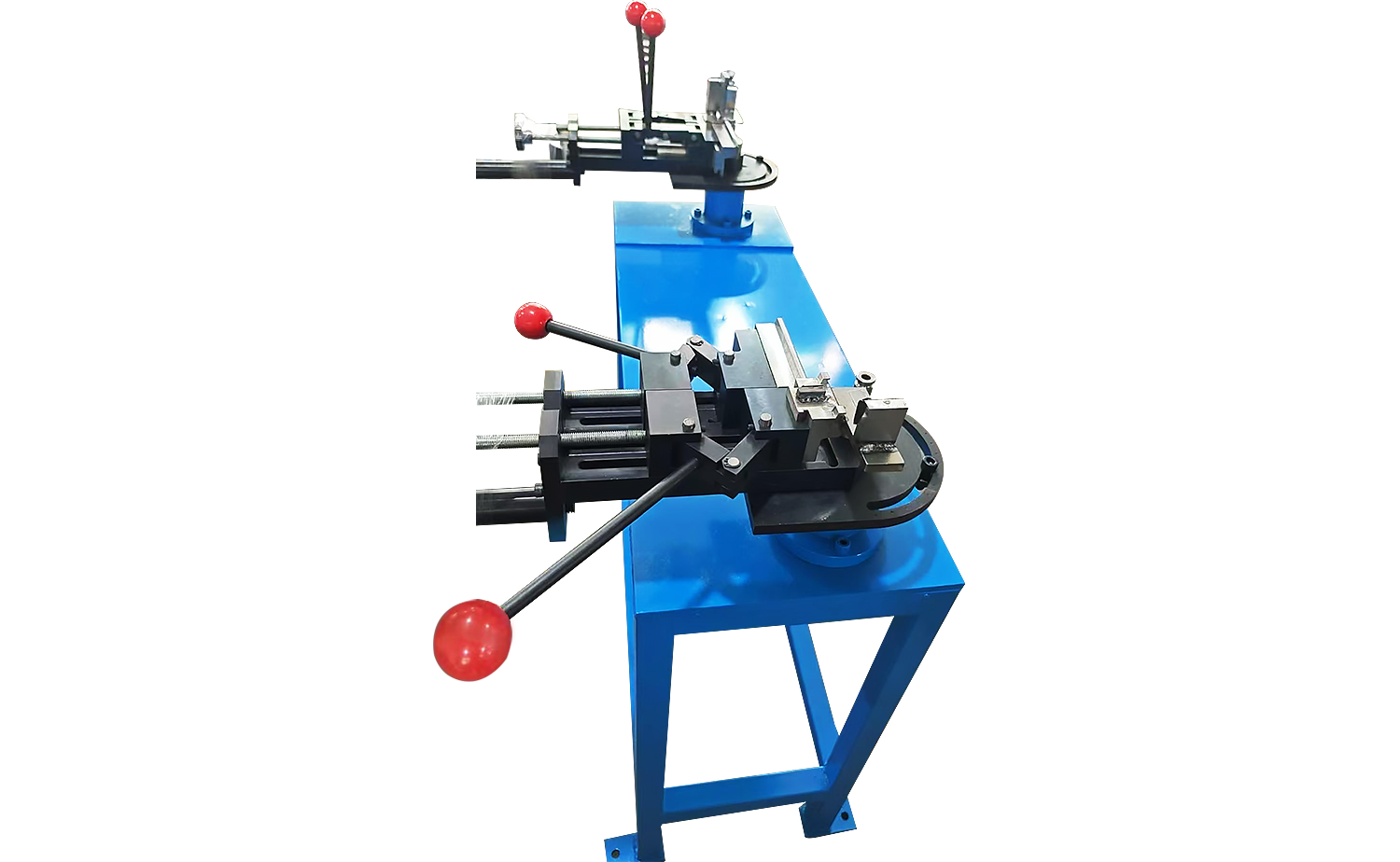
Technical Features and Application Scenarios of Manual Tube Bending Machines
In the modern industrial system, pipe processing equipment, as an important part of basic manufacturing, directly affects the development quality and efficiency of multiple industries. From refrigeration systems to heat pump devices and HVAC engineering, the bending accuracy and forming quality of pipes have always been key indicators. In this context, the MS Manual Tube Bending Machine continues to play an important role in many application scenarios due to its flexibility and stability.
Manual tube bending equipment is not synonymous with outdated technology. On the contrary, it has irreplaceable advantages in specific fields. Especially in small and medium batch production, maintenance, and on-site construction scenarios, manual equipment can achieve high-quality processing at a lower cost. This not only reduces the initial investment pressure of enterprises but also provides operators with greater operational freedom.
From the perspective of equipment structure, the MS Manual Tube Bending Machine is usually composed of a frame, clamping mechanism, bending mold, and operating lever. Its core design lies in converting manual force into uniform bending stress through a reasonable mechanical structure, ensuring that the pipe does not undergo significant deformation or damage during the bending process. Compared with automated equipment, this structure is more intuitive and easier to maintain.
In actual operation, the adjustment of bending radius is a key function. By replacing round molds of different specifications, the equipment can achieve switching of various bending radii. This design enables one machine to adapt to the processing needs of pipes of various specifications, greatly improving equipment utilization. For suppliers, this modular design helps reduce inventory pressure; for manufacturers, it improves efficiency through standardized production.
The MS Manual Tube Bending Machine emphasizes the combination of stability and adaptability in technical design. Its bending process relies on mechanical structure to achieve precise control. Through the cooperation of molds and clamping devices, the pipe is evenly stressed during bending, which is the key factor to avoid wrinkling or deformation.
In the field of copper pipe processing, this equipment performs particularly well. Due to the relatively soft material of copper pipes, problems such as inner wall wrinkling or outer wall cracking are likely to occur during bending. The manual tube bending machine effectively controls this phenomenon through a well-designed mold curvature, making the bending result smoother. This feature makes it widely used in the refrigeration industry.
In HVAC systems, pipeline layouts are often complex and require adjustment according to actual site conditions. The portability and flexibility of manual tube bending machines make them important tools for on-site construction. Technicians can quickly adjust bending angles according to actual needs, thereby improving construction efficiency.
Heat pump systems also rely on high-quality pipe bending. Due to the high requirements for system sealing, any bending defect may affect overall performance. Therefore, it is crucial to use stable and reliable bending equipment. The MS Manual Tube Bending Machine meets this requirement through its stable structural design.
In practical applications, pipes of different specifications require different processing parameters. The following table shows the relationship between common pipe specifications and bending parameters:
| Pipe Type |
Outer Diameter Range (mm) |
Recommended Bending Radius (mm) |
Applicable Mold Type |
Application Field |
| Copper Pipe |
6 - 12 |
20 - 50 |
Small Round Mold |
Refrigeration Equipment |
| Copper Pipe |
12 - 25 |
50 - 120 |
Medium Round Mold |
HVAC Systems |
| Aluminum Pipe |
10 - 30 |
40 - 150 |
Standard Round Mold |
Heat Pump Systems |
| Thin-wall Steel Pipe |
15 - 40 |
80 - 200 |
Reinforced Mold |
Industrial Equipment |
As shown in the table, different materials and pipe specifications have significant differences in bending radius and mold requirements. This also reflects the need for high adaptability in equipment design.
In terms of operation, ease of use is also important. The MS Manual Tube Bending Machine simplifies the operation process, enabling operators to quickly master its usage. This not only improves production efficiency but also reduces training costs.
For suppliers, providing comprehensive technical support is an important way to enhance competitiveness. During the equipment selection stage, suppliers need to recommend suitable models and mold configurations based on customer needs. In after-sales service, timely technical guidance is also essential.
Impact of Manufacturing Systems and Factory Capabilities on Equipment Quality
In the pipe processing equipment industry, the production capacity of manufacturers directly determines product quality. Zhangjiagang HuaShun Machinery Manufacture Co.,Ltd., as an important manufacturer in the industry, provides a solid guarantee for equipment quality with its long-term accumulated production experience.
The company's factory covers approximately 6,000 square meters and is equipped with two machining centers, six lathes, one boring machine, and 12 drilling machines. These machines form a complete processing system, enabling the enterprise to complete most component production in-house. This highly integrated manufacturing model helps control production costs and improve product consistency.
In the factory production process, every stage from raw material procurement to final assembly must be strictly controlled. Especially in the manufacturing of tube bending machines, mold precision and mechanical stability are crucial. Manufacturers must ensure that each machine meets standard requirements through precision machining and strict inspection.
The following table shows a typical production process of tube bending machines:
| Production Stage |
Main Content |
Equipment Used |
Key Control Points |
| Raw Material Preparation |
Steel cutting and processing |
Cutting machines, saws |
Material quality |
| Component Machining |
Frame and parts processing |
Machining centers, lathes |
Dimensional accuracy |
| Mold Manufacturing |
Mold processing and heat treatment |
Boring machines, heat treatment equipment |
Hardness and wear resistance |
| Assembly and Debugging |
Machine assembly and testing |
Manual tools |
Operational stability |
| Quality Inspection |
Performance and appearance testing |
Measuring instruments |
Compliance with standards |
From the above process, it can be seen that every stage in manufacturing affects the final product quality. Especially in the mold manufacturing stage, material selection and heat treatment processes directly affect the service life of the equipment.
In the modern manufacturing environment, digital management has gradually become a trend. By introducing information systems, factories can monitor production data in real time, thereby improving management efficiency. This model not only enhances transparency but also helps identify and resolve issues promptly.
The establishment of the AIKE brand marks an important step for manufacturers entering the international market. Based on long-term manufacturing foundations, this brand emphasizes the integration of mature manufacturing experience with global service capabilities.
Within the supply chain system, collaboration between suppliers and manufacturers is particularly critical. Suppliers need to adjust product strategies based on market demand changes, while manufacturers must continuously improve product performance through technological innovation.
Factories must also focus on environmental protection and sustainable development during production. For example, optimizing processes to reduce energy consumption and waste emissions aligns with regulatory requirements and supports long-term development.
In global market competition, equipment reliability has become a key factor. Customers consider not only price but also durability and maintenance costs. Therefore, manufacturers must improve product lifespan through high-quality production.
From a technical perspective, the design of tube bending machines involves multiple key factors, including mechanical structure, material selection, and processing technology. By continuously optimizing these factors, manufacturers can enhance equipment performance.
In practical use, proper operation is equally important. Even high-quality equipment may produce unsatisfactory results if used improperly. Therefore, suppliers usually provide detailed operation guides to ensure optimal performance.
With industry development, pipe processing equipment is evolving toward higher precision and multifunctionality. Despite the increasing popularity of automated equipment, manual machines maintain an important position due to their flexibility and cost-effectiveness.
In future industrial environments, relationships among manufacturers, suppliers, and factories will become closer. Through technological innovation and service optimization, enterprises can continuously enhance competitiveness.
Zhangjiagang HuaShun Machinery Manufacture Co.,Ltd. has continuously improved its product system through ongoing investment in production and research. Its wide range of equipment and stable manufacturing capabilities secure its position in the industry. The international development of the AIKE brand further expands its global market presence.
In practical industrial applications, equipment selection depends not only on technical parameters but also on enterprise needs. Through proper configuration, companies can improve efficiency while maintaining quality.
As technology continues to advance, pipe processing equipment will keep evolving. Both manual and automated systems will play important roles in their respective fields. The coordinated development of manufacturers, suppliers, and factories will continue to drive the industry forward.


 English
 русский
 Español