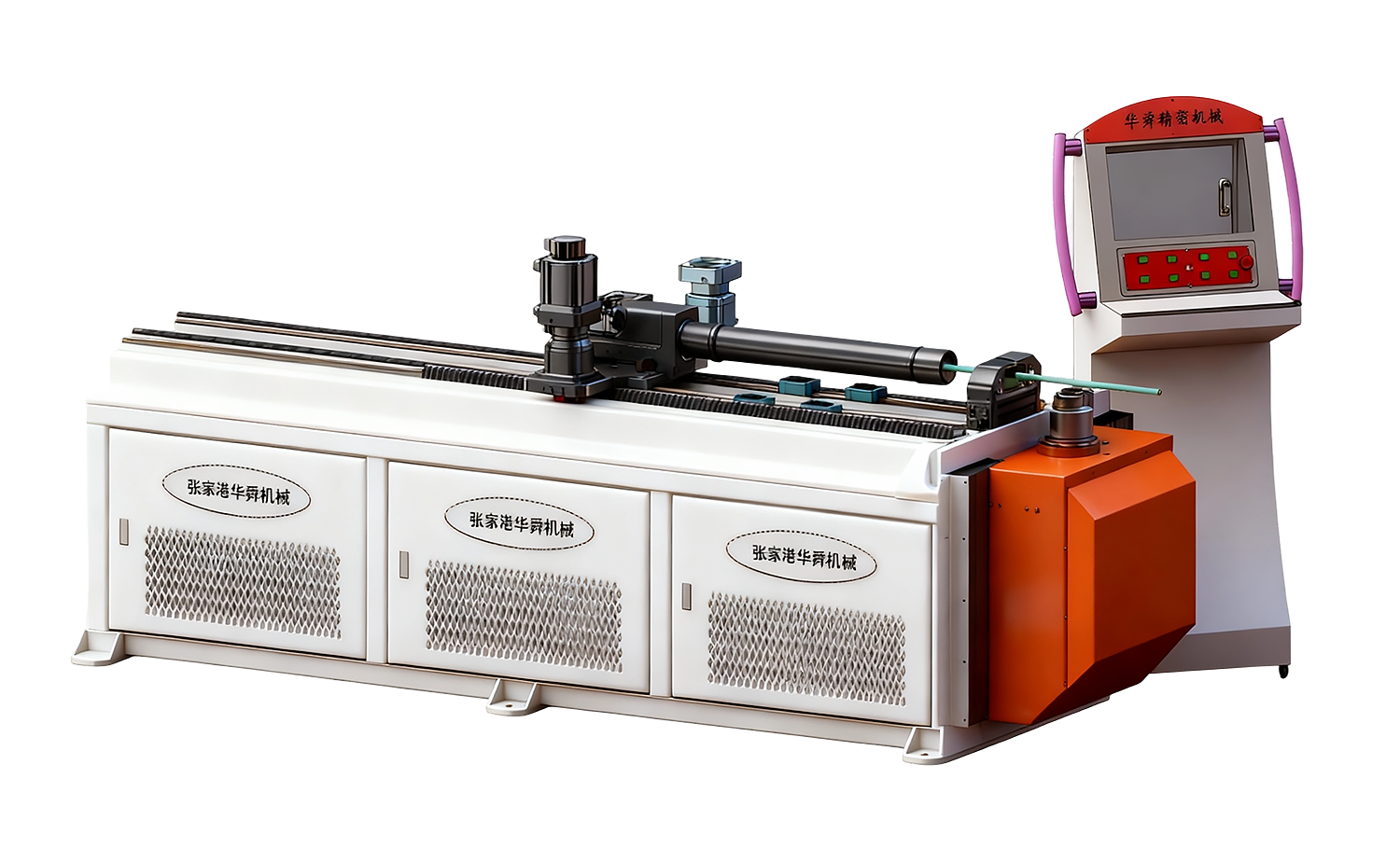
Technical Upgrades and Core Advantages of Solid Rod Bending Machine
Against the backdrop of continuous upgrading of global metal forming equipment, solid rod bending technology is ushering in a new round of development opportunities. With the increasing demand for high-strength material processing in industries such as automotive manufacturing, construction structures, new energy equipment, and heavy machinery, the Solid Rod Bending Machine has gradually become an important piece of equipment in the field of pipe and bar processing. Especially in complex structural component processing scenarios, the requirements for bending accuracy, repeatability, and multi-radius processing capabilities continue to increase, driving related equipment toward intelligence and high performance.
In recent years, a Rod Bending Machine equipped with a servo control system and optional 3D simulation function has attracted increasing market attention. This type of equipment can not only complete traditional solid bar bending but also handle thick-walled tubes and large-radius bending requirements, expanding the application boundaries of the machine. Innovations in structural design and control systems make the processing process more precise and controllable, while improving production efficiency and process stability.
In terms of core structure, the Solid Rod Bending Machine adopts a high-rigidity frame design to withstand the high stress loads generated during the bending of solid materials. Compared with traditional pipe bending equipment, solid bars place higher demands on torque and clamping force during processing. Therefore, the overall machine structure is usually reinforced to ensure long-term operational stability. At the same time, key components such as spindles, clamps, and guide systems are manufactured with high precision to ensure consistency during the bending process.
The introduction of a servo control system represents an important technological breakthrough for this type of equipment. Through the combination of high-precision servo motors and control algorithms, the machine can achieve precise control of bending angle, speed, and feed rate. In complex bending processes, this control method effectively reduces cumulative errors, thereby improving product qualification rates. For manufacturers, this technology not only enhances equipment performance but also strengthens competitiveness in international markets.
It is worth noting that the addition of a 3D simulation function enables the bending process to shift from experience-driven to data-driven. By conducting virtual simulations before actual processing, operators can preview bending paths, material deformation, and potential interference issues, thereby optimizing process parameters. This approach reduces trial-and-error costs and minimizes material waste, which is particularly important in high-value material processing scenarios.
In practical applications, the Solid Rod Bending Machine supports both draw bending and push bending modes. Draw bending is suitable for scenarios requiring high precision, while push bending is more appropriate for large-radius bending. The ability to achieve multiple bending radii using a single die set provides greater flexibility in production. This design reduces the frequency of mold changes and improves production efficiency.
In addition, the machine can be equipped with an optional cutting function, enabling it not only to perform bending operations but also to cut materials. This multifunctional integrated design makes the equipment more versatile within production lines. For factories, this means reduced equipment investment and optimized production processes.
Collaboration of Suppliers, Manufacturers, and Factories Driving Industry Development
Within the industry supply chain, the collaboration among suppliers, manufacturers, and factories is becoming increasingly important. Suppliers need to provide technologically advanced equipment in response to changing market demands; manufacturers enhance product performance through continuous research and development; and factories transform designs into actual products while ensuring stable production processes.
As a representative manufacturer, Zhangjiagang HuaShun Machinery Manufacture Co.,Ltd. has accumulated extensive experience in this field. With 25 years of industry experience, the company has established a comprehensive technical system in pipe and bar processing equipment. Its R&D team continuously optimizes equipment structure and control systems, enabling products to meet the needs of various application scenarios.
In terms of technological innovation, the company holds 75 technical patents covering bending processes, control systems, and equipment structures. These patents not only reflect the enterprise's R&D capabilities but also provide strong technical support for performance improvement. In a highly competitive market environment, technological reserves have become a key advantage for manufacturers.
In terms of production capacity, the company employs 180 staff members distributed across various production and technical positions. Through effective talent allocation and training, the enterprise maintains a stable production rhythm and continuously improves product quality. Employees play critical roles in equipment assembly, debugging, and quality inspection.
The layout of production bases also affects delivery capabilities. The company currently operates 4 production bases, each responsible for different product lines. This division of labor helps improve production efficiency and enhances the ability to handle large-scale orders. In the context of fluctuating global demand, a multi-base layout provides greater flexibility.
In international market expansion, the company's products have been exported to 115 countries. This reflects the adaptability of the equipment in different regional markets. Different countries have varying technical standards and usage requirements, requiring manufacturers to adjust accordingly. For example, customers in Europe and the United States focus more on automation levels and safety standards, while emerging markets emphasize cost-effectiveness and durability.
In factory production, the manufacturing of Solid Rod Bending Machines involves multiple key steps. From raw material selection to component machining and final assembly, each stage requires strict control. Especially in the processing of high-strength components, material performance and machining accuracy are critical.
The following table shows the main technical features of the Solid Rod Bending Machine:
| Item |
Technical Description |
| Control System |
Servo Control System |
| Bending Method |
Draw Bending and Push Bending |
| Mold System |
Single Die Set for Multiple Radii |
| Applicable Materials |
Solid Bars and Thick-Walled Tubes |
| Optional Functions |
3D Simulation and Cutting Function |
As shown in the table, the equipment features a high level of functional integration. This integrated design not only enhances performance but also simplifies operation.
In actual production, factories need to conduct multiple rounds of testing to ensure stable operation under various working conditions. These tests include load testing, accuracy testing, and durability testing. Through these inspection methods, manufacturers can identify potential issues and make improvements.
During equipment promotion, suppliers also need to provide customers with detailed technical documentation and operational training. Especially when involving 3D simulation functions, operators require a certain level of technical knowledge to fully utilize the equipment.
From an industry development perspective, solid rod bending equipment is gradually moving toward intelligent manufacturing. By integrating with software systems, equipment can not only perform processing tasks but also participate in production management. For example, through data collection and analysis, enterprises can optimize production processes and improve resource utilization.
With the development of the new energy industry, the demand for high-strength metal structural components continues to increase. These components often require complex bending processes, placing higher demands on equipment. The Solid Rod Bending Machine demonstrates strong application potential in this field.
In the construction industry, the processing of large steel structural components also relies on high-performance bending equipment. Precise control of bending angles ensures proper alignment during installation, driving continuous equipment upgrades.
In the automotive manufacturing sector, lightweight design has become an important trend. By using high-strength materials, vehicle weight can be reduced while maintaining safety. These materials require high-precision bending equipment during processing, further promoting the application of Solid Rod Bending Machines.
In future development, manufacturers will continue to improve equipment performance while optimizing user experience. For example, enhancing human-machine interfaces for more intuitive operation and increasing automation levels to reduce manual intervention. These changes will further strengthen market competitiveness.
Within the supply chain system, suppliers continuously update product lines to meet changing customer demands. Manufacturers maintain competitive advantages through technological innovation, while factories ensure product quality and delivery capability through efficient production.
Zhangjiagang HuaShun Machinery Manufacture Co.,Ltd. continues to improve its product system through ongoing investment in research and production. Its global market presence provides broad opportunities for equipment promotion.
With the continuous development of global manufacturing, the demand for metal processing equipment will remain strong. As an important part of this sector, the Solid Rod Bending Machine will continue to play a significant role across various industries. Through technological innovation and market expansion, related enterprises are continuously driving the industry forward.
FAQ
1. What materials are mainly processed by the Solid Rod Bending Machine? It is mainly used for solid metal bars and can also process thick-walled tubes.
2. What are the advantages of the servo control system? It enables high-precision control and improves bending consistency and stability.
3. What is the purpose of the 3D simulation function? It allows pre-processing simulation to reduce trial costs and optimize parameters.
4. How can one die set achieve multiple bending radii? By adjusting machine parameters and bending methods to achieve different radii.
5. Does the machine support automated production? It supports a certain level of automation and can be integrated into production lines.
6. How do manufacturers ensure equipment quality? Through strict production control and multiple testing procedures.
7. What is the most critical stage in factory production? Component machining accuracy and overall assembly quality.
8. Which industries use this equipment? It is widely used in automotive, construction, new energy, and machinery manufacturing industries.


 English
 русский
 Español