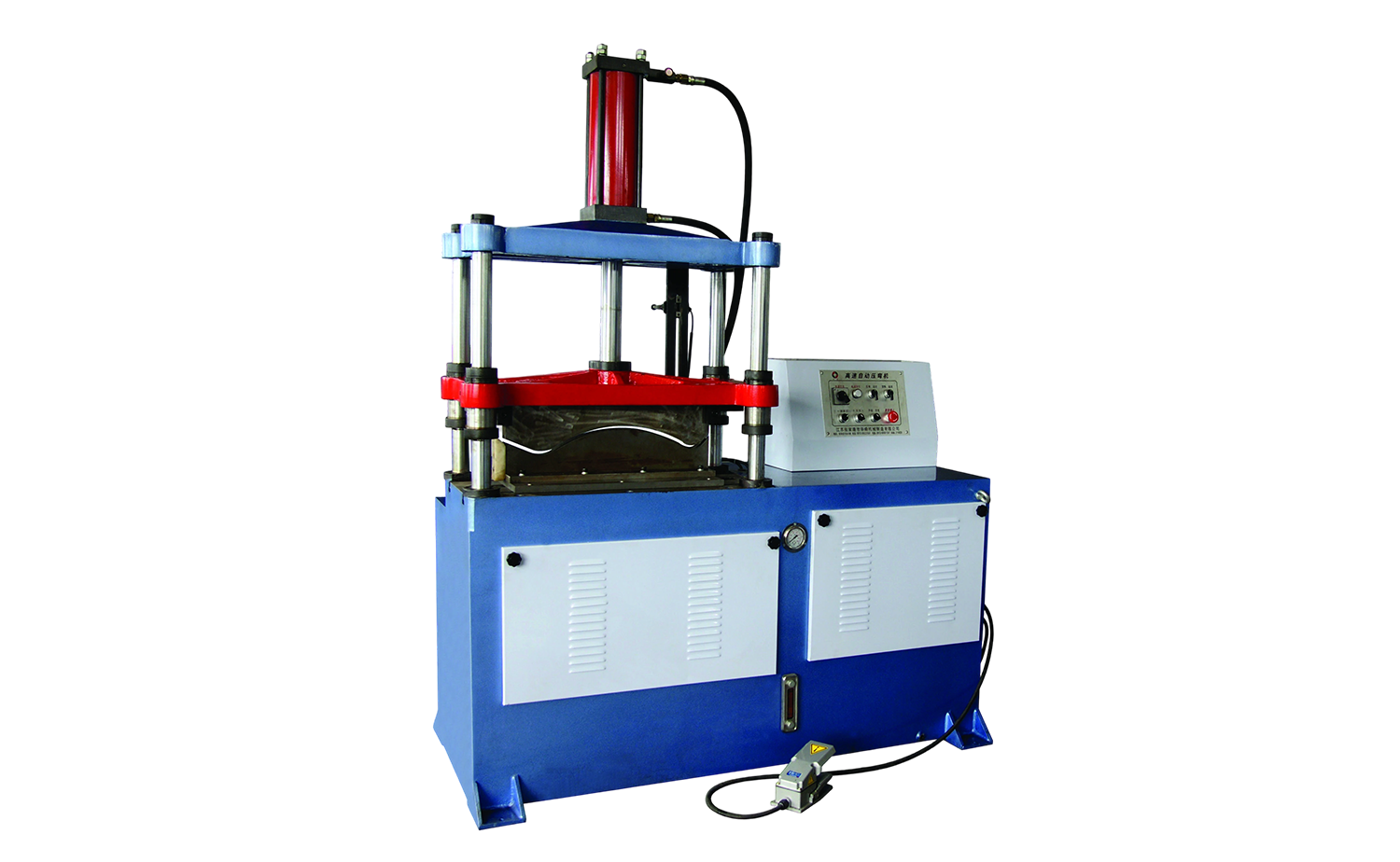
Technical Principles of Press Bending Machines and Structural Advantages of the YW Series
In the metal tube processing industry, Press Bending Machines have gradually become a mature and evolving type of equipment. Especially when facing complex structural components, large-radius bending, and multi-angle processing requirements, traditional tube bending equipment has shown limitations in efficiency and adaptability. In contrast, the YW Series Heavy-Duty Press Bending Machine for Metal Tubes provides a more flexible and efficient solution through structural optimization and process upgrades.
Traditional tube bending machines typically use rotary bending, where a rotating arm drives the tube around a mold. This method performs well for small and medium-radius bending but often faces issues such as structural complexity, higher wear, and limited stability in large-radius or complex-angle applications.
Press bending machines adopt a different approach by applying vertical or linear pressure directly to the tube, forming it within a mold. This reduces complex rotating transmission structures, making the machine more compact and lowering mechanical wear. In practical production, this design is easier to maintain and more suitable for long-term continuous operation.
The YW Series further optimizes this concept by converting rotational drive into efficient pressing force, ensuring more direct power transmission and reduced energy loss. This results in a simplified machine structure, lowering both manufacturing and maintenance costs.
Vertical Press Bending System and Its Impact on Space and Efficiency
The vertical press bending system is a key feature of the YW Series. This design significantly increases the available bending space, allowing for more flexible processing of large or complex workpieces. In real-world production environments, this advantage becomes especially evident when dealing with oversized tubes or intricate geometries.
Traditional machines often face spatial limitations, leading to interference issues when handling large or multi-angle bends. The YW Series minimizes such constraints by offering a more open bending area, enabling smoother operation and broader application possibilities.
For manufacturing plants, increased working space translates to expanded production capabilities. Tasks that previously required multiple machines can sometimes be completed with a single press bending machine, reducing equipment investment costs.
Clamp-Free Design and Operational Efficiency
The YW Series features a unique exerting device that eliminates the need for traditional clamping mechanisms. In conventional bending processes, clamping is required before bending, adding extra steps and increasing operation time.
With the YW Series, tubes can be placed directly into position and processed without clamping. This significantly simplifies the workflow, reduces operation time, and lowers the complexity of machine handling.
In high-volume production environments, even small time savings per operation can result in substantial efficiency gains. Additionally, the absence of clamping reduces the risk of surface damage to the tube, improving overall product quality.
Material Adaptability and Complex Bending Capabilities
The YW Series supports a wide range of materials, including carbon steel, stainless steel, aluminum alloys, and copper. Each material has unique mechanical properties, such as springback in stainless steel or deformation tendencies in aluminum.
The machine’s optimized pressure control system allows it to adapt to these variations, ensuring consistent bending quality across different materials. This versatility makes it suitable for multiple industries and reduces the need for multiple specialized machines.
In addition, the YW Series excels in handling large-radius bends and multi-angle operations. Complex components often require multiple bending steps at different angles, and this machine can perform such tasks efficiently on a single platform, improving consistency and reducing processing time.
Industry Applications, Supply Chain Collaboration, and Manufacturing Systems
The evolution of press bending machines is closely tied to the technological capabilities of manufacturers. Zhangjiagang HuaShun Machinery Manufacture Co.,Ltd., established in 2000, has focused on tube processing equipment for decades. Initially building its manufacturing foundation through independent development, the company began collaborating with a renowned Taiwanese tube bending machine manufacturer in 2005, introducing advanced engineering technologies.
By 2007, the company officially upgraded its brand and expanded into broader markets. This development path—from technology introduction to independent innovation—represents a typical progression in the industry.
For end users, choosing an experienced manufacturer often means better equipment reliability and more comprehensive after-sales support, reducing downtime risks and improving production stability.
Supplier Systems and Core Component Assurance
As a heavy-duty machine, the performance of a press bending machine depends not only on its design but also on the quality of its core components. Hydraulic systems, control units, and precision mechanical parts all play critical roles.
Suppliers are essential in ensuring consistent quality. Reliable suppliers provide stable components, allowing manufacturers to maintain product consistency and reduce production risks. Long-term partnerships between manufacturers and suppliers contribute to improved product performance and manufacturing efficiency.
Effective supply chain management also ensures smooth production processes, minimizing delays and enhancing responsiveness to market demand.
Factory Applications and Production Line Integration
In manufacturing plants, the YW Series press bending machine is typically integrated into a complete production line rather than used independently. Tubes are first cut to size, then processed through bending, and finally assembled or welded into finished products.
This integrated workflow significantly improves production efficiency. Proper equipment layout reduces material handling time, further optimizing operations. In advanced factories, the press bending machine can be combined with robotic systems or conveyors to achieve semi-automatic or fully automated production.
Applications span across industries such as automotive manufacturing, where precision is critical for exhaust systems and structural components; construction, where large steel tubes are used; and energy sectors, where pipeline processing demands high consistency and safety.
Coordination with Single-Head and Double-Head Bending Machines
Different types of bending machines serve different purposes. Single-head machines handle standard bending tasks, while double-head machines are ideal for symmetrical or high-volume production. Press bending machines complement these systems by handling complex or non-standard bending requirements.
The YW Series acts as a valuable addition to existing equipment setups. When traditional machines cannot achieve specific bends, the press bending machine provides an effective solution. This collaborative approach enhances overall production flexibility and efficiency.
Market Trends and Future Development
As manufacturing continues to evolve, the demand for advanced bending equipment is increasing. Machines are shifting from single-function to multi-functional capabilities, and from manual operation to automation.
Future developments include the integration of CNC systems for precise control and sensors for real-time monitoring. These advancements will further improve machine performance and efficiency.
Energy efficiency and environmental considerations are also becoming important factors in equipment design. Manufacturers are focusing on reducing energy consumption while maintaining high performance.
FAQ
1. What types of tasks are suitable for a Press Bending Machine?
It is suitable for large-radius bending, multi-angle complex structures, and tasks that traditional bending machines cannot handle efficiently.
2. What are the advantages of the YW Series compared to conventional bending machines?
Advantages include simplified structure, easier operation, larger working space, and better adaptability for complex bending.
3. Is professional training required to operate the machine?
Basic training is sufficient, although experienced operators are recommended for complex tasks.
4. What materials can be processed?
The machine supports carbon steel, stainless steel, aluminum alloys, and copper.
5. Can the machine be integrated into automated production lines?
Yes, it can be integrated with automation systems for semi-automatic or fully automatic production.
6. How to choose a reliable manufacturer?
Consider technical experience, production capability, product quality, and after-sales service.
7. Is maintenance complicated?
No, the simplified structure makes maintenance easier compared to traditional machines.
8. Which industries use the YW Series?
It is widely used in automotive, construction, energy, and general manufacturing industries.


 English
 русский
 Español