
 English
 русский
 Español
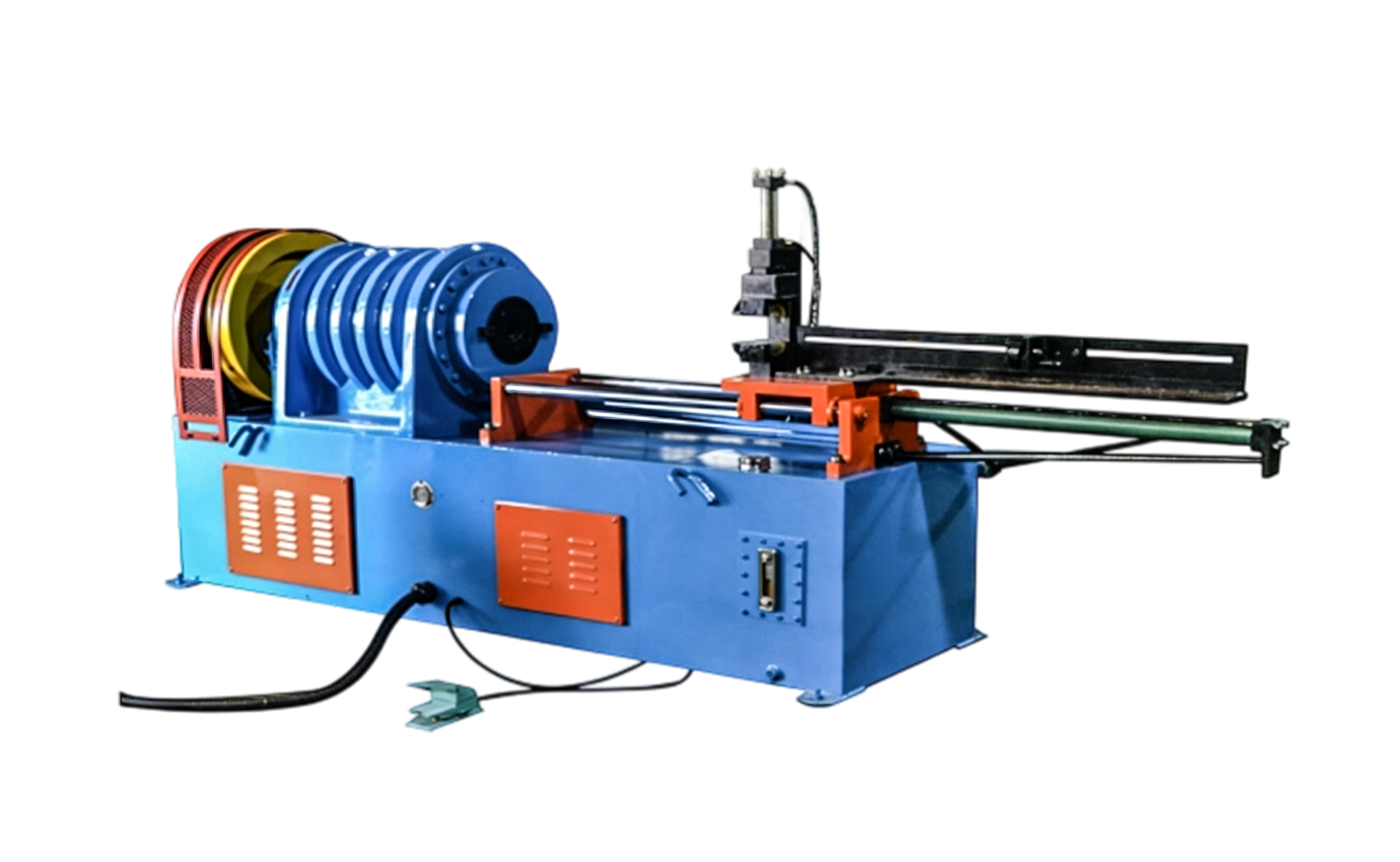
- TM40 High Efficiency Automatic Single Head Tube End Forming Machine
- TM80 Automatic Single Head Tube End Forming Machine
- TM100 Multi-Shape Forming Single-Head Tube End Forming Machine
- TM60 Hydraulic Single Head Tube End Forming Machine
- DTM40 High Efficiency Double Head Hydraulic Tube End Forming Machine
- AZTM-50/76 Automatic CNC Metal Tube End Shrink & Tapering Machine
Why Is Smart Single Head Tube End Forming the Critical ‘Smart Key’ to Accelerating the Global Revolution of NEV Lightweighting?
Date:Jun 23, 2026
Content
- 1 Why Lightweighting Is Critical for New Energy Vehicles
- 2 What Is Smart Molding?
- 3 Core Lightweight Molding Technologies
- 4 How Intelligence Enhances the Molding Process
- 5 Material Innovations Supporting Smart Molding
- 6 Applications Across the Vehicle
- 7 Manufacturing and Quality Benefits
- 8 Challenges in Adoption
- 9 The Future of Lightweight, Smart Molding
As new energy vehicles compete fiercely on driving range, cost, and manufacturing efficiency, lightweight, smart molding has emerged as one of the most decisive technologies shaping the industry. By combining advanced lightweight materials with intelligent, sensor-driven molding processes, manufacturers can produce structurally optimized components that reduce vehicle mass, shorten production cycles, and improve overall quality consistency — all while supporting the broader push toward sustainable, electrified mobility.
Why Lightweighting Is Critical for New Energy Vehicles
Unlike traditional internal combustion vehicles, new energy vehicles carry a heavy battery pack that significantly increases overall vehicle mass. Every kilogram of structural weight removed from the body, chassis, or interior translates directly into either extended driving range or the ability to use a smaller, less expensive battery pack. This makes lightweighting not a secondary engineering goal, but a central factor in vehicle competitiveness, cost structure, and energy efficiency.
Reduced mass also improves acceleration response, handling dynamics, braking distance, and tire wear — all of which contribute to a better ownership experience and lower lifecycle costs for consumers.
What Is Smart Molding?
Smart molding refers to the integration of sensors, real-time process monitoring, and intelligent control systems into traditional molding processes such as injection molding, compression molding, and die casting. Rather than relying on fixed process parameters, smart molding systems continuously adjust temperature, pressure, and cycle timing based on live feedback, ensuring consistent part quality even as raw material properties or ambient conditions fluctuate.
This intelligence layer is what separates modern lightweight component production from earlier generations of molding technology. It transforms molding from a largely manual, experience-based process into a data-driven, repeatable manufacturing system capable of meeting the tight tolerances required by automotive structural components.
Core Lightweight Molding Technologies
Large-Scale Integrated Die Casting
One of the most transformative developments in new energy vehicle manufacturing is large-scale integrated die casting, which consolidates dozens of individually stamped and welded body components into a single aluminum casting. This approach reduces part count, eliminates numerous welding joints, and significantly cuts both production time and structural weight, while improving overall body rigidity.
High-Pressure Injection Molding for Composite Structures
High-pressure injection molding enables the production of fiber-reinforced thermoplastic components used in battery enclosures, underbody shields, and structural brackets. These composite parts achieve a favorable strength-to-weight ratio while offering design flexibility that metal stamping cannot match, particularly for complex geometries with integrated mounting features.
Compression Molding for Carbon Fiber Components
Compression molding, particularly using sheet molding compound or prepreg carbon fiber materials, is increasingly applied to body panels and structural reinforcement components where maximum stiffness-to-weight performance is required, such as in premium or performance-oriented new energy vehicle models.
| Molding Process | Typical Component | Key Benefit |
|---|---|---|
| Integrated Die Casting | Front/rear underbody structures | Reduces part count and assembly weight |
| High-Pressure Injection Molding | Battery enclosures, underbody shields | Combines strength with design complexity |
| Compression Molding | Carbon fiber body panels | Maximizes stiffness-to-weight ratio |
| Foam Injection Molding | Interior trim, seat structures | Reduces mass while maintaining comfort |
How Intelligence Enhances the Molding Process
Real-Time Process Monitoring
Embedded sensors within molds track temperature distribution, injection pressure, and material flow in real time. This data allows control systems to detect deviations early, preventing defects such as warping, sink marks, or incomplete fills before they result in scrapped parts.
Digital Twin Simulation
Before physical production begins, digital twin models simulate how molten material flows through a mold cavity, predicting cooling rates, shrinkage patterns, and potential stress concentrations. This allows engineers to refine mold design and process parameters virtually, reducing costly trial-and-error iterations on the factory floor.
AI-Driven Process Optimization
Machine learning models analyze historical production data to identify optimal parameter combinations for new material batches or component designs. Over time, these systems can autonomously fine-tune molding cycles to maintain quality while minimizing cycle time and material waste.
Smart Molding Capability Checklist
- In-mold sensors for pressure and temperature tracking
- Closed-loop process control with automatic parameter adjustment
- Digital twin simulation prior to tooling commitment
- Machine vision for automated defect detection
- Data logging for traceability and continuous improvement
Material Innovations Supporting Smart Molding
The effectiveness of smart molding is closely tied to the materials it processes. Fiber-reinforced thermoplastics offer a balance of moldability and mechanical performance suitable for high-volume production. Long-fiber and continuous-fiber composites push strength-to-weight ratios even further for structural applications. Meanwhile, recyclable thermoplastic formulations are gaining attention as manufacturers seek to align lightweighting strategies with circular economy and end-of-life recycling goals.
Industry Insight: Combining integrated die casting for large structural sections with injection-molded composite components for secondary structures allows manufacturers to optimize weight, cost, and manufacturing speed simultaneously, rather than treating these as competing priorities.
Applications Across the Vehicle
- Battery Enclosures: Lightweight molded composite or hybrid metal-composite enclosures protect battery cells while minimizing added mass.
- Body Structures: Integrated die-cast modules replace multi-piece stamped and welded assemblies in the front and rear body sections.
- Interior Components: Foam-injection molded seat frames and trim panels reduce cabin weight without sacrificing comfort.
- Exterior Panels: Compression-molded composite panels offer styling flexibility alongside weight savings on premium models.
- Underbody Protection: Injection-molded shields protect battery packs from road debris while contributing minimal additional weight.
Manufacturing and Quality Benefits
Beyond weight reduction, smart molding technologies deliver measurable manufacturing advantages. Cycle times are reduced through optimized process parameters, defect rates drop due to real-time monitoring and correction, and production flexibility improves as digital process recipes can be adjusted quickly for design changes or new vehicle variants. These efficiency gains are particularly valuable in the fast-iterating new energy vehicle market, where model refresh cycles are often shorter than in traditional automotive segments.
Challenges in Adoption
- High Initial Investment: Large-scale die casting machines and smart sensor-equipped molds require substantial capital expenditure.
- Tooling Complexity: Designing molds capable of producing highly integrated, complex geometries demands advanced engineering expertise.
- Material Recyclability: Composite materials used in lightweight molding can complicate end-of-life recycling compared to traditional metal components.
- Skills Gap: Operating and maintaining intelligent molding systems requires specialized knowledge in both materials engineering and data analytics.
The Future of Lightweight, Smart Molding
Looking ahead, the integration of artificial intelligence into molding process control is expected to deepen, with self-optimizing systems capable of adjusting parameters in real time without human intervention. Advances in recyclable and bio-based composite materials will likely address current sustainability concerns, while continued growth in die casting machine size will enable even greater structural consolidation, further reducing part count and weight across the vehicle platform.
As new energy vehicle manufacturers continue to compete on range, cost, and production efficiency, lightweight, smart molding will remain a foundational technology — one that bridges materials innovation and manufacturing intelligence to meet the demands of an increasingly electrified and data-driven automotive industry.
Lightweighting determines how far a vehicle can go on a single charge; smart molding determines how reliably and efficiently that lightweight structure can be built at scale.
Recommended Articles


Copyright © 2025 Huashun Technology All Rights Reserved.
Custom Precision Tube Forming Machine Manufacturers