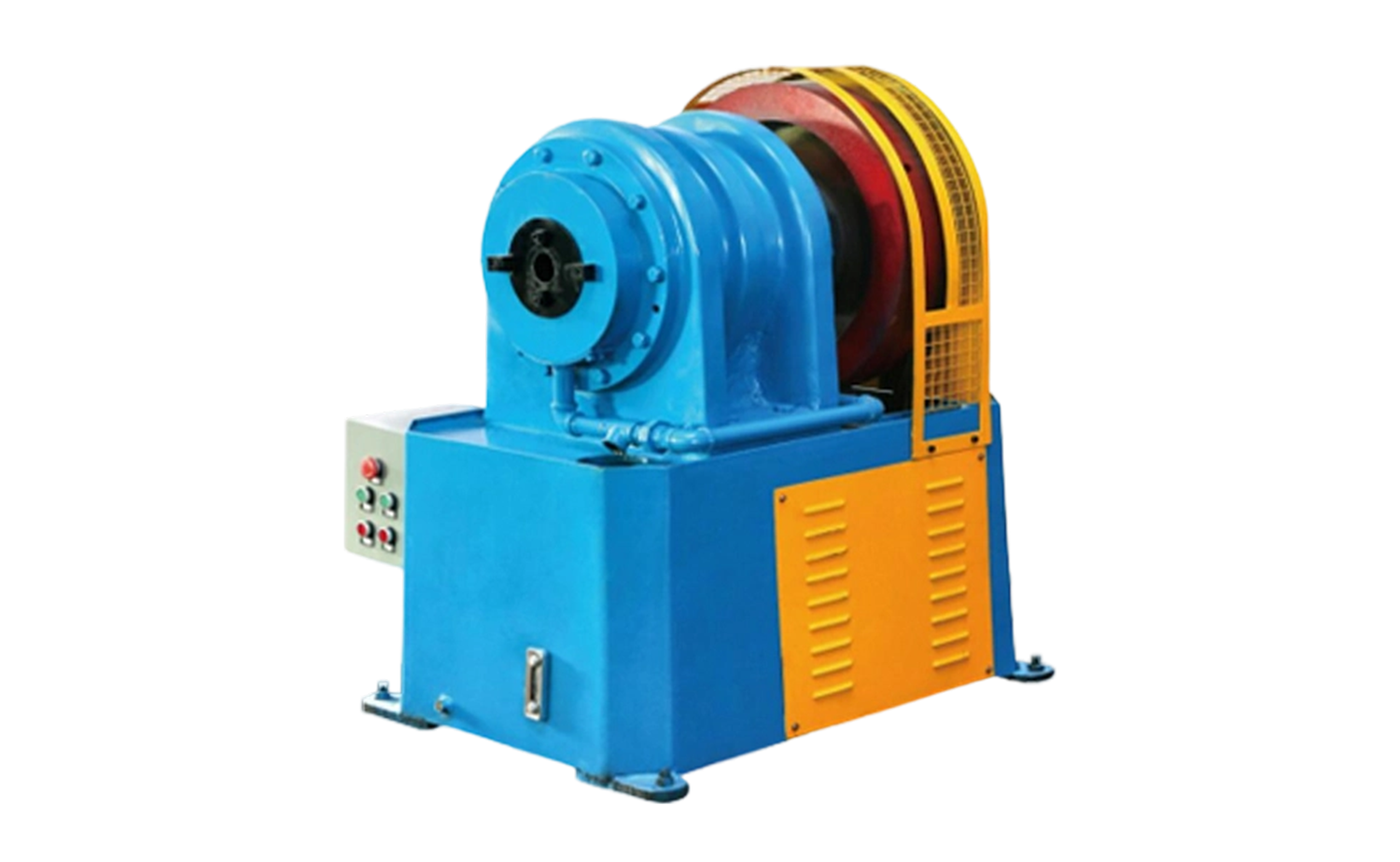
Overview and Technical Foundation of Semi-Automatic Taper Tube Reducing Machine Industry
The Semi-Automatic Taper Tube Reducing Machine is an essential piece of equipment in the field of metal tube processing and plays a significant role in modern manufacturing systems. Its core function is to perform end reduction on various metal tubes, forming tapered or diameter-reduced structures to meet different assembly, connection, and sealing requirements. This type of equipment is widely used in industries such as automotive components, HVAC systems, home appliance manufacturing, engineering machinery, and precision instrument production.
Represented by the ZTM-50/60/76/114 Multi-Material Applicable Semi-Automatic Taper Tube Reducing Machine, this equipment is designed with diverse industrial requirements in mind. It is capable of processing a wide range of materials including carbon steel, stainless steel, aluminum, copper, and various alloys. This multi-material compatibility reduces the need for multiple specialized machines in factories and provides greater flexibility for production line configuration. In practical applications, different materials have distinct physical properties. For example, stainless steel has high strength and toughness, while aluminum is relatively soft and prone to deformation. Therefore, the machine must offer precise control to maintain stable forming quality across different materials.
Semi-automatic taper tube reducing machines typically use hydraulic drive systems, which provide stable and adjustable pressure output, ensuring a smooth reduction process. The hydraulic system pushes the mold to compress the tube radially, achieving diameter reduction. Compared with traditional mechanical structures, hydraulic systems offer clear advantages in pressure control and motion stability, effectively preventing cracks, wrinkles, or dimensional deviations during processing.
In terms of control systems, modern machines widely adopt microcomputer control technology. Operators can set processing parameters such as reduction stroke, pressure, and speed through the human-machine interface. The machine executes operations automatically according to preset parameters, achieving a high level of automation. At the same time, manual operation mode is retained, allowing precise control during debugging, sample processing, or special applications. This combination of automatic and manual modes ensures a balance between flexibility and stability.
The ZTM series emphasizes user experience, typically offering bilingual interfaces in Chinese and English, along with intuitive graphical displays. This design reduces training difficulty and improves operational efficiency, which is especially important for international suppliers and export-oriented manufacturers.
From a mechanical perspective, the application of linear guide rails significantly enhances operational stability. These rails provide precise guidance for the feeding mechanism, ensuring straight-line movement of the tube during reduction and preventing deviation or vibration. This guarantees consistent finished product dimensions. The combination of high-precision guide rails and a rigid machine structure enables stable performance even during long-term operation.
In industrial applications, the semi-automatic taper tube reducing machine serves as a bridge between design and manufacturing. By precisely controlling tube end structures, it enables reliable connections in complex piping systems, such as high-pressure automotive pipelines, air conditioning refrigerant tubes, and industrial fluid transport systems. These applications demand high precision and consistency, driving the continuous development of such equipment.
Manufacturers must consider material mechanics, hydraulic system stability, and control accuracy during equipment development. For example, Zhangjiagang HuaShun Machinery Manufacture Co.,Ltd. enhances performance by optimizing hydraulic circuits and improving guide rail precision, ensuring stable operation across multiple materials. This technical accumulation stems from extensive manufacturing experience and continuous process improvement.
Suppliers translate these technical advantages into practical value through demonstrations, documentation, and case studies, helping factories understand equipment capabilities. They also handle transportation, installation, and training to ensure smooth production startup.
Factories, as end users, evaluate equipment based on product structure, material types, and production rhythm. The machine must meet current requirements while allowing scalability for future needs. Support from manufacturers and suppliers plays a crucial role in real-world performance.
Performance Characteristics and Multi-Material Processing Practices
The semi-automatic taper tube reducing machine demonstrates several key performance characteristics, especially its stability and adaptability in multi-material processing. The ZTM-50/60/76/114 series allows rapid switching between different materials without complex adjustments, which is critical in modern manufacturing where production tasks often involve multiple materials and specifications.
In carbon steel processing, sufficient pressure is required to achieve effective reduction while avoiding cracks caused by stress concentration. The hydraulic system provides stable pressure output, ensuring deformation occurs within the plastic range and maintaining structural integrity. Stainless steel requires higher pressure control due to its hardness, and the microcomputer system precisely adjusts hydraulic parameters for efficient and safe processing.
For softer materials such as aluminum and copper, surface quality and springback control are critical. The machine precisely controls feeding speed and pressure variation to prevent scratches or uneven deformation. The linear guide rail system ensures stable positioning during processing, improving product consistency.
Multi-material capability is also supported by process guidance from manufacturers. Zhangjiagang HuaShun Machinery Manufacture Co.,Ltd. typically provides parameter references for different materials, including pressure ranges, stroke settings, and speed recommendations. These guidelines help factories quickly establish stable production processes and reduce trial-and-error costs.
Efficiency is another key performance indicator. The machine achieves high processing speed while maintaining accuracy. In automatic mode, it operates continuously based on preset programs, reducing manual intervention. In manual mode, operators can adjust the pace for small batches or special processing needs.
Stability is essential for long-term operation. High-quality machines use wear-resistant materials for key components and undergo precision machining and strict inspection to ensure consistent performance. Suppliers emphasize durability and reliability, as these factors directly affect factory operating costs.
Stable equipment reduces downtime and maintenance costs, improving overall productivity. Suppliers also provide comprehensive after-sales services, including spare parts, technical support, and maintenance assistance to ensure long-term operation.
Operator skill also influences performance. Skilled operators can adjust parameters based on material characteristics to achieve optimal results. Manufacturers and suppliers often provide systematic training to help operators master machine operation and maintenance.
Collaboration Between Manufacturers, Suppliers, and Factories and Application Expansion
In the semi-automatic taper tube reducing machine industry, manufacturers, suppliers, and factories form a closely integrated ecosystem. This collaboration extends beyond equipment sales to include technical exchange, process optimization, and productivity improvement.
Manufacturers serve as the technical core, responsible for design, development, and production. Zhangjiagang HuaShun Machinery Manufacture Co.,Ltd. continuously improves structural design and control systems to meet diverse industrial requirements. Its factory uses advanced machining equipment and testing instruments to ensure high precision and reliability.
Suppliers connect manufacturers with the market. They provide equipment selection guidance, transportation, installation, commissioning, and training services. In international trade, they also handle customs clearance and logistics, ensuring smooth delivery and operation.
Factories determine application methods based on their production needs. Some prioritize precision and require high repeatability, while others focus on efficiency for mass production. The machine’s flexibility allows it to meet these varying requirements.
In practical applications, the machine is widely used in automotive manufacturing for fuel pipes, brake pipes, and hydraulic components. In HVAC systems, it processes copper and aluminum tubes for reliable sealing. In home appliances, it ensures accurate connections and clean appearance.
With industrial development, applications continue to expand into new energy systems and high-end equipment manufacturing, where precision and stability requirements are even higher.
Maintenance is essential for long-term performance. Factories must regularly check hydraulic systems, clean guide rails, and replace lubricants. Proper maintenance extends service life and maintains accuracy. Manufacturers provide maintenance manuals, while suppliers offer on-site support.
Operational safety is also critical. Machines involve high-pressure hydraulic systems and moving components, requiring strict adherence to safety procedures. Manufacturers incorporate safety features such as emergency stops and protective covers to reduce risks.
Through collaboration among manufacturers, suppliers, and factories, the semi-automatic taper tube reducing machine continues to evolve, delivering stable and efficient solutions for modern industrial production.
FAQ
Q1: Which industries use semi-automatic taper tube reducing machines?
A1: They are widely used in automotive manufacturing, HVAC, home appliances, machinery production, and new energy industries.
Q2: What materials can the machine process?
A2: It can process carbon steel, stainless steel, aluminum, copper, brass, and certain alloys.
Q3: What is the difference between automatic and manual modes?
A3: Automatic mode runs continuously based on preset parameters, while manual mode allows precise control for testing and small-batch production.
Q4: How is machine stability ensured?
A4: Stability is achieved through hydraulic systems, linear guide rail structures, and high-precision machine design.
Q5: What maintenance is required?
A5: Regular inspection of hydraulic oil, cleaning of guide rails, lubrication of moving parts, and routine servicing are required.
Q6: What roles do manufacturers and suppliers play?
A6: Manufacturers design and produce the equipment, while suppliers handle sales, installation, training, and after-sales support.


 English
 русский
 Español