
 English
 русский
 Español
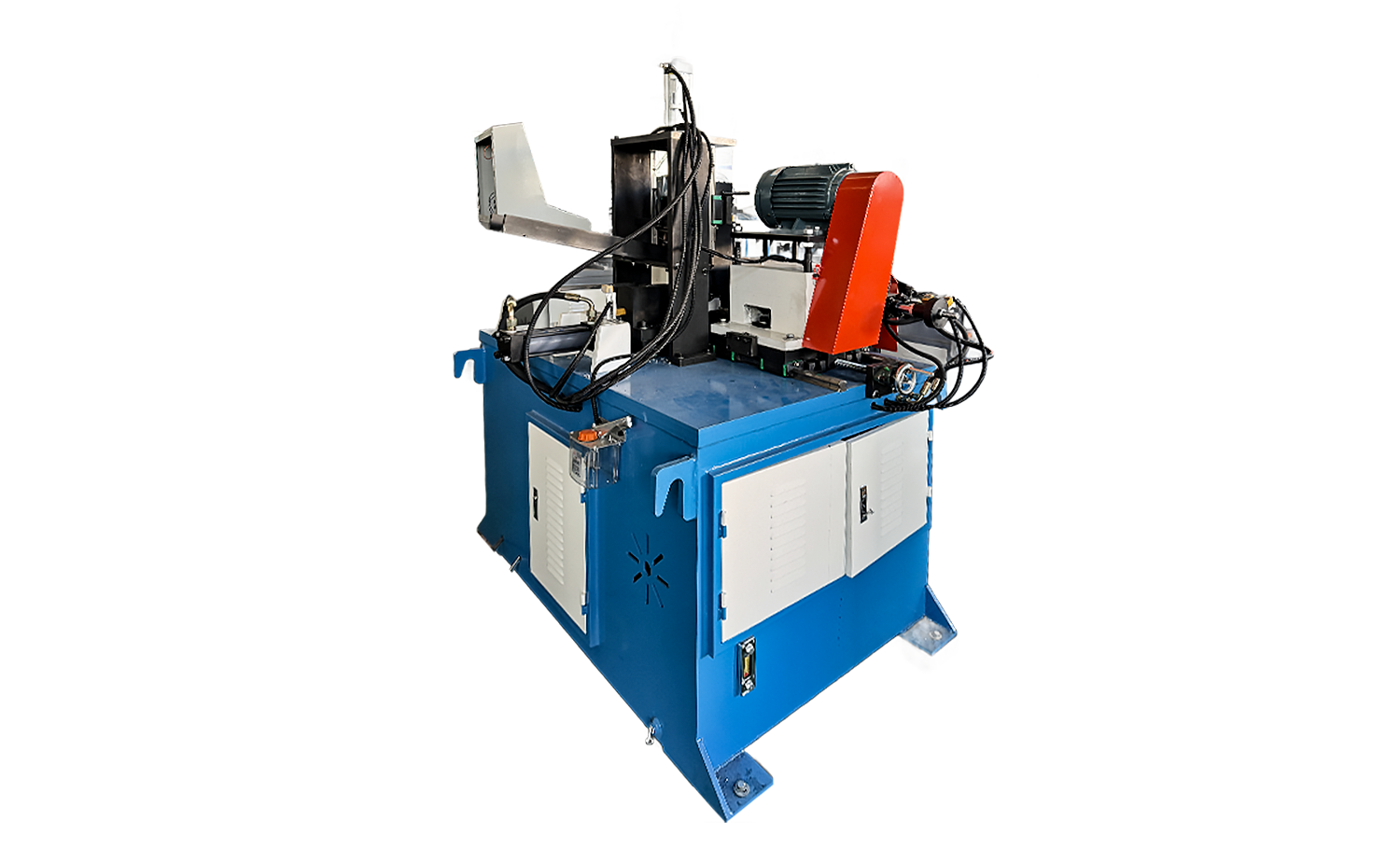
- ES550 Semi-Automatic Aluminum Cutting Machine for Big Profiles and Tubes
- DEF50PVS Servo Tube Chamfering Machine for Short Metal and PVC Tubes
- NC M Series Hydraulic Tube Bending Machine with Mandrel Control
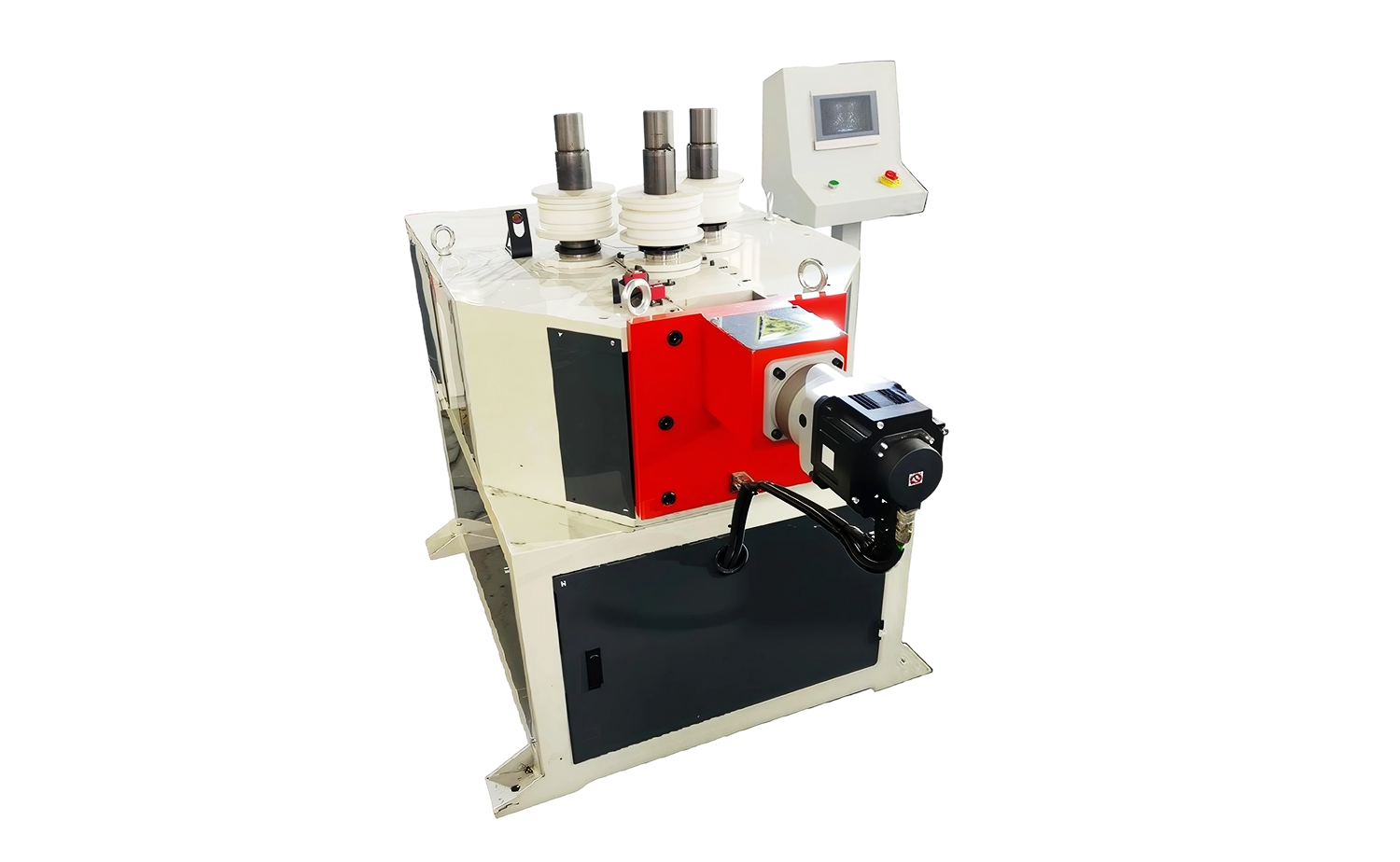
- CNC Series Tube Roll Bending Machine for Metal Profiles
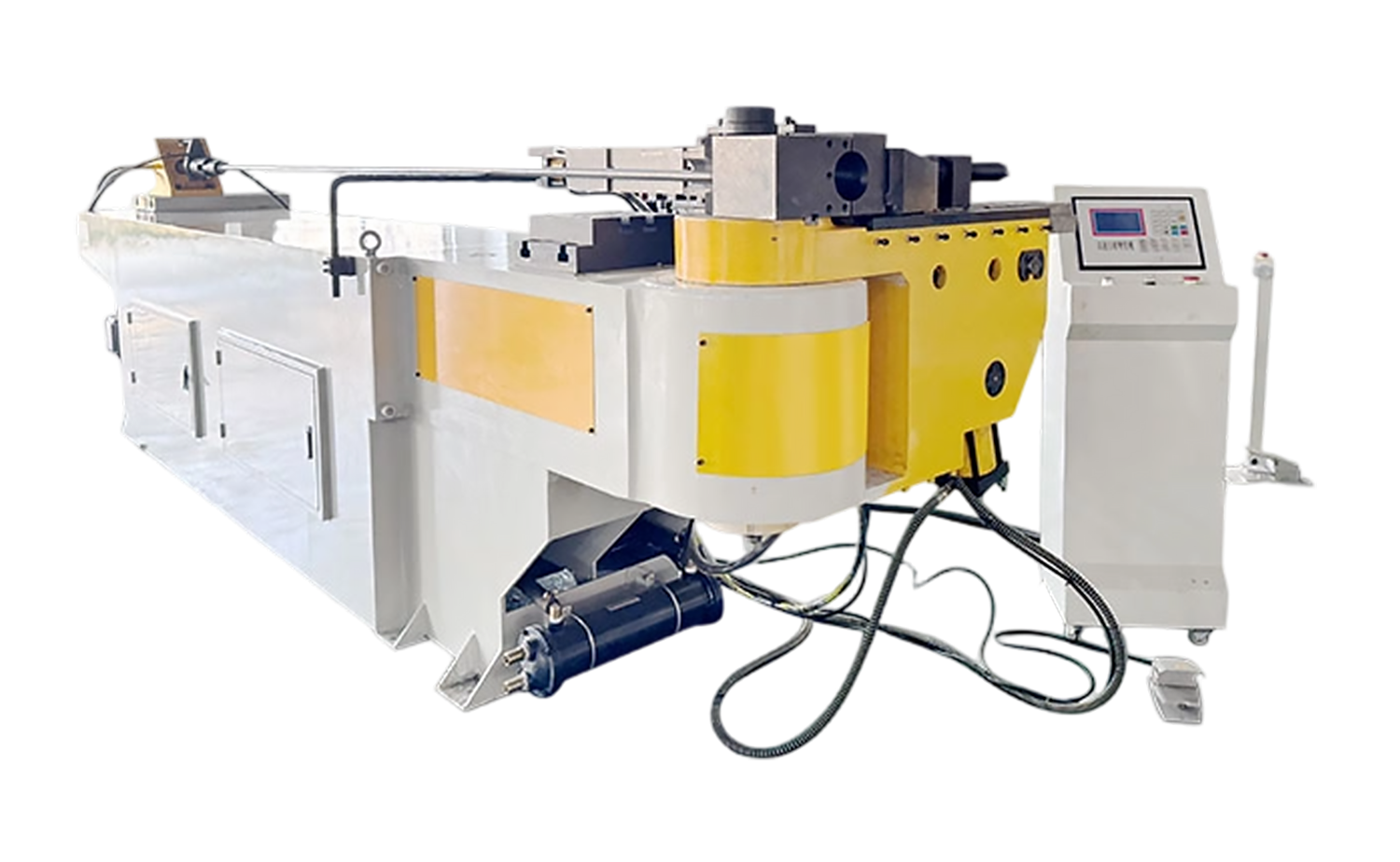
- NC L Series High-performance Hydraulic Pipe/Tube Bending Machine
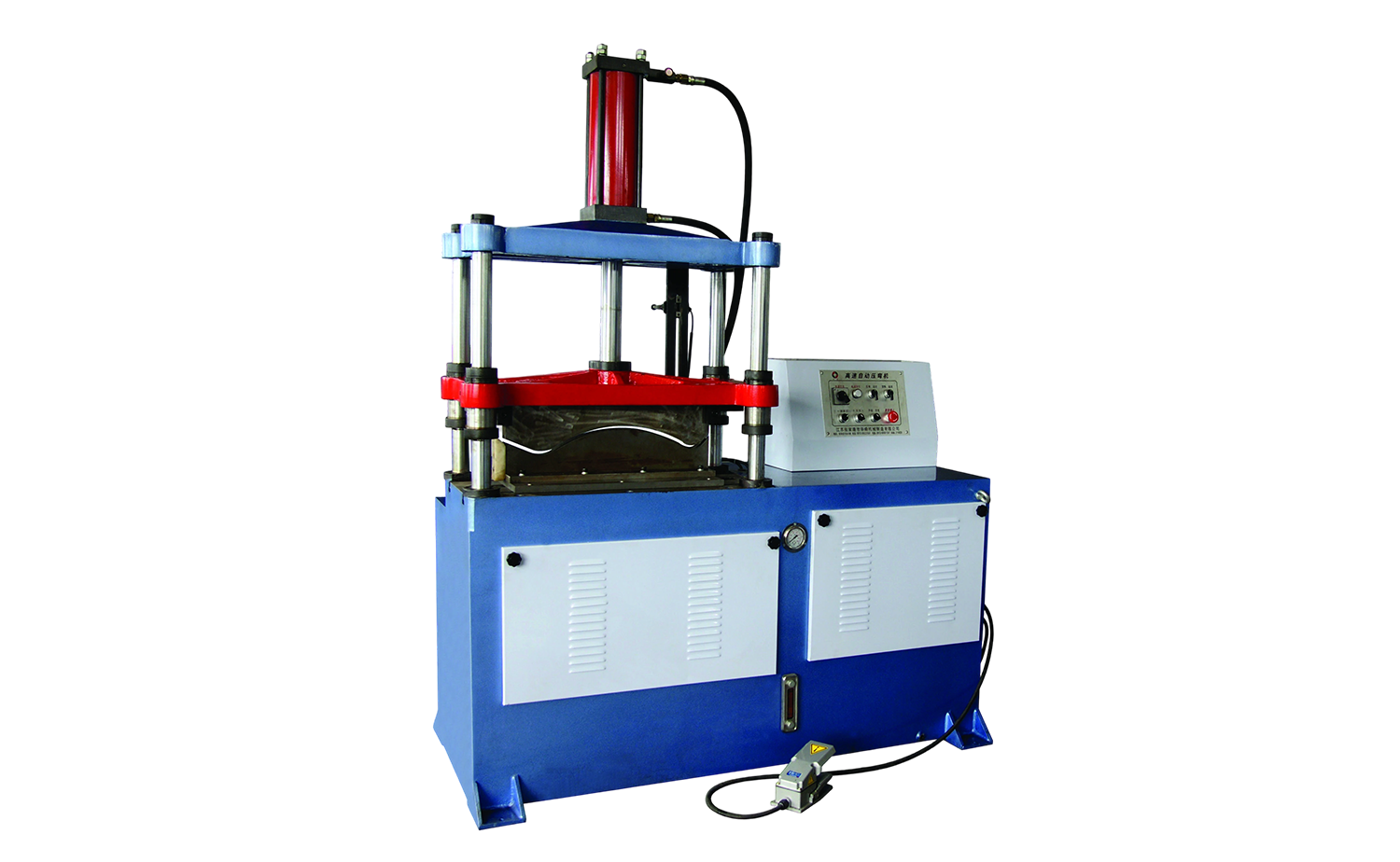
- YW Series Heavy-Duty Press Bending Machine for Metal Tubes
Round Tube Bending: Methods, Tooling, and Choosing the Right Machine for Your Shop
Date:Sep 24, 2026
Content
- 1 What Round Tube Bending Really Involves
- 2 The Main Methods for Bending Round Tube
- 3 Large-Radius Work: Roll Bending Round Tube
- 4 Tooling Choices That Decide Bend Quality
- 5 Matching Machine Control to Production Volume
- 6 Reading the Defects: Wrinkling, Flattening and Springback
- 7 Material Behaviour Across Common Tube Grades
- 8 Where Round Tube Bending Shows Up
- 9 Questions Worth Asking Before You Buy
Round tube bending looks straightforward on a drawing and turns complicated the moment metal meets die. A 90-degree bend in a 25 mm tube with a 2 mm wall should be routine, yet the same job can wrinkle on one machine and come off clean on another. The difference is rarely operator skill alone. It comes down to method, tooling, material, and how well the equipment matches the batch size you actually run.
We build tube processing equipment — benders, cutters, end formers, chamfering, punching and expanding machines — for workshops that range from two-person job shops to high-volume automotive suppliers. What follows is the same explanation our engineers give customers every week: how round tube bending works, what decides bend quality, and how to choose a machine without overbuying.
What Round Tube Bending Really Involves
Round tube is specified by outside diameter and wall thickness, while pipe is ordered by nominal bore and schedule. That distinction matters because every bending calculation — radius, force, mandrel size — is built on the tube's actual OD and wall, not on a nominal pipe size.
Before quoting any job, four numbers tell you whether it is easy, difficult, or impossible on a given machine:
- Centerline radius (CLR) — the radius measured to the middle of the tube wall.
- Bend angle — how far the tube travels around the die.
- CLR-to-OD ratio — below roughly 1.5, most round tube needs a mandrel and a wiper die.
- Wall factor — OD divided by wall thickness; thin walls flatten and wrinkle far sooner than thick ones.
Springback also has to be planned for. Every metal springs back slightly once the die opens, and the amount changes with material, wall thickness and radius. CNC machines compensate by over-bending automatically, which is one practical reason automated bending holds tolerance better across a long production run.
The Main Methods for Bending Round Tube
Rotary draw bending is the workhorse of the industry, and for good reason. The tube is clamped against a rotating bend die while a pressure die follows it and a mandrel supports the inside of the wall, so material flows instead of collapsing. It is the only practical method for tight radii, thin walls and multi-bend parts that must be repeatable.
| Method | Typical radius | Tooling | Best fit |
|---|---|---|---|
| Rotary draw bending | Tight, 1D and above | Bend die, clamp die, pressure die, mandrel | Multi-bend parts, thin wall, high volume |
| Roll bending | Large, 5D and above | Three or more powered rolls | Arcs and sweeps for structural and architectural work |
| Press bending | Large | Radius die with follower | Thick wall, large diameter, low volume |
| Compression bending | Medium to large | Fixed die and wiper shoe | Simple parts, small batches, low tooling budget |
| Serpentine bending | Medium | Programmed multi-bend head | Coils and heat exchanger tubing |
If your parts carry several bends and must drop into a fixture, rotary draw bending on a CNC machine is almost always the answer. If you are producing gentle arcs for handrails, arches or frames, roll bending is faster and far cheaper to tool.
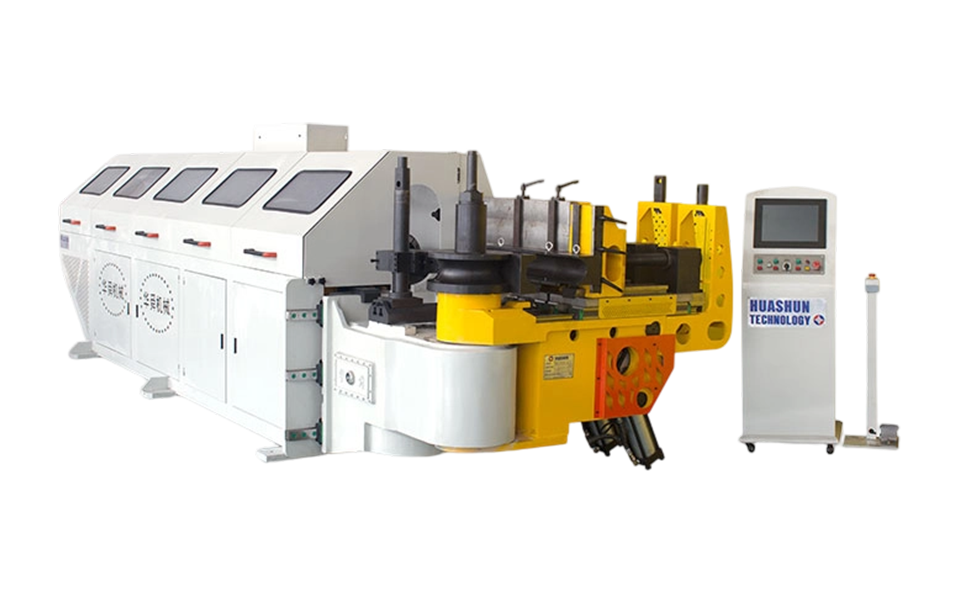 CNC L Series Servo-Hydraulic Tube Bending Machine with Touch ScreenThis fully automatic bender uses servo motors for feeding and rotation, plus a touch screen PLC for precise multi-bend parts, making it ideal for repeatable tight-radius work.View Product →
Servo-hydraulic rotary draw machines handle the tight-radius, thin-wall work that manual benders simply cannot repeat, and stacked tooling lets one setup produce several different radii on the same part.
Large-Radius Work: Roll Bending Round Tube
Not every round tube bend is a tight corner. Handrails, arch frames, conveyor guides and playground structures need long, sweeping arcs with a consistent radius, and those are produced by rolling rather than draw bending.
Three-roll machines pass the tube between powered rolls and curve it progressively as the rolls close in. Seven-roll and nine-roll versions support thin-wall tube more evenly, reducing the flattening that appears when a light wall is pushed through a simple three-roll setup. Bidirectional machines reverse roll direction to form S-shaped profiles and multi-radius sweeps in a single sequence.
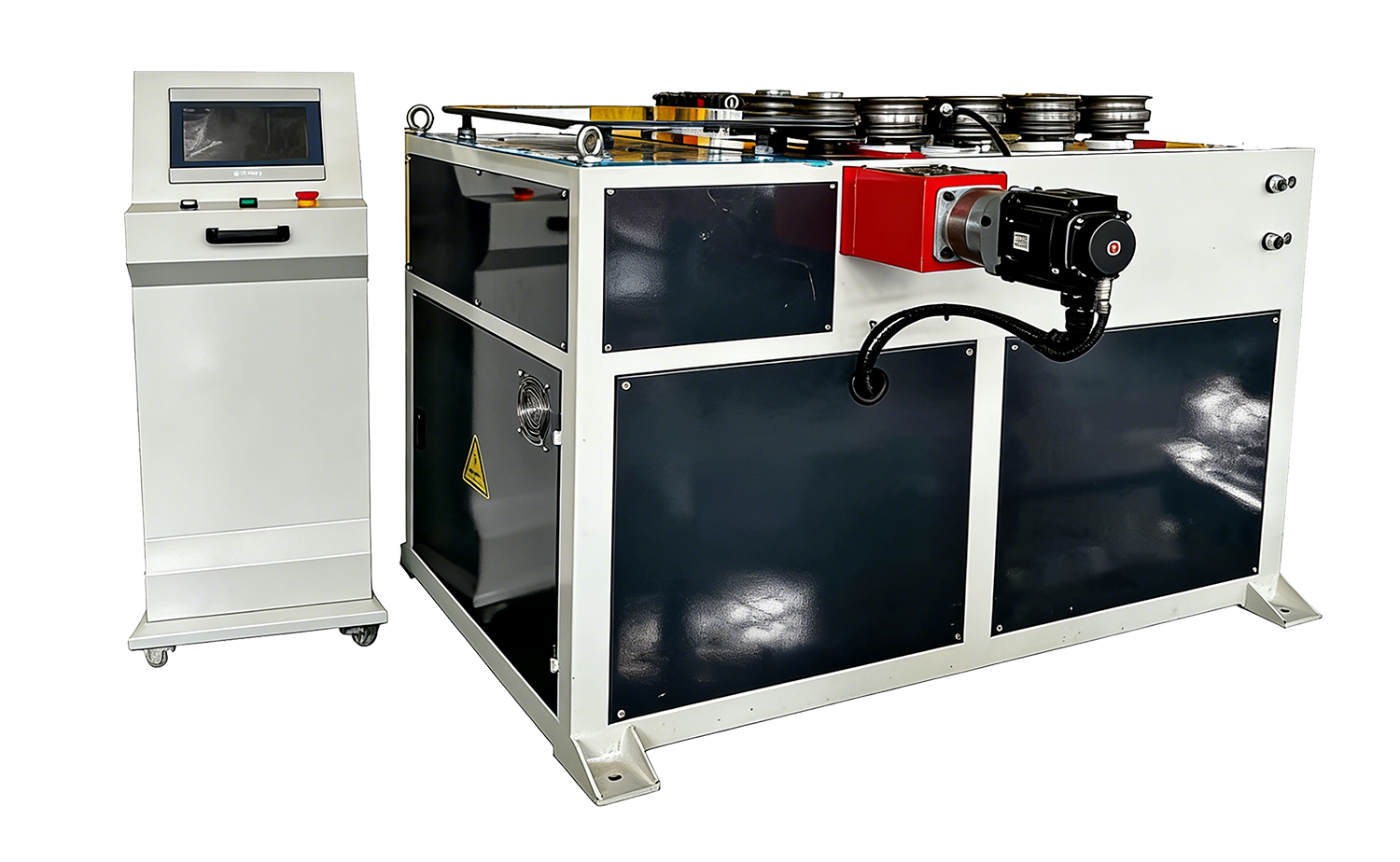 GY S Shape Series Round Tube Rolling Machine for Multi-Radius BendsThis three-roll machine uses a servo-controlled roller position and bidirectional forming to produce S-curves, arcs, and spirals on thin-wall tube without excessive tooling costs.View Product →
Roll bending rarely needs a mandrel, so tooling cost stays low, but it cannot hold the tight radii or end-to-end repeatability of a rotary draw bender. Many shops keep both types on the floor and split work by radius.
Tooling Choices That Decide Bend Quality
Mandrel selection
A plug mandrel is enough for generous radii on thick walls. As the wall thins or the radius tightens, a ball or segment mandrel — a series of linked balls pulled to the tangent point of the bend — supports the inside wall and keeps ovality in check. Position it too far forward and the tube grows; too far back and it flattens.
Wiper and pressure dies
The wiper die supports the inner radius and is the single most effective weapon against wrinkles. Pressure die force matters just as much: too little and the tube slips, too much and it drags material, thinning the outer wall of the bend.
Lubrication and setup discipline
Round tube bending lives or dies on friction control. A consistent lubricant, clean dies and a documented setup sheet for every part number will do more for quality than any single equipment upgrade.
Matching Machine Control to Production Volume
Once the method is settled, the automation level decides your real cost per bend.
| Machine class | Control | Best suited to |
|---|---|---|
| Manual bender | Hand lever, mechanical stop | One-offs, prototypes, repair work |
| NC semi-automatic | Hydraulic, angle set by programme | Small and medium batches, frequent job changes |
| CNC automatic | Servo axes, multi-radius stacking | High volume, tight tolerance, thin wall |
| Double-head bender | Two bending heads | Symmetrical frames, furniture, HVAC parts |
| Serpentine bender | Continuous feed and bend | Coils and heat exchanger tubing |
| Roll bender | Powered rolls, no mandrel | Large radius arcs and sweeps |
Semi-automatic hydraulic benders remain the value choice for shops that run a few hundred pieces at a time, change jobs often, and do not need servo positioning. Angle setting is quick, tooling is affordable, and the learning curve is measured in days rather than weeks.
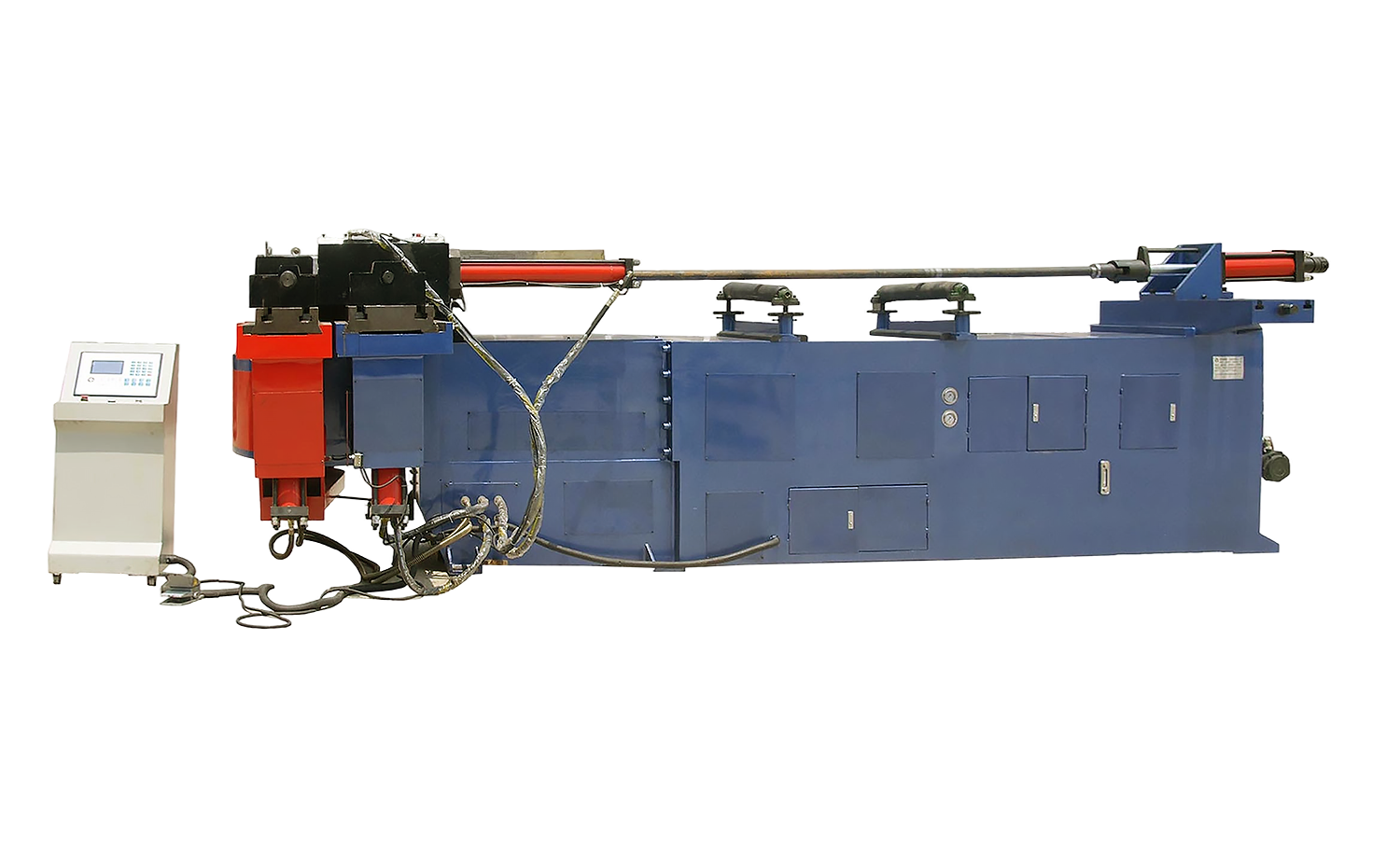 NC L Series Hydraulic Pipe Bending Machine with 16-Program MemoryA semi-automatic hydraulic bender with quick angle setup, manual feed and rotation axes, and programmable spring-back compensation—a practical value option for frequent job changes.View Product →
When volumes rise and part families repeat, CNC machines pay for themselves through setup time rather than raw speed. That is where the decision usually turns, and it is worth modelling your own numbers before assuming more automation is automatically better.
Reading the Defects: Wrinkling, Flattening and Springback
- Wrinkling on the inner radius — usually a missing or badly set wiper die, or a mandrel positioned too far back.
- Flattening and ovality — insufficient mandrel support, too little pressure die force, or a radius tighter than the wall can carry.
- Thinning on the outer wall — excessive pressure die drag or a bend die radius too small for the wall thickness.
- Angle drift across a batch — springback left uncompensated, or a change in material from the supplier.
- Scoring and galling — worn or dirty dies, the wrong lubricant, or a tool radius that no longer matches the tube.
Almost every bending problem we are asked about traces back to one of those five causes. Fix the tooling and the setup sheet first, and only then question the machine.
Material Behaviour Across Common Tube Grades
Mild steel is forgiving and predictable, which is why most standard bending charts assume it. Stainless steel work-hardens as it bends, springs back more, and needs larger radius compensation. Aluminium is soft and prone to galling, so it rewards polished tooling and generous lubrication. Copper and brass bend easily but mark quickly. Coated and galvanised tube adds one more constraint: the tooling has to protect the surface as well as form the bend.
Where Round Tube Bending Shows Up
Round tube bending sits behind more products than most people expect. Automotive manufacturing relies on it for exhaust systems, seat frames, roll cages and fluid lines. HVAC contractors bend copper and steel for refrigerant and heating circuits. Fitness equipment, furniture, agricultural implements, data-centre cooling manifolds and structural handrails all depend on controlled bends in round tube.
What changes between those industries is rarely the principle — it is the tolerance, the surface finish requirement, and the volume. A handrail supplier and a tier-one automotive supplier can bend the same diameter of tube on completely different equipment, and both are right.
Questions Worth Asking Before You Buy
- What is the largest tube diameter and wall thickness I will realistically run?
- What is the tightest CLR-to-OD ratio anywhere in my part range?
- How many bends per part, and how many parts per month?
- Do I need stacked tooling for multi-radius components?
- How long does a changeover take, and who will perform it?
- What tooling ships with the machine, and what will I need to buy later?
Answer those six questions honestly and the shortlist usually narrows to two or three models. Our tube bending machines span manual, NC and full CNC classes, so the same conversation can cover a single-bend prototype job and a multi-radius production line.
Round tube bending rewards preparation more than brute force. Match the method to the radius, the tooling to the wall, and the machine to the batch, and the wrinkles, ovality and angle drift that trouble so many shops simply stop appearing. If you are unsure which configuration fits your parts, send us a drawing with the tube diameter, wall thickness and target radius — we will tell you plainly what the job needs, and what it does not.
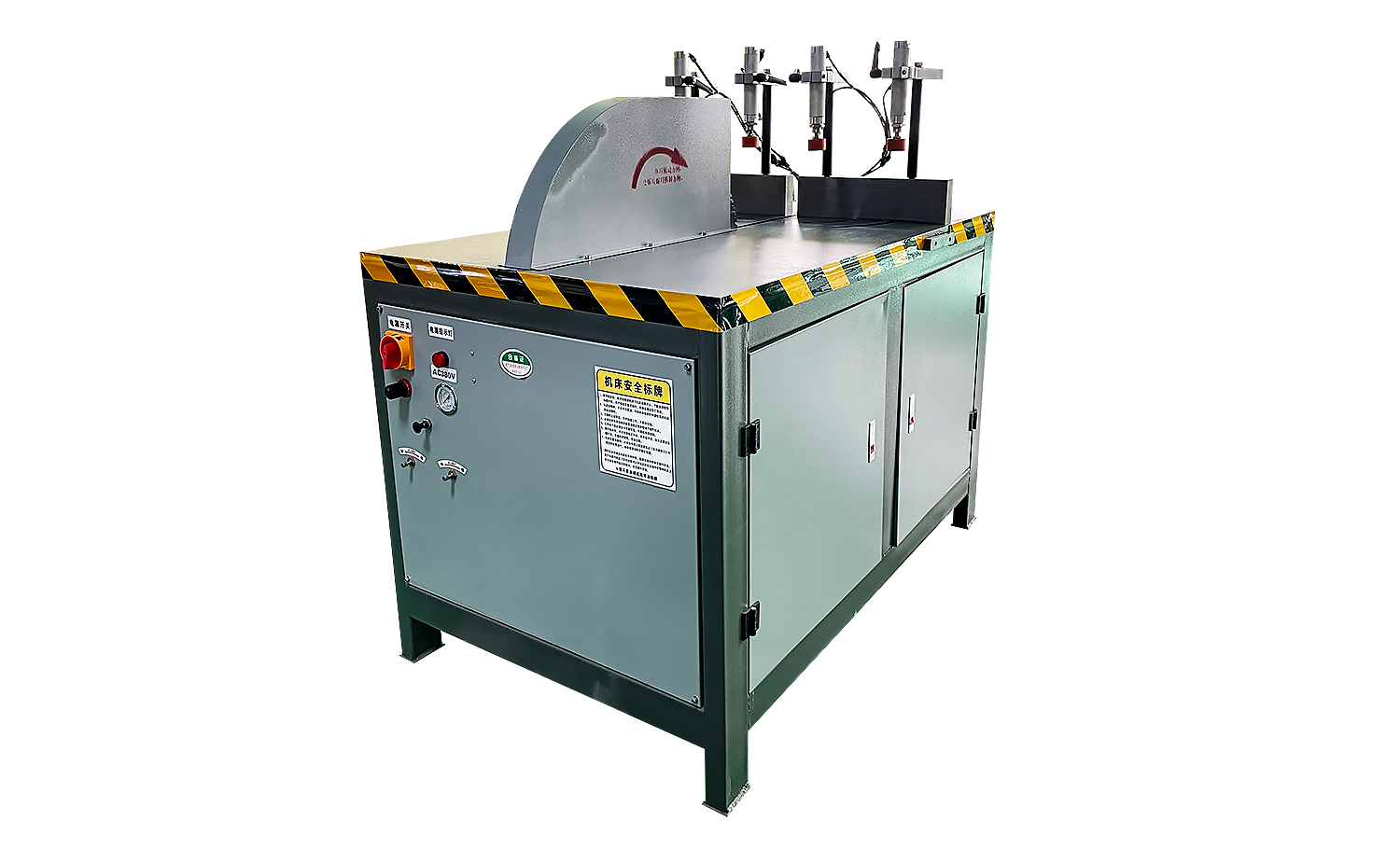



Copyright © 2025 Huashun Technology All Rights Reserved.
Custom Precision Tube Forming Machine Manufacturers