
 English
 русский
 Español
- YW Series Heavy-Duty Press Bending Machine for Metal Tubes
- ES550 Semi-Automatic Aluminum Cutting Machine for Big Profiles and Tubes
- DEF50PVS Servo Tube Chamfering Machine for Short Metal and PVC Tubes
- EF PV2 Series Single Head Tube Chamfering Machine for Metal Tubes
- CNC L Series Fully Automatic Tube Bending Machine with Servo-Hydraulic Control
- NC L Series High-performance Hydraulic Pipe/Tube Bending Machine
Hydraulic Press Bending Machine Guide: How to Choose Right Press Bender for Metal Tubes
Date:Aug 28, 2026
Content
To produce moderate-volume, simple-geometry bends in metal tube with consistent angles and low tooling cost, a hydraulic press bending machine is often a cost-effective solution your shop can choose. It forms a tube by pressing a top die into a bottom die, relying on hydraulic force instead of the rotary wrap used by standard draw benders. For a 50.8 mm OD carbon steel hoop at 90 degrees, a hydraulic press bender can often complete the bend in under 15 seconds and hold the angle to within one degree, provided the machine is sized correctly and the die is properly compensated for springback. The trade-off is that press bending suits workpieces with simple curves, moderate volume, and limited radius variation. Once your order mix shifts toward multi-radius parts, tight wall-thinning limits, or 3D tube paths, you may be better served by a rotary draw bender with CNC controls.
What Is a Hydraulic Press Bending Machine?
At its core, a hydraulic press bending machine is a vertical press equipped with a top die and a bottom die. The hydraulic ram drives the top die downward, forcing the metal tube to conform to the shape of the lower V or U block. Unlike rotary draw bending, which pulls the tube around a bend die while clamping it against a pressure die, press bending does not use a mandrel in the standard configuration. This difference makes the machine simpler to operate and easier to tool up.
The components that matter most are the cylinder tonnage, the stroke length, the die set, and the control method. Tonnage determines the maximum wall thickness and tube diameter the machine can bend without overloading the frame. Stroke length defines how deep the top die travels, which directly affects bend angle. Die geometry controls the final radius and the degree of flattening on the outside of the bend. Control method may range from a manual valve to a PLC that stores programs for multiple angles and bend sequences.
Standard hydraulic press bending machines are built with single-stage cylinders, but some manufacturers offer double-station or tandem designs for high-volume work such as furniture frames or structural hoops. A typical unit for shop use covers tube diameters from 20 mm to 114 mm, wall thicknesses from 1.0 mm to 8 mm, and bend radii from 1.5 times the tube OD upward. Heavier models can reach 200 tons or more, which opens the door to bending square tube, rectangular profiles, and thick-wall pipe.
Press Bending vs. Rotary Draw Bending
Understanding when to specify a hydraulic press bender requires comparing it head-to-head with a rotary draw bender. The table below condenses the key differences that affect purchase decisions.
| Aspect | Hydraulic Press Bending | Rotary Draw Bending |
|---|---|---|
| Forming principle | Top die presses tube into lower V or U die | Tube is wrapped around a rotating bend die |
| Bend radius control | Depends on die profile; large radius changes need new die | Fixed by bend die radius; changing radius requires a new bend die |
| Wall thickness retention | Moderate; thinning occurs on the outside of the bend | Very good; mandrel and wiper die support thin-wall tube |
| Springback compensation | Manual overbend or optional PLC-assisted angle correction | CNC programs with springback compensation algorithms |
| Tooling cost | Low; V and U dies are inexpensive and simple to machine | High; bend dies, clamp dies, and wiper dies can be costly |
| Cycle time per bend | Short, especially for single-plane hoops and U-bends | Longer for complex geometries; faster for simple 90-degree bends |
| Geometric complexity | Simple curves and planar shapes | Multi-radius, 3D shapes, and tight-radius bends |
| Typical applications | Structural hoops, railing bends, furniture frames | Automotive exhaust, hydraulic lines, aerospace tubing |
| Operator skill requirement | Low to moderate | Higher for setup and troubleshooting |
For shops that run a mix of both simple and complex jobs, many manufacturers offer a hydraulic press bender alongside a CNC draw bender, allowing the shop to choose a lower-cost machine per order. Practically, the decision comes down to whether a job requires a mandrel, a tight bend radius below 1.5D, or a bend path that changes plane. If none of these apply, a press bending machine can often deliver a competitive part at a lower cost per piece.
Core Specifications to Evaluate Before Buying
Tonnage and Die Opening
It's best not to select a hydraulic press bender based on catalog tube diameter alone. The correct tonnage depends on the material yield strength, the tube outer diameter, the wall thickness, and the length of tube being bent. A conservative rule for mild steel is that the required force rises roughly with wall thickness and with the square of the tube diameter. For example, bending a 50.8 mm OD tube with a 2.5 mm wall takes roughly 30 to 40 tons, while the same diameter with a 6 mm wall can push the requirement toward 80 tons or more. Check the machine's maximum die width as well, because a wider tooling area lets you run multiple tubes in one pressing cycle.
Bend Radius and Springback
Every metal tube rebounds slightly after the pressing force is released. Carbon steel typically springs back by two to five degrees, stainless steel by up to ten degrees, and aluminum by one to three degrees depending on the temper. A machine that includes an angle correction function or a programmable overbend compensation can reduce setup time and scrap. Minimum bend radius is another important limit. Hydraulic press bending can generally handle radii down to about 1.5 times the tube OD without excessive ovality, but the outer wall will thin. For production work, a radius of 2D to 4D is often a practical sweet spot for quality and tool life.
Control System and Repeatability
Manual hydraulic presses are fine for small batches, but repeatability depends on the operator. A semi-automatic machine with an NC controller stores bend angles and pressing times in memory, so the same job can often be reproduced tomorrow without measuring the first piece. This is where a NC semiautomatic hydraulic pipe bending machine earns its value in shops that run recurring production lots. If the shop needs full traceability, CNC automation with servo-hydraulic precision should be considered, especially for long runs where labor cost per bend matters.
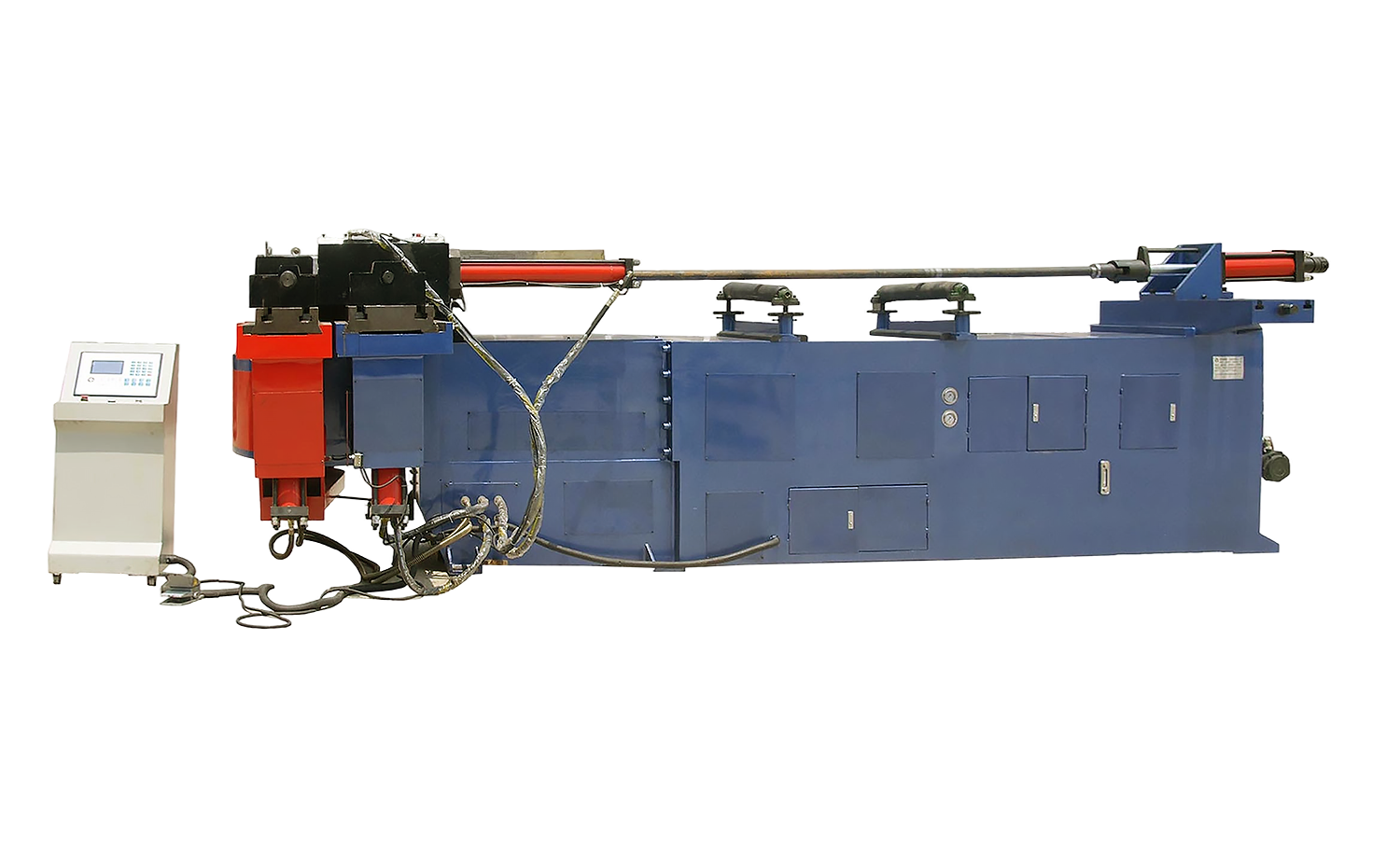 High-Performance NC Semi-Automatic Hydraulic Tube Bending MachineThis NC-controlled machine stores up to 16 programs with 16 bends each, enabling repeatable production for recurring lots. Its hydraulic pressure die with adjustable speed and spring-back compensation ensures precise bends in steel, stainless, aluminum, and more.View Product →
Ask the supplier for their repeatability data: a tolerance of plus or minus 0.5 degrees or better is typically expected for a quality press bender with solid guides and a rigid frame.
Tooling Versatility
Die sets are the most frequently changed element on any press bending machine. Look for a quick-change clamping system that lets your operator swap a V die or U die in under three minutes. Multi-channel V blocks, which form different radii on different sections of the same die, can reduce the number of tooling changes on mixed jobs. For shops that also need to form square tube or flat bar, ask whether the machine frame accepts interchangeable top and bottom dies without modification.
Application-Driven Selection
Automotive Components
Automotive work often demands high repeatability in exhaust systems, seat frames, and structural rails. A hydraulic press bender can handle many of these parts efficiently when the geometry is simple, but when a part contains a tight radius with a thin wall, a mandrel-equipped draw bender is usually the safer choice. For shops that supply the automotive supply chain, the decision is driven by both volume and the required wall-thinning limit. Review the automotive manufacturing application to see how machine selection aligns with specific component families.
Construction and Decoration
Handrails, stair ramps, balustrades, and facades call for clean bends with consistent visual quality. Hydraulic press bending often works well here because the pressing action tends to leave a smooth outer face and generally does not mark the tube with a clamp die. The wide range of decorative profiles—round tube, square tube, oval tube, and angle iron—also suits the simple die interchange of a press bender. The construction and decoration application covers typical outdoor and indoor metalwork where batch sizes are moderate and tooling cost sensitivity is high.
HVAC and Industrial Lines
HVAC shops bend copper, aluminum, and light-gauge steel for refrigerant lines, condensate drains, and compressed air piping. These parts are often small-diameter, high-volume, and less demanding on tolerance. A double-station press bender can produce two bends per cycle, which is a direct productivity gain. Because tube cleanliness matters in refrigerant lines, consider dies with non-marring inserts or a machine with a quick-release tooling table for easy cleaning.
Choosing the Right Press Bending Machine for Your Tube Shop
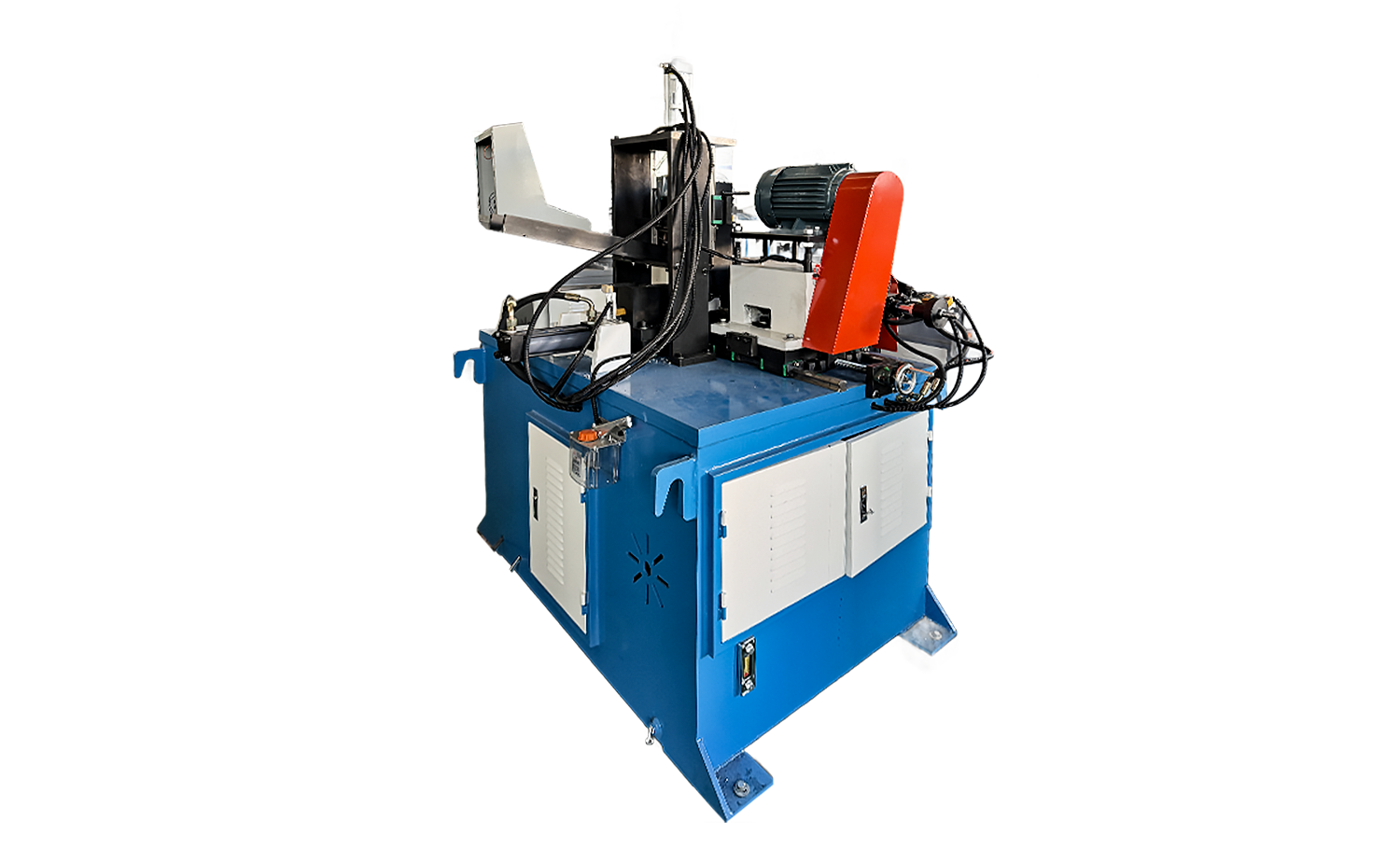
Selecting the right machine starts with sorting your work order mix by geometry complexity, batch size, and tolerance. If the majority of your parts are simple single-plane bends with a radius above 1.5D, a heavy-duty hydraulic press bending machine can be a direct path to lower piece cost. The heavy-duty hydraulic press bending machine is designed for high wall thicknesses and large-diameter tube, which makes it a strong fit for structural work and production lines that run consistently through the week.
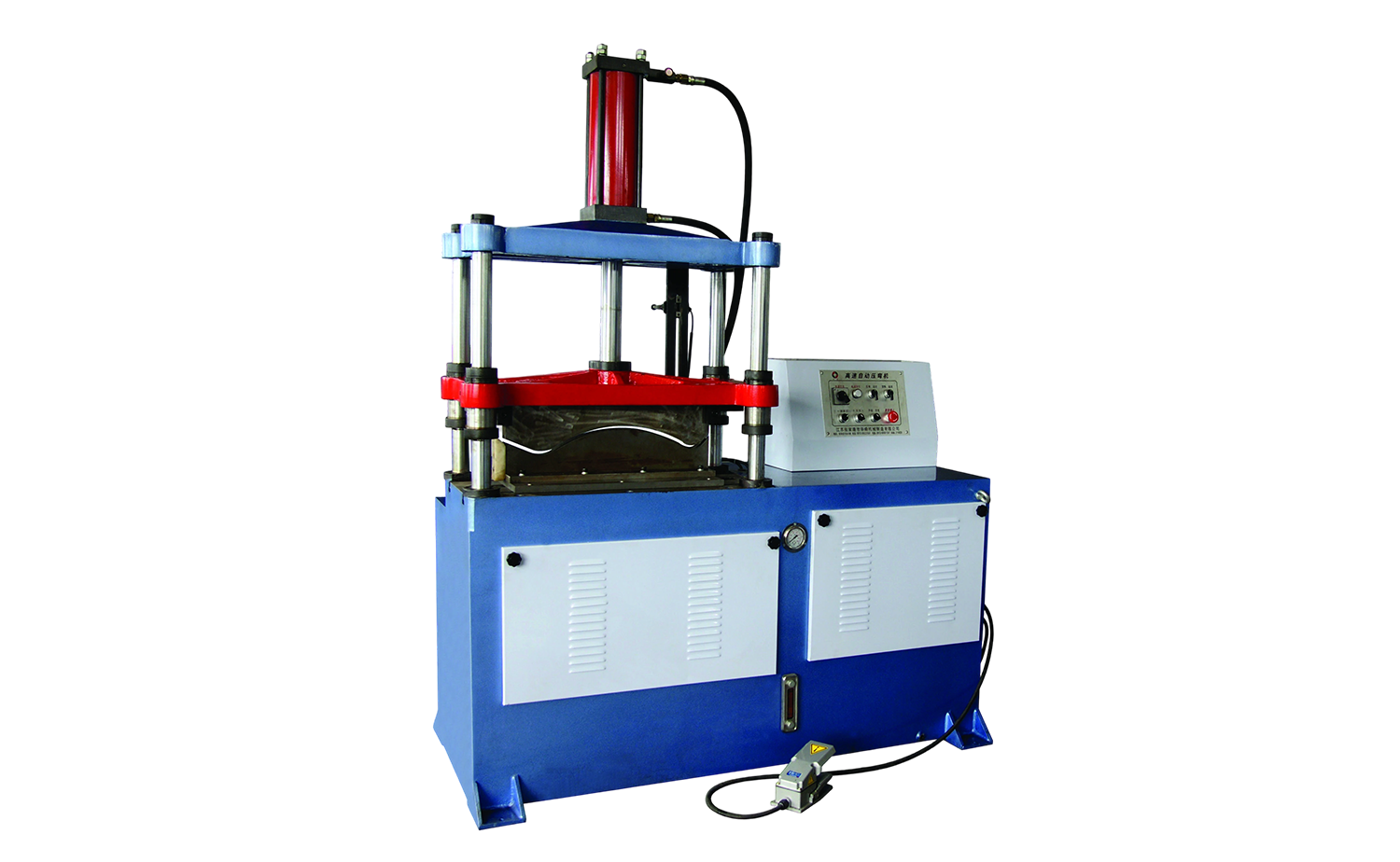 Heavy-Duty Hydraulic Press Bending Machine for Large-Diameter TubesIdeal for high wall thicknesses and large-diameter tubes, this vertical press bender simplifies loading and unloading with its unique clamping-free design, making it a cost-effective choice for structural parts and consistent production runs.View Product →
As your parts gain complexity, consider whether a CNC rotary draw bender is worth the added investment. The CNC series fully automatic tube bending machine with servo-hydraulic handles multi-radius parts, 3D geometry, and minimal wall thinning, which are common limitations of press bending. In many shops, the practical path is to run a press bender for the simple jobs and a CNC bender for the tight radii, then measure the cost difference per part before specifying new equipment.
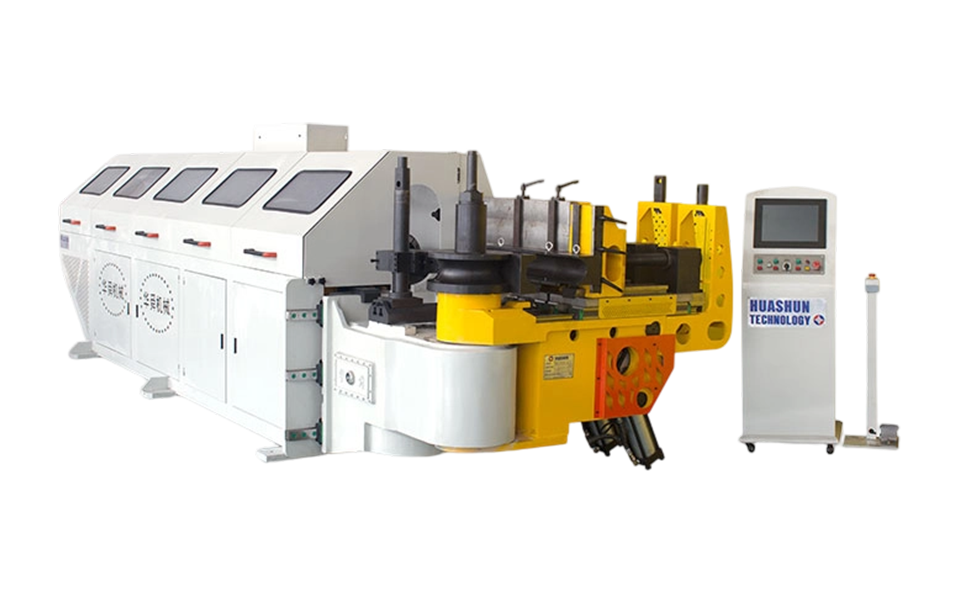 Fully Automatic CNC Tube Bending Machine with Servo-Hydraulic ControlThis machine offers three programmable axes with servo motors for feeding and rotation, supporting both hydraulic and servo bending. Its PLC touchscreen provides real-time monitoring, while advanced lubrication systems reduce wear and extend service life for complex parts.View Product →
When you are ready to compare machines, ask the supplier for three deliverables:
- A repeatability test performed on your actual tube material, not a sample supplied by the vendor.
- A tonnage chart that covers the full range of your tube diameters and wall thicknesses, including die dimensions.
- A timed demonstration of the tooling changeover, from the last bend of one job to the first bend of the next.
A hydraulic press bending machine is an asset that can pay for itself through reduced setup, shorter cycle times, and minimal scrap. With the right model in place, the transition from hand bending to hydraulic accuracy can become a meaningful gain in throughput rather than a long-term experiment.





Copyright © 2025 Huashun Technology All Rights Reserved.
Custom Precision Tube Forming Machine Manufacturers