
 English
 русский
 Español
- CNC Series Tube Roll Bending Machine with Three-Roller Drive
- CNC S Series Fully Automatic Tube Bending Machine with Optional Simulation Function
- CNC M Series Fully Automatic Multi-Radius Tube Bending Machine
- NC M Series Hydraulic Tube Bending Machine with Mandrel Control
- CNC L Series Fully Automatic Tube Bending Machine with Servo-Hydraulic Control
- NC L Series High-performance Hydraulic Pipe/Tube Bending Machine
Roller Tube Bending Machine: Types, Working Principle & Selection Guide
Date:Oct 23, 2026
Content
Roller tube bending machines solve a problem that every metal fabricator eventually runs into: producing a large-radius curve without investing in expensive custom dies. Instead of wrapping the tube around a fixed bend die like a rotary draw bender, this type of machine gradually curves the workpiece between rotating rolls. Each pass brings the tube closer to the target radius, which makes it the ideal choice for arcs, rings, coils, and long sweeping bends. Understanding how the process works and which configuration fits your parts is the first step toward a smooth production workflow.
How a Roller Tube Bending Machine Works
The classic design is the three-roll pyramid. Two lower rolls drive the tube forward and backward, while a top roll applies downward pressure. As the top roll moves deeper, the tube bends a little more with every pass. The operator checks the radius with a template or a digital readout and continues until the curve matches the drawing.
This working principle gives roller bending several useful characteristics:
- Cold bending without a mandrel, wiper die, or filler material in most cases
- Large-radius curves, typically five or more times the tube diameter
- Versatility: with interchangeable roll sets, the same machine can form round tube, square tube, pipe, flat bar, angle, and channel
- A gentle forming action that keeps surface marks to a minimum
Before selecting a machine, it is worth clarifying the difference between tube and pipe. Tube is measured by its exact outside diameter, while pipe is referenced by a nominal inside diameter. A 1-inch pipe has an outside diameter of 1.315 inches, for example. This distinction matters when ordering roll sets or calculating the centerline radius of the finished part.
Roller bending complements rather than replaces mandrel draw bending. Each process suits a different radius range and part geometry.
| Aspect | Roller Bending | Draw Bending |
|---|---|---|
| Typical radius | Large, often five or more times tube diameter | Tight, down to 1.5D or less |
| Tooling | Adjustable rolls for multiple sizes | Dedicated die set for each size and radius |
| Ovality control | Good with multi-roll designs | Excellent with mandrel support |
| Common parts | Arches, coils, hoops, structural sections | Exhaust pipes, handrails, furniture frames |
Many shops own both types. The roller machine handles the long, sweeping curves, while the draw bender covers the tight corners. Roller bending also shines when you need to bend a long length of tube in one piece. Because the rolls move the workpiece continuously, there is no practical limit to the arc length; sections of several meters can be curved in a single sequence of passes.
Main Types of Roller Tube Bending Machines
The right machine depends on the part geometry, wall thickness, and production volume. In practice, most fabricators choose from three configurations.
Three-Roll Machines
Three-roll machines are the workhorses of the family. They are built for general-purpose work and handle sections ranging from small-diameter tube up to heavy structural profiles. In a CNC-controlled three-roll machine, the upper roll position is set by a servo or hydraulic system, and the lower rolls are driven by a geared motor. Operators can store parameters for dozens of part programs and recall them at the push of a button. This is especially valuable in job-shop environments where the same machine switches between different diameters, wall thicknesses, and radii several times a day.
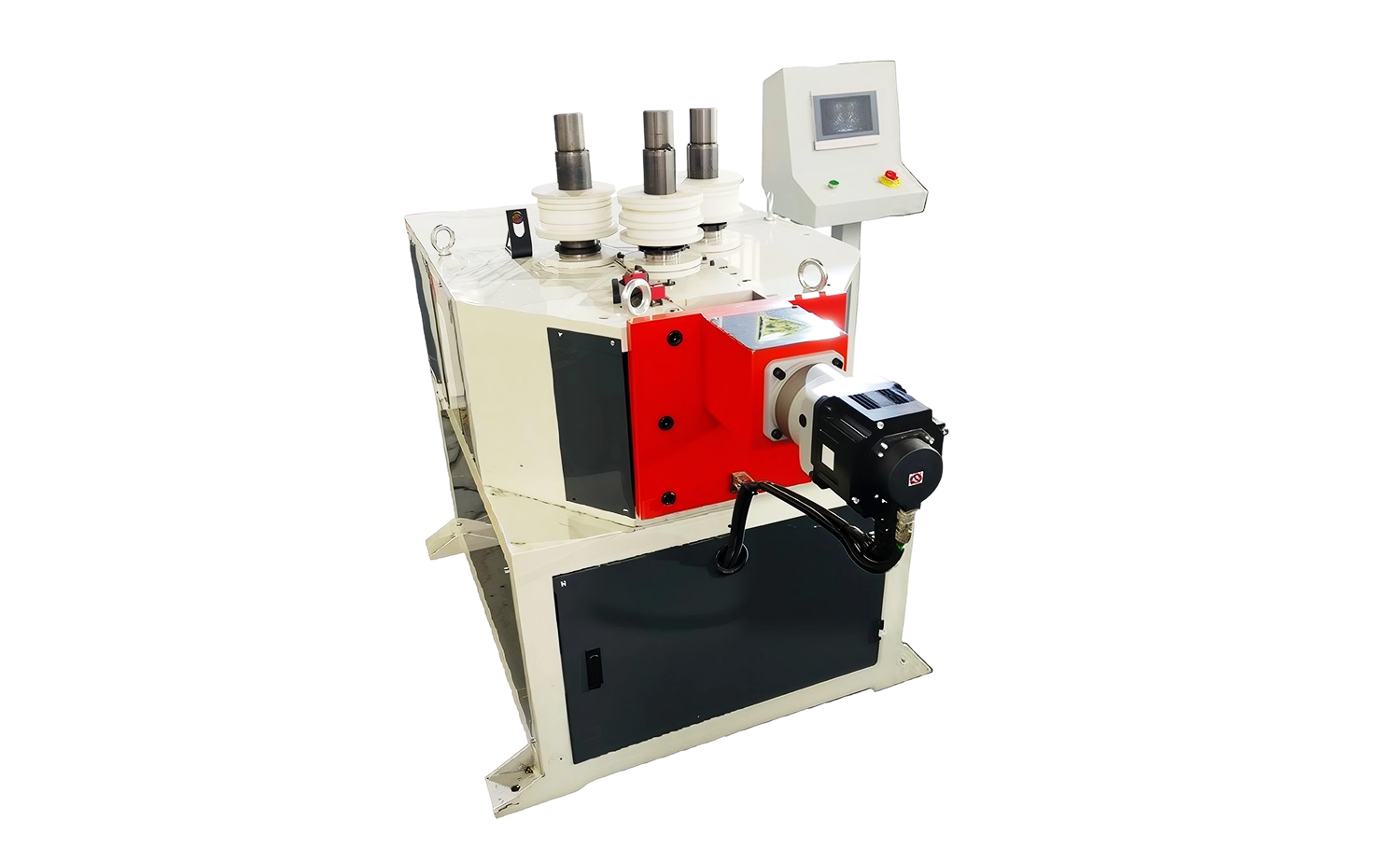 CNC Series Roll Bending Machine for Metal ProfilesThis three-roll CNC machine handles varied profiles with servo control and touch-screen programming, ideal for job shops needing repeatable large-radius bends on angle, flat, or round steel.View Product →
Seven-Roll and Nine-Roll Machines
Thin-walled tube presents a challenge to a conventional three-roll machine because the cross section tends to ovalize at the contact points. Seven-roll and nine-roll machines solve this by adding small support rollers that cradle the tube more completely. The result is a significantly rounder cross section after bending. These machines are the right choice for visible architectural components, stainless handrails, and any part where a slightly flattened section would be rejected by the customer.
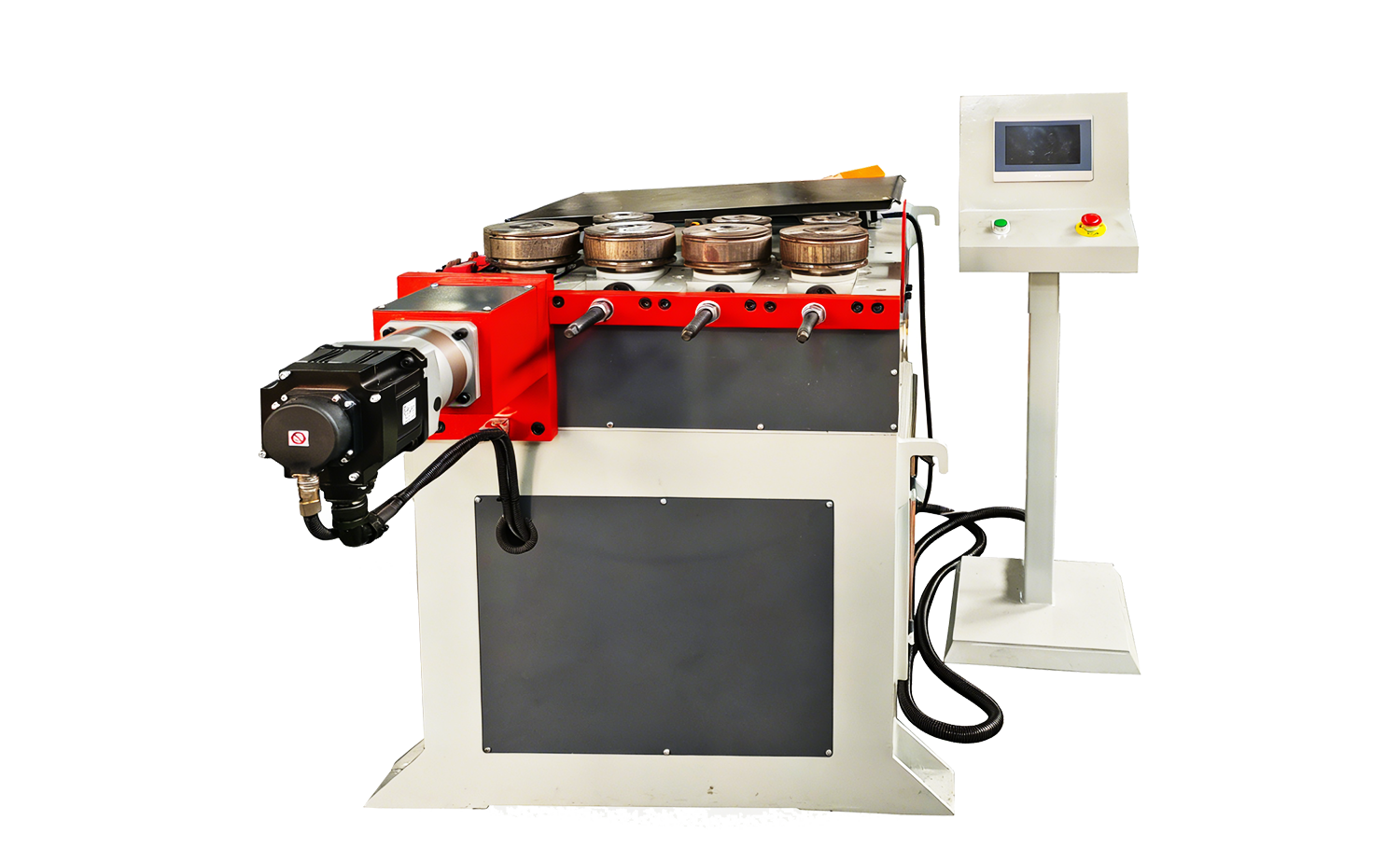 GY40 CNC High-Speed Thin-Walled Tube Roll BenderWith seven-roll support and anti-slip drive, this machine prevents ovalization on thin-walled tubes, ensuring round cross-sections for architectural rails and visible components.View Product →
S-Bend Bidirectional Machines
Some products require more than a simple arc. Serpentine coils, solar collector tubing, and HVAC heat exchangers all need S-shaped curves in a single continuous piece. A bidirectional roller machine reverses the rolling direction automatically, so the tube curves one way and then the other without being removed and reloaded. This saves considerable handling time and keeps the entire part in one uninterrupted cycle.
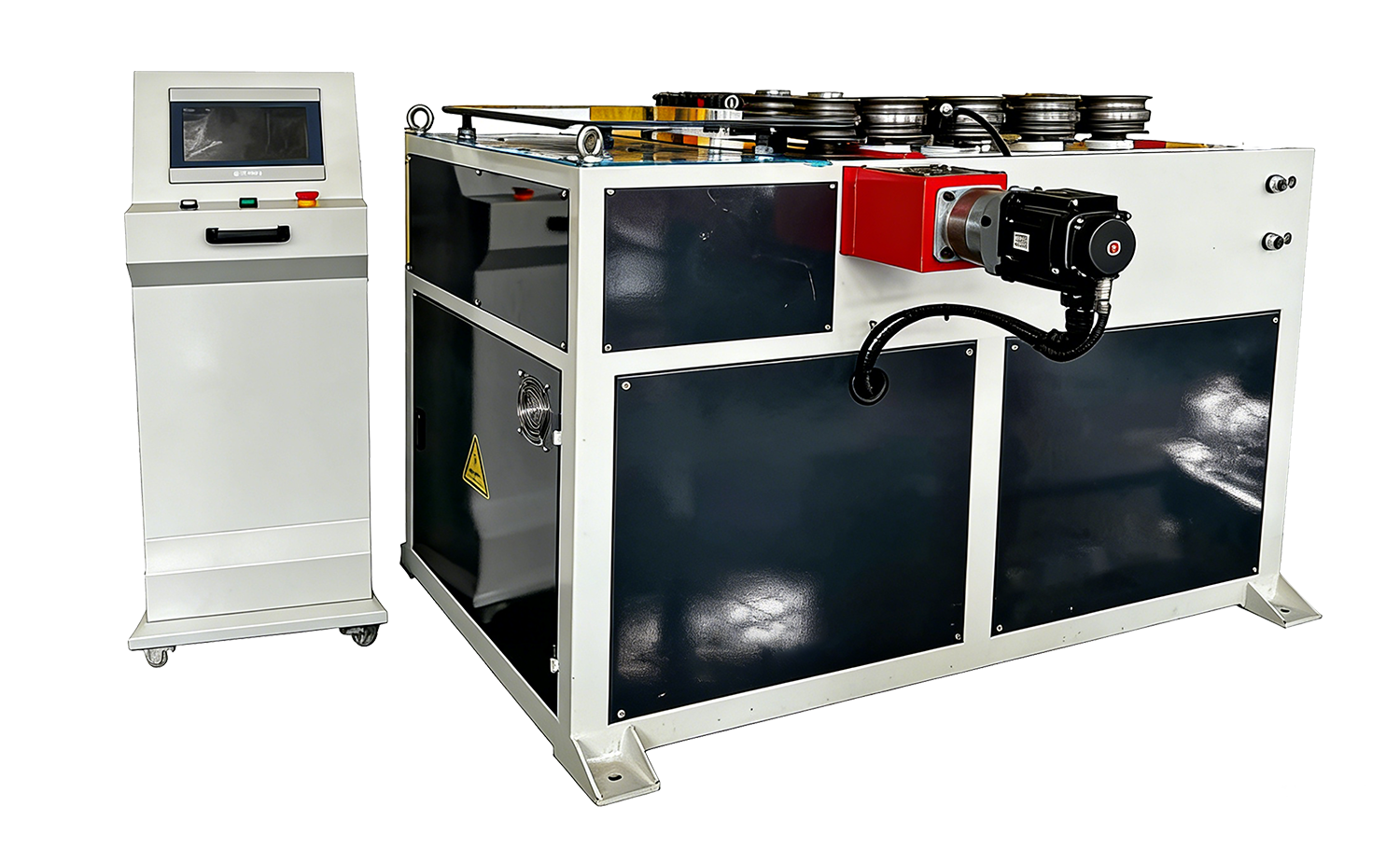 GY S Shape Series Round Tube Rolling MachineBidirectional rollers automatically form S-curves in one continuous cycle, making it perfect for serpentine coils, solar tubing, and HVAC heat exchangers without reloading.View Product →
Where Roller Tube Bending Machines Are Used
Because the process handles such a wide range of materials and profiles, it appears in nearly every metalworking sector. Common applications include:
- Architectural and structural metalwork: arches, roof trusses, handrail sweeps, and curtain wall profiles
- Furniture and fitness equipment: chair backrests, table bases, exercise machine uprights, and bench frames
- HVAC and refrigeration: condenser coils, heat exchanger serpentines, and refrigerant lines
- Agricultural and off-highway equipment: rollover protection structures, frame members, and conveyor guards
- Construction and decoration: balustrades, gates, display stands, and retail fixtures
The common thread across these industries is a need for smooth, accurate large-radius curves produced without surface marking or long die changeover delays. Architects and structural engineers often specify large-radius curves for both aesthetic and functional reasons: a clean, continuous bend distributes stress more evenly than a series of segmented bends, and it simply looks better. That is why roller bending has become standard in premium railing systems, storefront designs, and custom architectural metalwork.
How to Choose the Right Roller Tube Bending Machine
If you are evaluating a roller bending machine for your shop, a few technical points will narrow down the options quickly.
- Tube diameter and wall thickness. The machine capacity should offer a comfortable margin above your largest material, because running at the limit every day accelerates wear.
- Minimum radius. Confirm that the machine can achieve the tightest radius your parts require. If the radius is smaller than about five times the tube diameter, a draw bender may be a better fit.
- Material type. Stainless steel springs back more than mild steel, and aluminum behaves differently again. Look for sufficient downforce and a control system that allows springback compensation values to be stored per material.
- Production volume. For prototype or maintenance work, a manual roll positioner may be enough. For series production, CNC control with programmable radii and automatic pass counting pays for itself quickly.
- Automation level. Consider whether you need a data input panel, pre-bend and over-bend settings, and the ability to store dozens of part programs for fast changeover between jobs.
Also assess the roll materials and bearing quality. Hardened rolls with smooth finishes last longer and mark the tube less, which matters when the finished part will be visible or powder-coated. Springback is a fact of life in any bending process: when the top roll is released, the tube relaxes slightly toward its original straightness. A good machine gives you a way to compensate, either with a digital readout showing roll position in hundredths of a millimeter or with programmable over-bend values. Our engineering notes on round tube bending methods cover tooling choices and radius calculations in more detail if you want to go deeper.
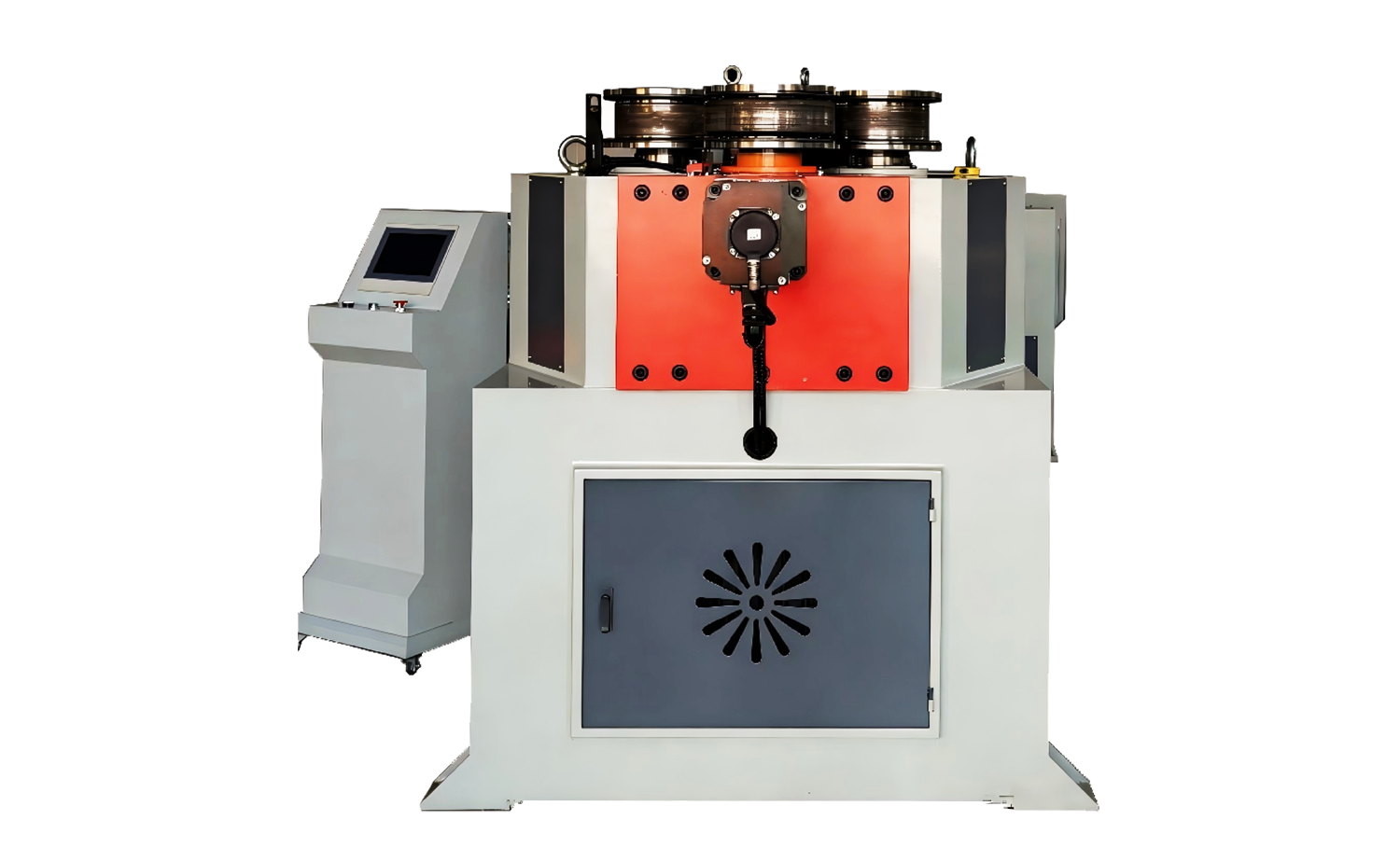
A roller tube bending machine is not the answer to every tube fabrication question, but when the job calls for a large radius, it is often the fastest and most economical way to get there. The key is matching the machine to your tube sizes, materials, and production volumes, and working with a supplier who can guide you through roll selection and process setup. Our roller tube bending machine lineup covers three-roll, multi-roll, and bidirectional configurations, and our team has spent years helping manufacturers solve exactly these kinds of bending challenges. If you are evaluating a new machine, send us your part drawings and tell us about your production targets; a short conversation is usually enough to point you toward the right configuration.


Copyright © 2025 Huashun Technology All Rights Reserved.
Custom Precision Tube Forming Machine Manufacturers