
 English
 русский
 Español
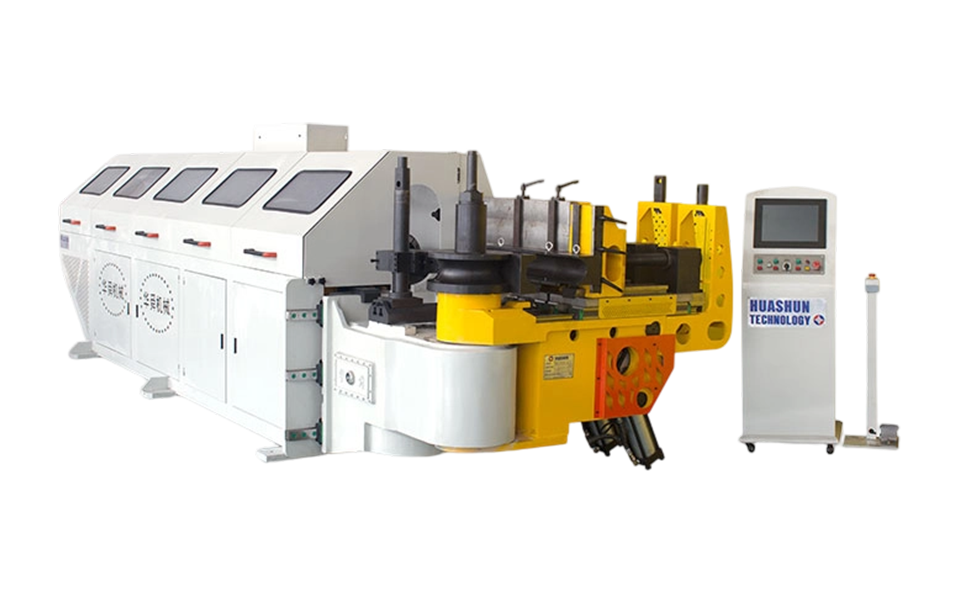
- CNC M Series Fully Automatic Multi-Radius Tube Bending Machine
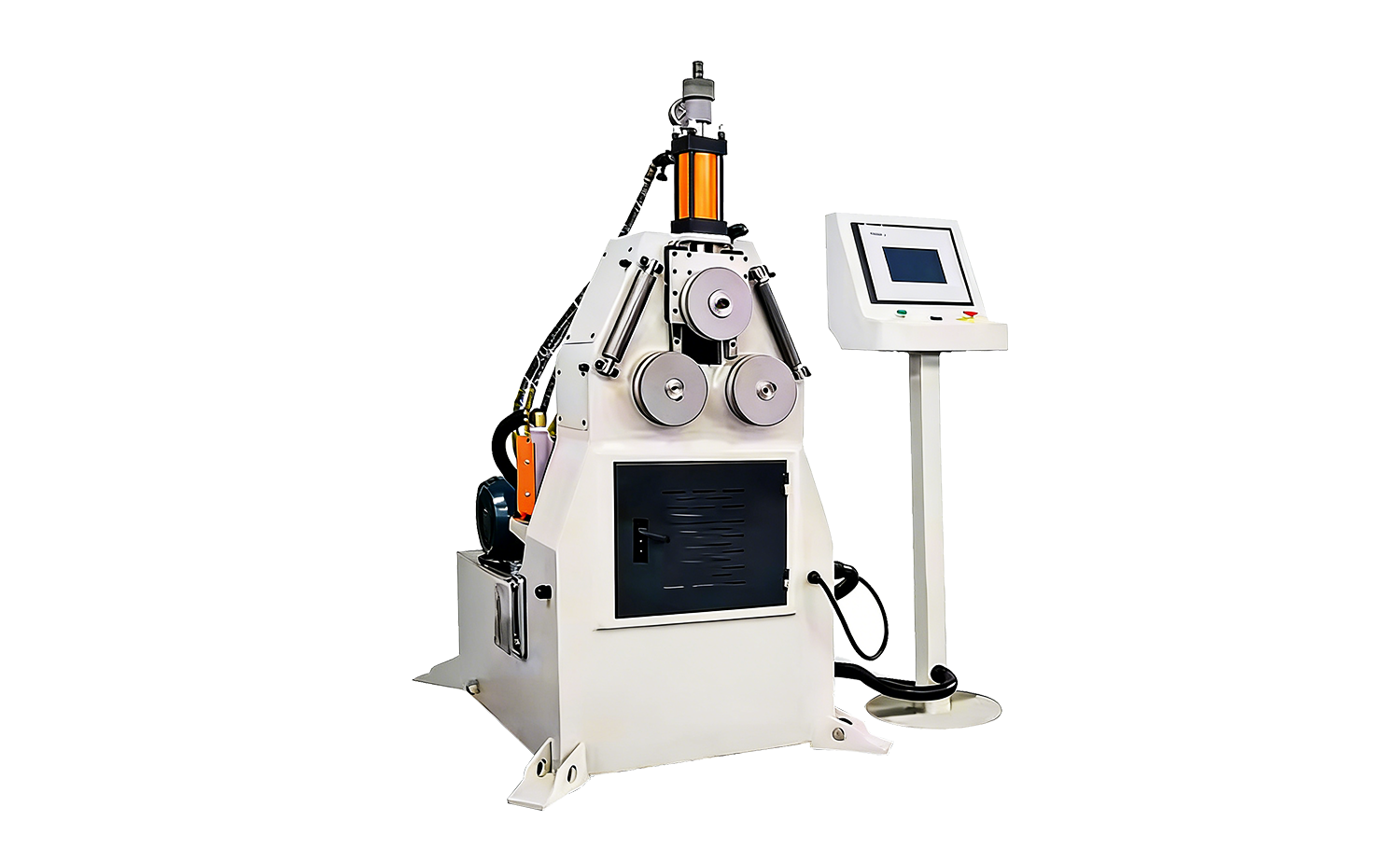
- CNC Series Tube Roll Bending Machine with Three-Roller Drive
- CNC S Series Fully Automatic Tube Bending Machine with Optional Simulation Function
- CNC L Series Fully Automatic Tube Bending Machine with Servo-Hydraulic Control
- CNC Series Tube Roll Bending Machine for Metal Profiles
- High Precision CNC Tube Roll Bending Machine
How Does Variable Radius Tube Bending Work with CNC Multi-Radius and Roll Bending Machines?
Date:Sep 04, 2026
Content
- 1 The Two Reliable Routes to a Variable Radius
- 2 CNC Multi-Radius Bending Machines for Tight and Programmable Curves
- 3 Roll Bending for Large and Gradually Changing Radii
- 4 Key Technical Factors to Check Before You Buy
- 5 Real Industries That Benefit from Variable Radius Bending
- 6 A Practical Decision Guide
Variable radius tube bending is not a single machine process. In practice, it is usually achieved by combining a CNC draw bender with a roll bender, or by selecting a machine that can change the bend radius within the same tube. Consider a bent tube for an automotive exhaust line. The first bend may need to be tight, the second has to be a long sweeping transition, and the final section must follow a soft arc to clear the chassis. A fixed-radius machine would require separate tooling, multiple setups, and often welded joints. A variable radius approach keeps the tube continuous, reduces production risk, and improves part reliability.
The Two Reliable Routes to a Variable Radius
There are two practical ways to produce a variable radius on the same tube. The first method uses a CNC tube bending machine with multi-radius capability. This approach works well for compact bends, small diameters, and high-volume production. The second method uses a roll bending machine with three or more rollers. This is better for large-radius arcs, thin-walled tubes, and gradual changes in curvature.
The choice is not about which method is better in general. It is about matching the method to the tube diameter, wall thickness, bend radius, and production volume. In many shops, the two machines work together on the same project.
- CNC draw bending is precise, repeatable, and handles tight radii with mandrel support.
- Roll bending is capable of large and gradual radius changes on long sections.
- A combined approach uses draw bending for tight features and roll bending for sweeping curves.
CNC Multi-Radius Bending Machines for Tight and Programmable Curves
A CNC multi-radius bender is a draw bending machine that can change the bend radius from one bend to the next within the same tube. The operator programs the feed length, bend angle, and bend radius for each step. The machine positions the tube, clamps it, and forms the bend with high repeatability.
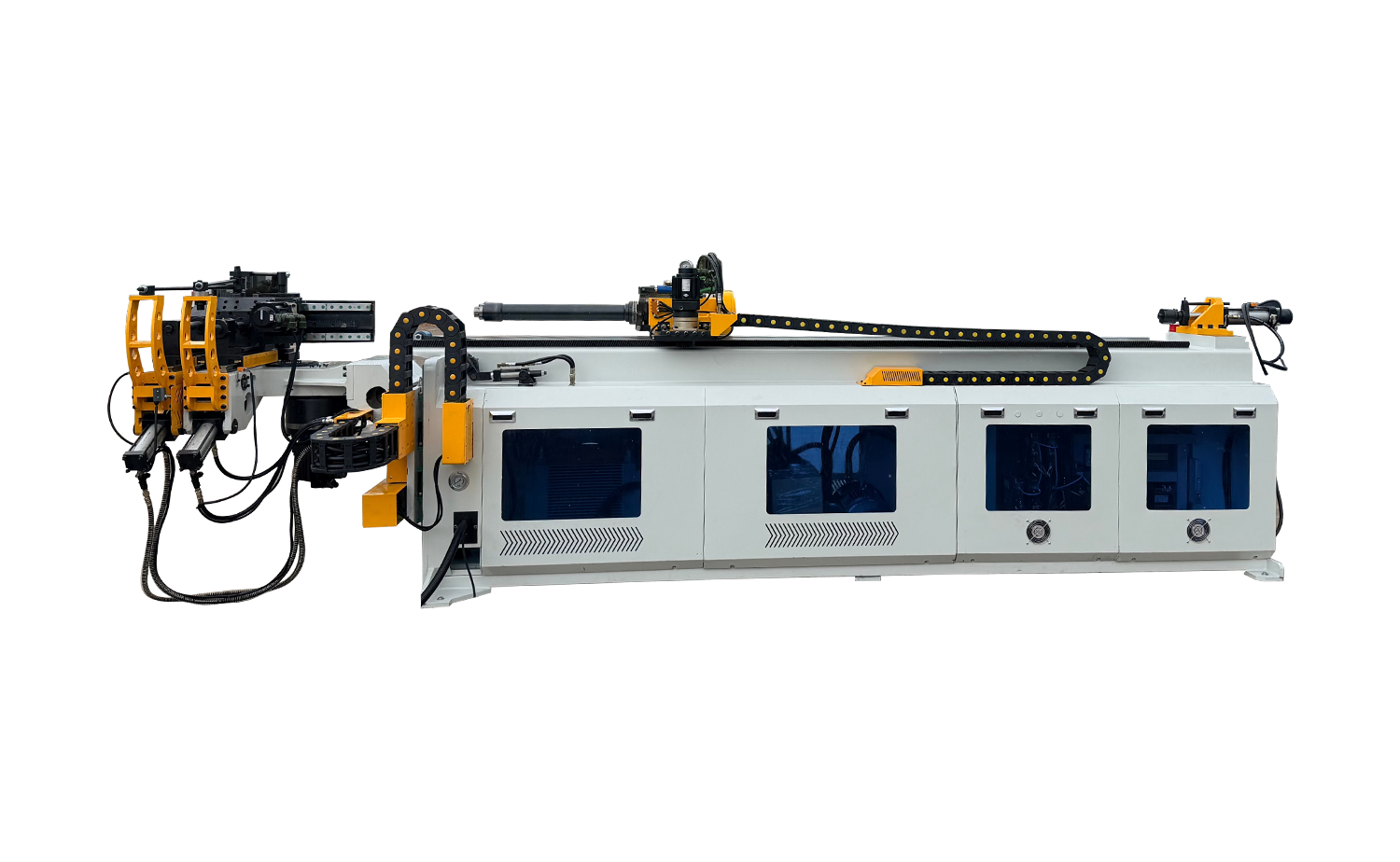
Because the tooling supports the inner wall, these machines handle thin-walled tubes and small bend radii without collapse. Wall thinning stays within controlled limits, and ovality can be held to a narrow range. A CNC M-series full-automatic multi-radius tube bending machine is designed for exactly this type of work. It combines servo-hydraulic control with a multi-radius forming head, which makes it suitable for automotive exhausts, structural furniture, and HVAC components.
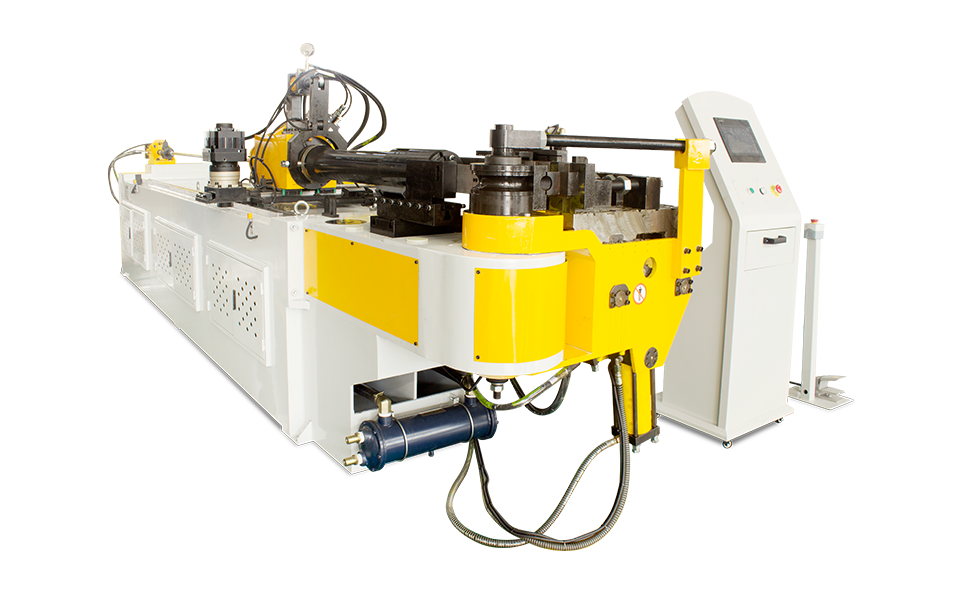 CNC M Series Fully Automatic Multi-Radius Tube Bending MachineDesigned for thin-walled tubes and small bend radii, this servo-hydraulic machine supports repeatable production with controlled wall thinning and ovality, ideal for automotive exhausts, furniture, and HVAC parts.View Product →
In a production environment, the main advantage is repeatability. Once the program is saved, the operator can run the same part in the afternoon or next month without renegotiating the geometry. The only change needed is the material lot or the die setup for a different diameter.
Roll Bending for Large and Gradually Changing Radii
Roll bending is the second route to a variable radius. A three-roller machine passes the tube through rotating dies, producing a smooth, variable curve. By changing the position of the center roller, the operator can increase or decrease the radius during the pass. This makes it possible to start a bend at a large radius and gradually tighten it, or the opposite, without stopping the process.
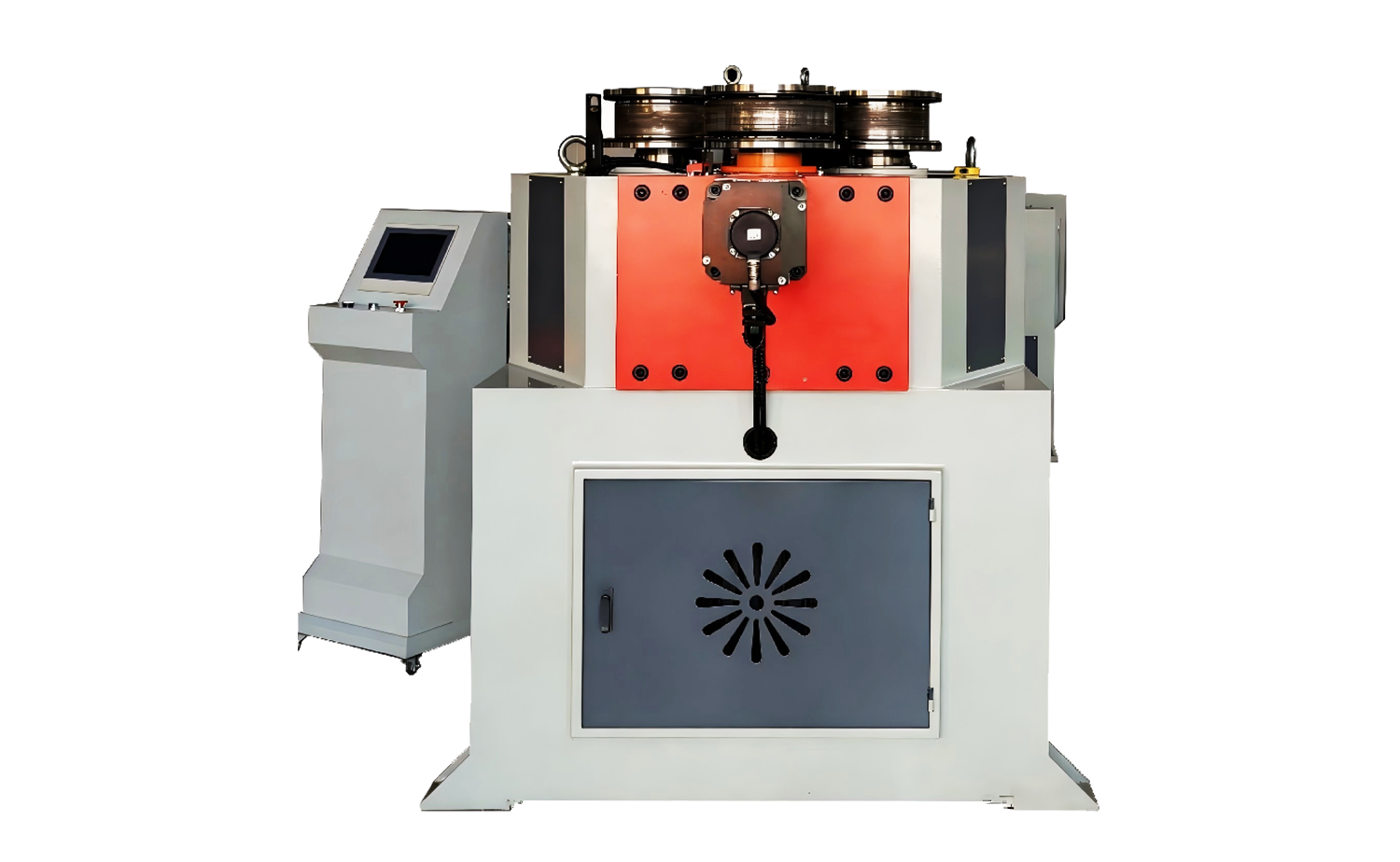
Roll bending is especially useful for long arcs with a radius that changes gradually, such as architectural elements, solar panel frames, and large-diameter process piping. It also works well on aluminum and other soft alloys, where small bend radii without mandrel support would be risky. A CNC three-roller tube roll bending machine gives the operator precise control over the roller position, which means the radius can be adjusted on the fly. This is a straightforward way to achieve a continuous variable radius on a long section.
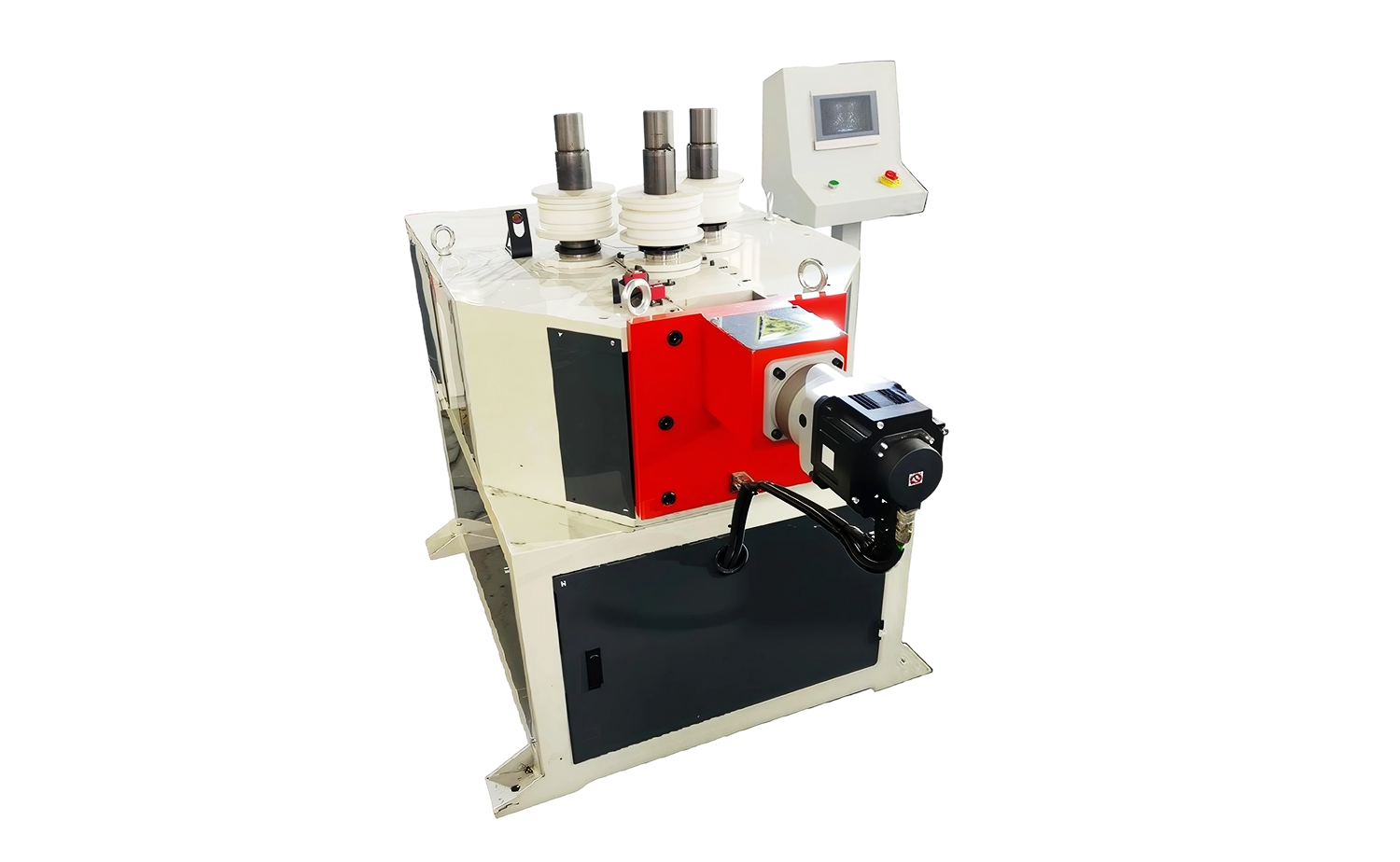 CNC Three-Roller Tube Roll Bending Machine for Metal ProfilesOffers precise control over roller position to achieve continuous variable radii on long sections, suitable for architectural elements, solar frames, and large-diameter piping without mandrel support.View Product →
The trade-off is lower precision on tight radii. Roll bending is not a substitute for draw bending when the part needs a clean, sharp corner or a tightly controlled wall thickness.
Key Technical Factors to Check Before You Buy
Variable radius bending adds complexity, so the purchasing decision depends on a few critical parameters.
- Tube outside diameter (OD) and wall thickness.
- Minimum and maximum bend radius.
- Wall thinning allowance.
- Springback compensation.
- Whether mandrel support is required.
- Programming capability and tooling setup.
Wall thinning is one of the key risks. When a tube is bent, the outside wall stretches and the inside wall compresses. If the bend radius is too small for the wall thickness, the outside wall may crack or thin beyond the design limit. Springback is another issue. After bending, the tube springs back slightly, so the machine must compensate for this in the program. Ask the supplier for a sample bend on your actual tube material before finalizing the purchase.
Real Industries That Benefit from Variable Radius Bending
Variable radius bending is used across many industries, but a few stand out because their parts are very difficult to make with one fixed bend radius. In automotive manufacturing, the exhaust system often requires a combination of tight and gentle bends to fit the underbody structure. The same applies to HVAC piping, where refrigerant lines need to follow the internal layout of a unit without leaking or creating pressure drop.
In aerospace, fuel lines and structural frames benefit from continuous curvature because it reduces stress concentrations and simplifies assembly. In architecture, curved façade elements and handrails use gradual radius changes to create smooth visual lines. In fitness equipment and furniture, variable radius frames improve both aesthetics and structural performance.
Two common examples illustrate the need clearly. On one hand, automotive manufacturing relies on variable radius bending for compact underfloor layouts where multiple tight bends must connect to larger arches. On the other, HVAC piping uses the same approach to route copper or aluminum tubing efficiently, often with a small-radius bend followed by a long, gentle sweep.
A Practical Decision Guide
Choose a CNC multi-radius bender if your parts require tight bends, high repeatability, and high production volume. Choose a roll bender if you need large-radius arcs that change gradually over a long length. If your shop works on both types of parts, consider a machine that can handle both.
| Feature | CNC Multi-Radius Bender | Roll Bender |
|---|---|---|
| Preferred tube diameter | Small to medium | Medium to large |
| Typical bend radius | Tight to medium | Large to very large |
| Wall thinning control | Strong with mandrel | Good for thin walls with care |
| Repeatability | High | Medium to high |
| Best for | Automotive, HVAC, furniture | Architectural, structural, process piping |
A CNC multi-radius machine with a roll bending attachment is one option. Another is to buy the two machines separately and plan the workflow around the part geometry. Either way, the correct decision starts with the geometry of the pipe itself. Get a tube sample, run a test bend, and verify the radius, ovality, and wall thinning before signing off.




Copyright © 2025 Huashun Technology All Rights Reserved.
Custom Precision Tube Forming Machine Manufacturers