
 English
 русский
 Español
- NC L Series High-performance Hydraulic Pipe/Tube Bending Machine
- NC M Series Hydraulic Tube Bending Machine with Mandrel Control
- SS Series Fully Automatic CNC Pipe Bending Machine
- CNC Rotary Head Pipe Bending Machine- Bi-Directional
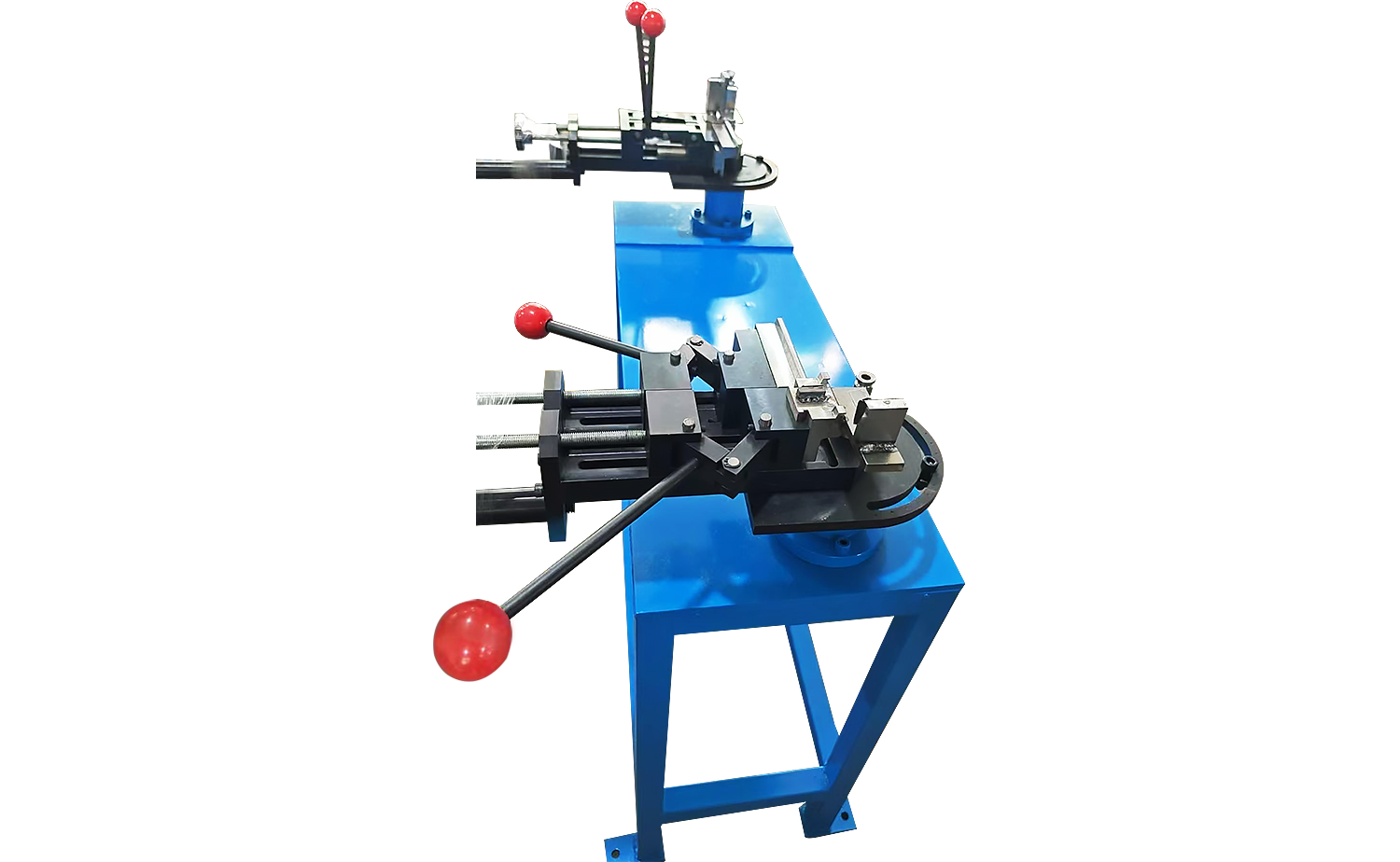
- MS Manual Simple Pipe Bending Machine
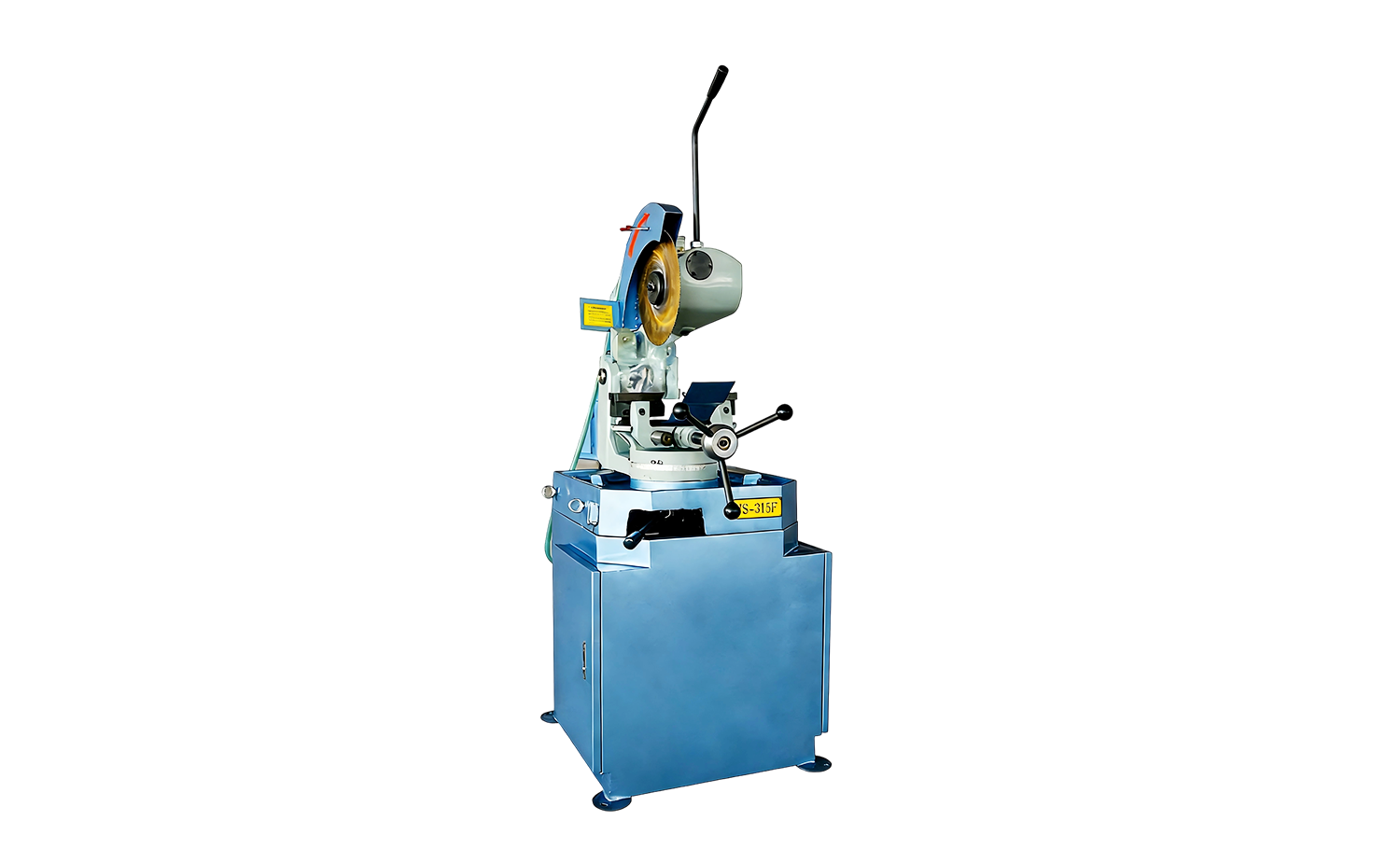
- F Series Manual Pipe Cutting Machine
What Is an NC Pipe Bending Machine?
Date:Apr 13, 2026
Content
- 1 Core Operating Principle
- 2 Machine Configurations and Design Variants
- 3 NC Controller Technology
- 4 Key Specifications and Selection Parameters
- 5 Tooling: The Interface Between Machine and Metal
- 6 Applications Across Industries
- 7 Programming Methods: From LRA to 3D Import
- 8 Maintenance, Tooling Life, and Production Optimisation
- 9 NC vs. CNC Pipe Bending: Choosing the Right Technology Level
- 10 Buying Guide: What to Evaluate Before Purchasing
An NC pipe bending machine — short for Numerically Controlled pipe bending machine — is an industrial tube-forming system that uses a programmable digital controller to execute precise, repeatable bending operations on metallic and thermoplastic pipes. Unlike fully manual or hydraulic pipe benders, which rely on operator skill and mechanical stops, an NC pipe bending machine stores bending parameters — angle, speed, feed length, and rotation — in numerical form and executes them through servo-driven or electro-hydraulic actuators.
The distinction between NC and CNC (Computer Numerical Control) is worth clarifying at the outset. An NC system reads a fixed program from punched tape, a stored sequence, or a front-panel input and executes it without closed-loop feedback during the bend cycle. A CNC system adds real-time feedback, on-the-fly program editing, and often a graphical human-machine interface (HMI). In common industrial usage, however, "NC pipe bending machine" is frequently used as a broad category encompassing both pure NC and entry-level CNC machines, particularly in the hydraulic tube-bending segment.
NC pipe bending machines are workhorses of the metalworking industry. They shape pipe and tube stock for automotive exhaust systems, HVAC ductwork, structural handrails, hydraulic lines, boiler manifolds, and furniture frameworks. Their combination of programmable precision, mechanical robustness, and relatively accessible price point has made them the dominant bending technology in small-to-medium fabrication shops worldwide.
Core Operating Principle
The fundamental mechanics of pipe bending have not changed in generations: a pipe is clamped against a bend die, a pressure die forces the pipe against the die's radius, and the bend arm rotates through the programmed angle. What the NC controller adds is deterministic, repeatable command of every motion parameter in this sequence.
Most NC pipe bending machines operate on the rotary-draw bending principle, which produces the tightest radii with the least wall thinning and ovality. The bend die — also called the former die — defines the centreline radius (CLR) of the finished bend. During the bend stroke, a mandrel inserted inside the pipe prevents collapse at the intrados, while a wiper die positioned at the tangent point suppresses wrinkling at the inside of the bend.
Key Motion Axes in a Typical NC Pipe Bender:
B-axis → Bend rotation (degrees of arc)
Y-axis → Carriage feed (pipe advance between bends)
C-axis → Pipe rotation (positioning the plane of the next bend)
X-axis → Pressure die advance / boost
Z-axis → Mandrel retract (on machines with servo mandrel control)
B-axis → Bend rotation (degrees of arc)
Y-axis → Carriage feed (pipe advance between bends)
C-axis → Pipe rotation (positioning the plane of the next bend)
X-axis → Pressure die advance / boost
Z-axis → Mandrel retract (on machines with servo mandrel control)
The NC controller sequences these axes according to the bend program. For a simple two-bend elbow, the program might read: rotate B-axis to 90°, retract mandrel, release clamp, advance Y-axis 180 mm, rotate C-axis 45°, engage clamp, advance mandrel, rotate B-axis to 90°. This entire sequence executes in seconds with sub-degree angular precision.
Springback compensation is a critical feature of NC bending systems. All metals exhibit elastic recovery after the bending load is removed, causing the bend angle to open slightly. The NC controller applies an over-bend correction — typically 1°–5° depending on material, wall thickness, and bend radius — so that the finished angle matches the nominal design dimension after springback. Springback tables are stored in the controller and can be empirically refined through trial bends.
Machine Configurations and Design Variants
Single-Stack vs. Multi-Stack Tooling
Single-stack NC pipe benders carry one set of tooling at a time and require manual changeover when switching pipe diameters or bend radii. Multi-stack machines — also called multi-radius or turret benders — mount several sets of bend dies on a rotating turret or stacked spindle, enabling automatic die selection under NC program control. Multi-stack machines dramatically reduce changeover time in high-mix production environments where multiple diameters or CLRs appear in a single component.
Left-Hand, Right-Hand, and Twin-Head Machines
A right-hand bender rotates its bend arm clockwise; a left-hand bender rotates counter-clockwise. Twin-head machines carry both orientations simultaneously, allowing complex components with bends in alternating directions to be completed in a single clamping — eliminating re-chucking and its associated positional error. Twin-head NC pipe benders are standard equipment in automotive exhaust manifold and chassis rail production.
Hydraulic vs. All-Electric NC Benders
The majority of NC pipe bending machines in current production use electro-hydraulic actuation: servo-controlled proportional valves regulate hydraulic cylinder motion. This architecture delivers high clamping and pressure-die forces at relatively low capital cost. In recent years, all-electric NC benders — driven entirely by servo motors through ball screws and rack-and-pinion transmissions — have gained market share due to their lower energy consumption (no continuously running hydraulic pump), faster axis positioning, cleaner operation, and easier integration with Industry 4.0 data systems. All-electric machines command a price premium but offer total cost-of-ownership advantages in high-cycle applications.
NC Controller Technology
The controller is the defining component of an NC pipe bending machine. Early NC benders used relay-logic or proprietary dedicated controllers with limited program capacity. Contemporary machines are equipped with industrial PLC-based controllers — from Siemens, Mitsubishi, Beckhoff, or proprietary OEM platforms — running on ruggedised touchscreen HMIs with the following capabilities:
- Storage of hundreds of bend programs with multi-level part naming and revision tracking
- Graphical 2D or 3D preview of the programmed bend sequence before machine execution
- Springback compensation tables per material grade and wall thickness
- Automatic calculation of Y-axis feed from part geometry (LRA — Length, Rotation, Angle — programming)
- Production counting, cycle time logging, and error event recording
- Ethernet/USB connectivity for program transfer and remote diagnostics
Higher-end NC pipe bending machines incorporate angle measurement feedback via in-process sensors (contact or laser-based) that measure the actual achieved bend angle before mandrel retraction and automatically apply a compensating re-bend if the measured angle falls outside tolerance. This closed-loop correction brings the machine functionally into CNC territory and is increasingly offered as a standard feature rather than an option.
Key Specifications and Selection Parameters
Selecting the correct NC pipe bending machine for a given application requires matching machine specifications to pipe stock characteristics and production requirements. The following table summarises the principal specification dimensions and their practical significance:
| Specification | Typical Range | Practical Significance |
|---|---|---|
| Max. Pipe OD | 12 mm – 325 mm | Defines the largest tube the machine can bend; dictates clamp and die force requirements |
| Max. Wall Thickness | 0.5 mm – 20 mm | Thicker walls require higher bending force; affects mandrel and wiper die life |
| Min. Centreline Radius (CLR) | 1× – 3× OD | Tighter radii require more powerful mandrel support; increases wrinkling risk |
| Max. Bend Angle | 180° – 200° | Most rotary-draw machines exceed 180° to accommodate springback over-bending |
| Number of Axes | 3 – 7 | More axes enable more complex bend sequences without re-chucking |
| Bend Speed | 5° – 90° per second | Higher speed increases throughput; too fast can cause wrinkling in thin-wall tube |
| Program Capacity | 50 – 9,999 programs | Critical for high-mix production; defines how many part numbers can be stored |
| Angle Accuracy | ±0.1° – ±0.5° | Tighter tolerance machines command higher price; required for aerospace and precision hydraulic work |
| Drive Type | Hydraulic / All-electric | All-electric: faster, cleaner, lower energy; hydraulic: higher force, lower initial cost |
| Tooling Stack | Single / 2 – 6 stack | Multi-stack eliminates manual changeover; essential for multi-diameter or multi-radius parts |
Selection Note: For structural tube in mild steel and stainless steel, a D/t ratio (outer diameter to wall thickness) above 15 generally signals the need for mandrel bending support to prevent collapse. For high-strength alloys (Inconel, titanium), expect springback values 3–8× higher than mild steel and specify a machine with in-process angle measurement accordingly.
Tooling: The Interface Between Machine and Metal
An NC pipe bending machine is only as precise as its tooling. The tool set for rotary-draw bending comprises five principal components, each with a specific functional role:
- Bend die (former die) — the master radius reference; the pipe wraps around its profile during the bend stroke. Manufactured from hardened tool steel or ductile iron; radius ground to tolerance of ±0.05 mm on the CLR groove.
- Clamp die — grips the pipe against the bend die upstream of the tangent point; must exert sufficient normal force to prevent the pipe from slipping during the bend without deforming the wall. Often serrated or knurled on the pipe-contact face for light-wall material.
- Pressure die — applies lateral force to the pipe on the outside of the bend, tracking with the bend arm during the stroke. A boost pressure die — driven axially by a hydraulic or servo actuator — feeds pipe material into the bend zone, reducing wall thinning at the extrados.
- Wiper die — positioned at the intrados tangent point, its knife-edge geometry prevents buckle initiation as the inner wall of the bend compresses. The most wear-intensive tooling component; typically made from bronze or aluminium alloy to reduce galling against the workpiece.
- Mandrel — inserted inside the pipe and positioned with its nose at or slightly ahead of the bend tangent point. Ball-jointed mandrels — consisting of a mandrel body with one to four articulating ball links — support the pipe wall through the bend arc. Mandrel retraction timing, controlled by the NC program, is critical: too early causes collapse; too late causes mandrel marks on the pipe ID.
Tooling material selection depends on pipe material, surface finish requirements, and production volume. For stainless steel bending, chrome-plated tool steel or carbide-tipped wiper dies are preferred to minimise galling. For aluminium, polished aluminium-bronze tooling reduces surface scoring. High-volume automotive applications use through-hardened D2 or M2 steel tooling with expected lives of 50,000–200,000 bends before reconditioning.
Applications Across Industries
Automotive and Commercial Vehicles
Automotive exhaust systems, chassis rails, roll cages, seat frames, and fuel lines are among the highest-volume applications for NC pipe bending machines. The industry demands tight angular tolerances (±0.5° or better), consistent springback compensation across production lots, and rapid program changeover between model variants. Twin-head all-electric NC benders have become the reference standard for exhaust component lines, where components frequently include six or more bends in alternating planes with no straight inter-bend segments.
HVAC and Refrigeration
Copper and aluminium tube bending for refrigerant circuits, heat exchanger coils, and HVAC manifold assemblies represents a large and steady market for smaller-bore NC benders (12 mm – 76 mm OD). The challenge in this segment is maintaining roundness and surface finish in thin-wall tube (D/t ratios of 20–40 are common), which demands precise mandrel support, optimised lubrication, and controlled bend speed.
Oil, Gas, and Process Piping
Large-bore NC pipe bending machines — handling diameters from 100 mm to 325 mm — are used to fabricate bends for subsea pipelines, offshore platform piping, and chemical process plant installations. These applications often specify tight dimensional tolerances on bend angle and ovality, and may require bending of high-strength exotic alloys (duplex stainless, Inconel 625, titanium Grade 2) that demand high-force machines with sophisticated springback compensation algorithms.
Furniture, Architecture, and Structural Fabrication
Square and rectangular hollow section (RHS) bending for furniture frames, architectural handrails, and structural trusses uses NC bending machines with section-specific tooling designed to control the characteristic distortion modes of non-circular profiles. Profile bending (also called section bending or roll bending) for large-radius architectural curves uses a different machine type — a three-roll bender — but short-radius bends in structural hollow sections are routinely produced on NC rotary-draw machines.
Programming Methods: From LRA to 3D Import
NC pipe bending machines support several programming approaches depending on controller sophistication and workshop workflow:
- LRA (Length–Rotation–Angle) programming — the operator enters, for each bend, the straight length from the previous bend tangent point (L), the rotation of the pipe about its centreline axis (R), and the bend angle (A). This is the universal programming language of pipe bending and is understood by every NC controller on the market.
- Cartesian XYZ coordinate programming — the operator enters the 3D endpoint coordinates of each straight segment. The controller solves the geometric transformation to LRA parameters internally. This method is faster when working from CAD drawings that specify pipe routing in coordinate space.
- CAD/CAM import — advanced NC bending controllers accept IGES, STEP, or proprietary file formats from tube-design software packages (Romer, Numalliance Bend-It, Unison Opt2Sim, Schwarze-Robitec BendSim). The design system models the component in 3D, checks for tooling collisions, simulates springback, and exports a verified LRA program directly to the machine controller. This workflow eliminates manual program entry errors and is standard practice in automotive Tier 1 supply chains.
- Reverse engineering / teach-in — for duplicating an existing bent component without CAD data, some NC benders support a teach-in mode where a reference part is manually traced or digitised, and the controller records the resulting LRA sequence as a new program.
Maintenance, Tooling Life, and Production Optimisation
Reliable NC pipe bending performance depends on a disciplined maintenance regime targeting the machine's highest-wear interfaces. Mandrel rods and ball links are subject to cyclic bending stress and should be inspected for fatigue cracking at intervals specified by the manufacturer — typically every 10,000–25,000 bends depending on pipe material and CLR. Wiper die tips, which experience the highest contact stress in the tool set, should be measured for profile wear regularly; a worn wiper tip that no longer sits flush at the tangent point will cause wrinkling even in materials that previously bent cleanly.
Hydraulic circuit maintenance — filter changes, oil sampling for particle count and moisture, and actuator seal inspection — is the most common source of unscheduled downtime on electro-hydraulic NC benders. Keeping hydraulic oil within the manufacturer's specified cleanliness class (typically ISO 4406 class 17/15/12 or better) prevents valve spool wear that progressively degrades motion control accuracy.
On the production optimisation side, lubrication management is disproportionately influential on both bend quality and tooling life. Mandrel lubricant — typically a water-soluble drawing compound, sulphurised oil, or synthetic gel — reduces the friction between the mandrel ball links and the pipe ID, preventing the characteristic "mandrel marks" (internal surface scratches) that are a quality rejection criterion in most specifications. Correct lubrication also reduces wiper die wear by a factor of three to five compared with dry or under-lubricated bending.
NC vs. CNC Pipe Bending: Choosing the Right Technology Level
For many fabrication shops, the choice between a conventional NC pipe bending machine and a full CNC system with in-process measurement is a critical capital decision. The following considerations frame that choice:
- Part complexity: Components with more than five bends in multiple planes benefit from CNC control with 3D simulation to verify collision-free sequences before any metal is bent.
- Tolerance requirements: Aerospace, precision hydraulic, and medical device applications that specify ±0.5° or better on all angles require in-process angle measurement that is effectively a CNC feature.
- Material variability: High-strength alloys with batch-to-batch springback variation require adaptive closed-loop correction — a CNC capability.
- Production volume and mix: High-volume, low-mix production (e.g., a single exhaust component in tens of thousands) amortises CNC investment rapidly. Low-volume, high-mix job shops may find that the programming efficiency of CNC's CAD/CAM integration justifies the premium even at lower volumes.
- Operator skill availability: CNC machines with graphical simulation and automatic program validation are substantially less dependent on experienced operator judgment than NC machines with purely parametric input.
For standard structural, HVAC, and general industrial fabrication where material grades are consistent, volumes are moderate, and angular tolerances are in the ±1° range, a well-specified NC pipe bending machine delivers excellent value with lower capital outlay, simpler maintenance, and faster operator training cycles than full CNC alternatives.
Buying Guide: What to Evaluate Before Purchasing
Prospective buyers of NC pipe bending machines should conduct a structured evaluation covering the following areas before committing to a supplier:
- Pipe specification range: Confirm that the machine covers your full range of pipe ODs, wall thicknesses, and materials — including future product lines, not just current requirements. Specifying marginally is a common and costly mistake.
- Tooling availability and cost: Proprietary tooling systems lock buyers into a single supplier for every future die set. Open-standard tooling interfaces allow competitive sourcing. Request a quote for three to five representative die sets as part of the machine evaluation.
- Controller ergonomics and connectivity: Operate the HMI yourself. A controller that is logical and fast to program reduces cycle time and training cost far more than marginal mechanical specification differences.
- After-sales support network: Verify service engineer availability in your region, spare parts lead times for critical components (hydraulic valves, servo drives, encoder modules), and the supplier's commitment to controller software updates over the machine's expected life.
- Demonstration with your material: Insist on a bending demonstration using your actual pipe stock and target specifications before purchase. A reputable manufacturer will accommodate this request; one that declines should be viewed with caution.
- Total cost of ownership modelling: Compare hydraulic and all-electric options on energy cost, maintenance schedule, and expected downtime over a five-year horizon, not purchase price alone. For two-shift operation, energy savings from all-electric drive can offset the price premium in 18–36 months.
The NC pipe bending machine market offers solutions at every performance and price level, from manual-assist NC benders for job shops at under $20,000 to fully automated multi-axis CNC bending cells with robotic loading and vision-based inspection at $500,000 and above. Anchoring the selection to documented production requirements — not brand preference or list-price positioning — consistently produces better outcomes.
Recommended Articles


Copyright © 2025 Zhangjiagang HuaShun Machinery Manufacture Co.,Ltd. All Rights Reserved.
Custom Precision Tube Forming Machine Manufacturers