
 English
 русский
 Español
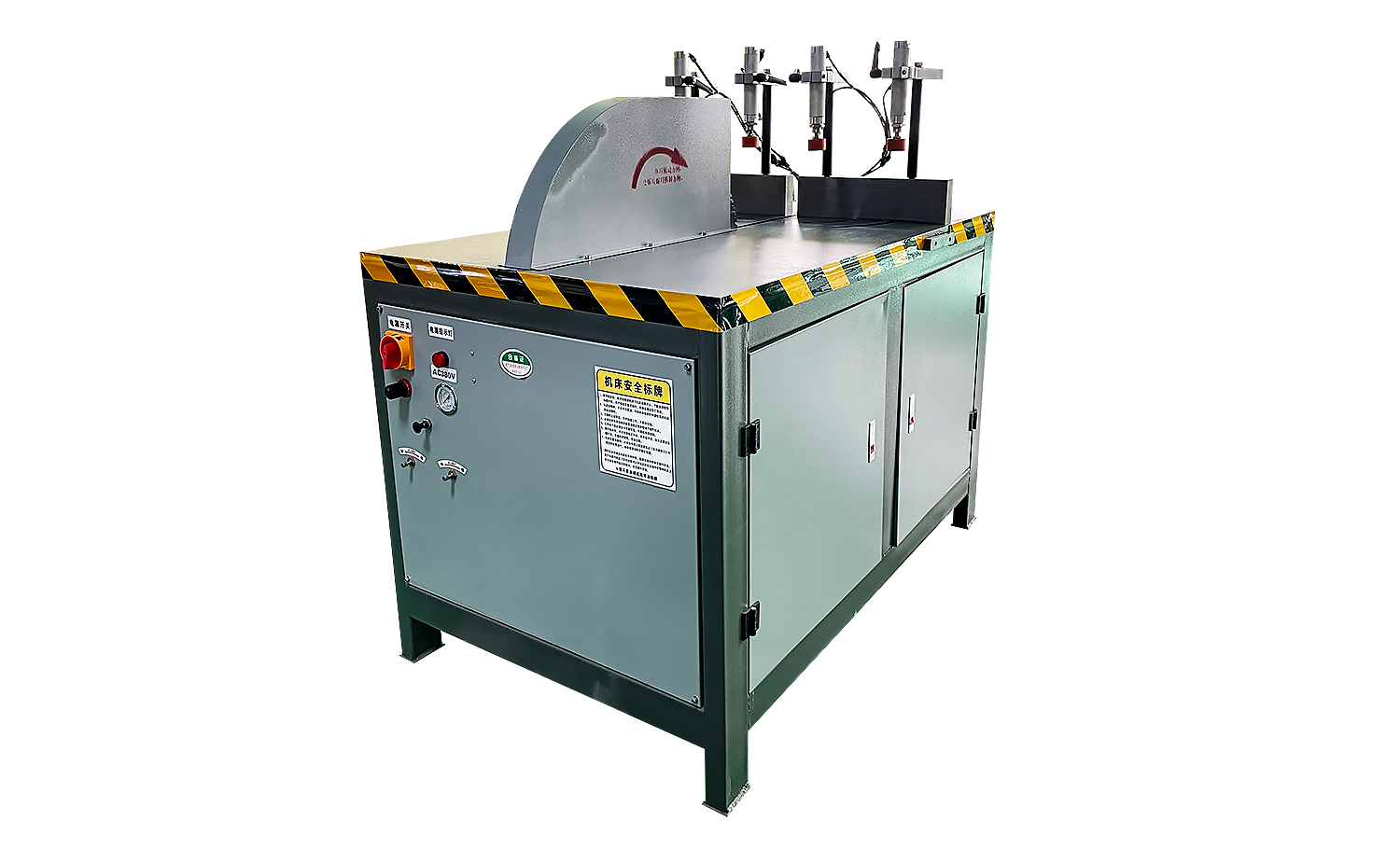
- ES550 Semi-Automatic Aluminum Cutting Machine for Big Profiles and Tubes
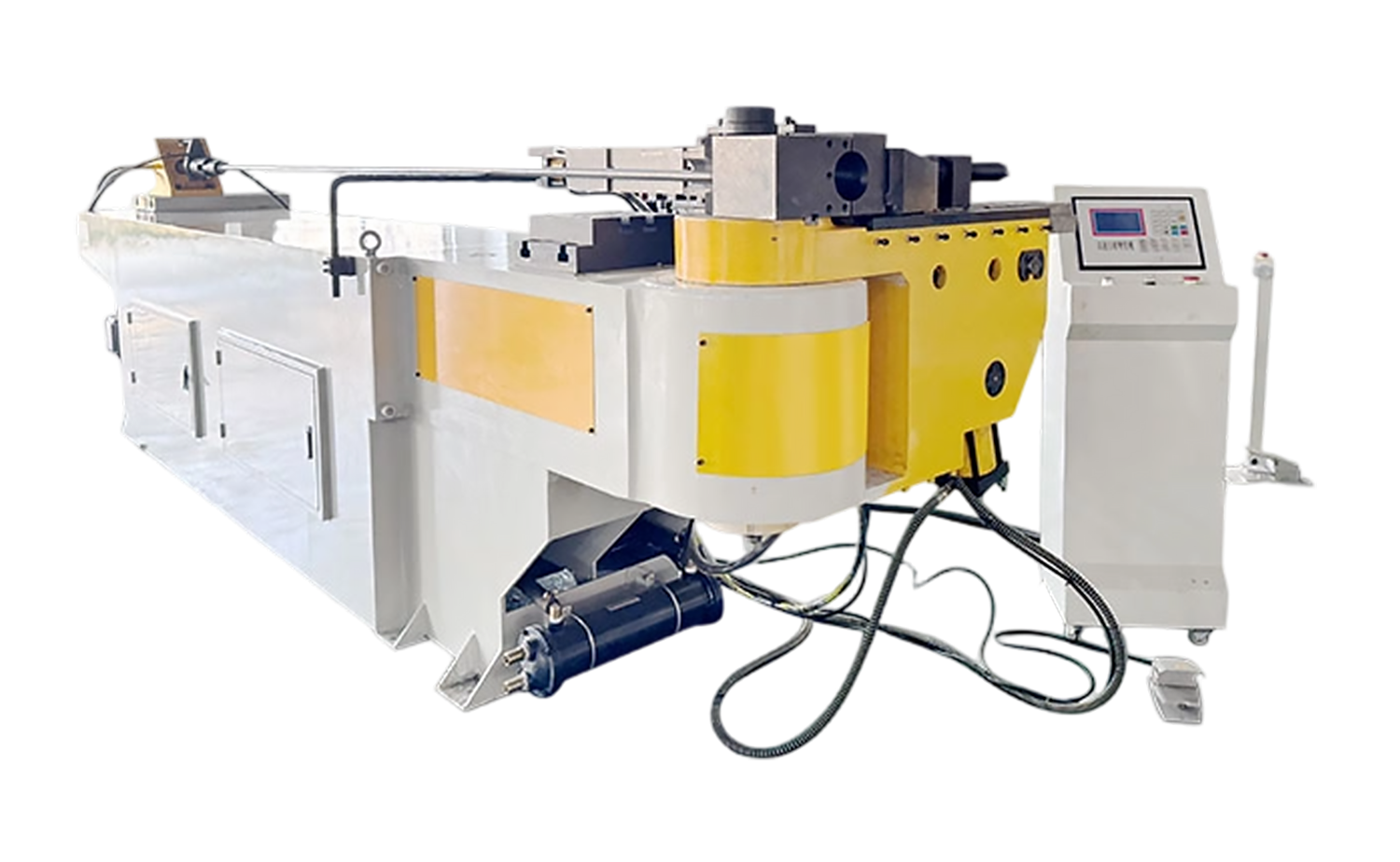
- NC M Series Hydraulic Tube Bending Machine with Mandrel Control
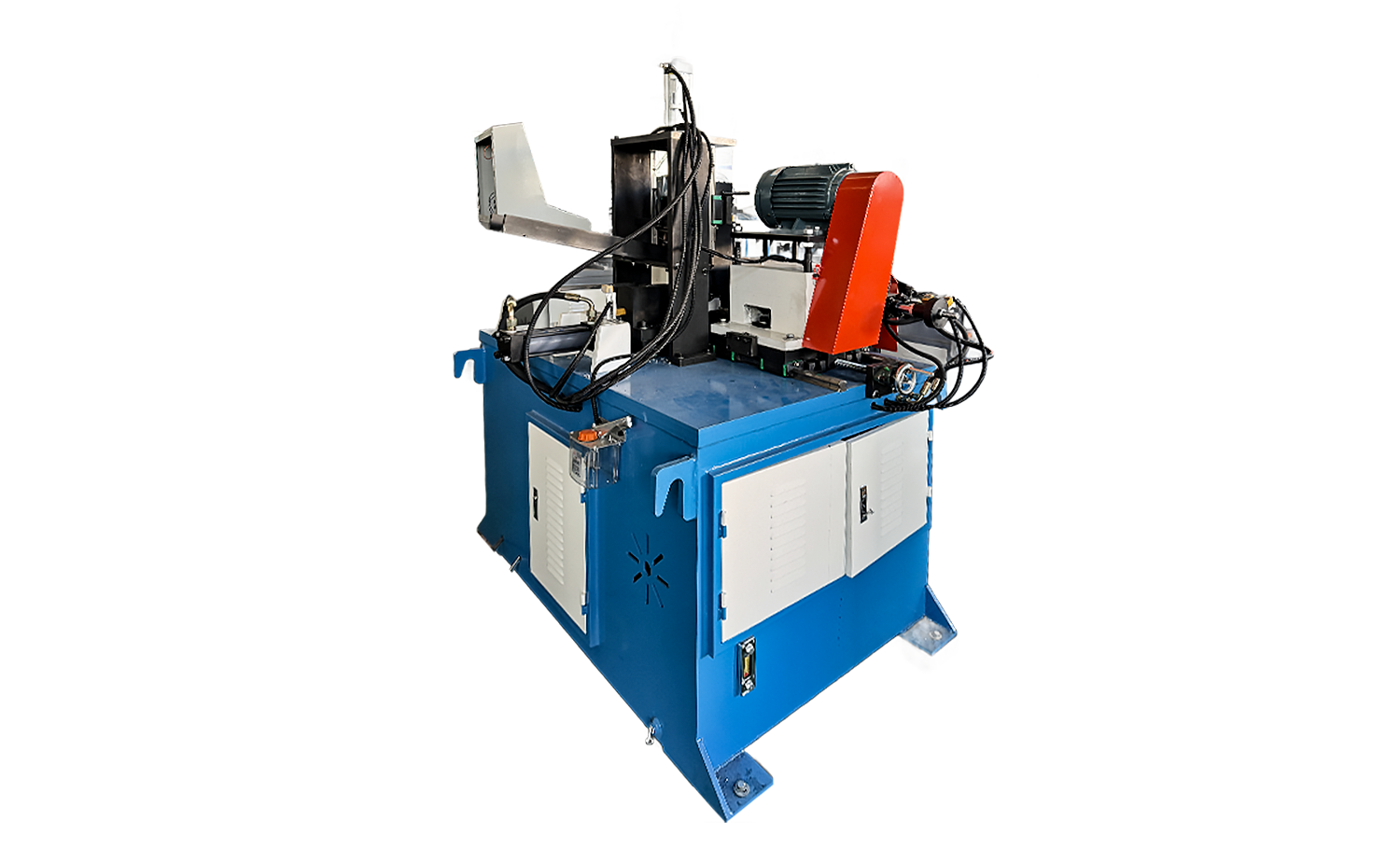
- DEF50PVS Servo Tube Chamfering Machine for Short Metal and PVC Tubes
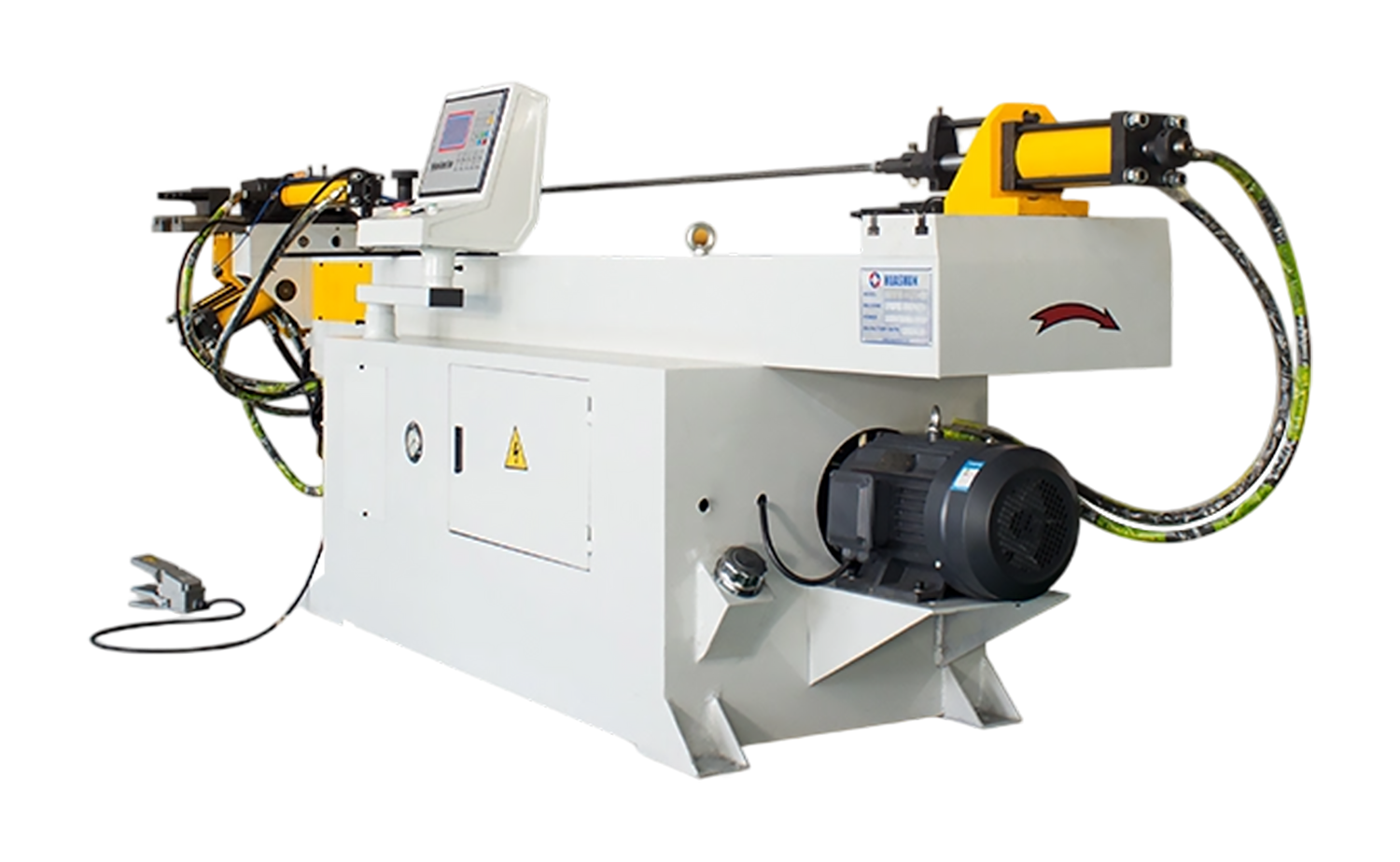
- NC S Series Mandrel Hydraulic Tube Bender with Easy-Program Setting
- SC-30 Chipless Tube Straightening and Cutting Machine
- CNC Series Automatic Single Cylinder Hydraulic Punching Machine
What Are Tube Punching, Tube Arc Punching, and Hole Punching Machines, and How to Choose, Operate, and Maintain Them?
Date:Apr 09, 2026
Content
- 1 Precision in Metal Fabrication: Why Punching Technology Matters
- 2 What Is a Tube Punching Machine? Components, Function, and Advantages
- 3 Understanding Tube Arc Punching Machines: Notching for Structural Joints
- 4 The Versatility of the Industrial Hole Punching Machine
- 5 Key Factors to Consider When Buying Tube and Hole Punching Machines
- 6 Maintenance and Safety for Tube and Hole Punching Equipment
- 7 References
Precision metal fabrication depends on the ability to remove material cleanly, repeatedly, and quickly from tube and plate stock without distorting the workpiece, generating secondary burrs that require additional finishing, or introducing dimensional errors that accumulate across an assembly. The Tube Punching Machine, the Tube Arc Punching Machine, and the industrial Hole Punching Machine each address a specific segment of this requirement, and together they represent the core punching technology suite for sheet metal workshops, structural fabrication shops, furniture manufacturers, and automotive component producers operating across the full range of production volumes from custom one off work to high volume automated production.
The direct answer for any fabricator evaluating these machine categories is this: a Tube Punching Machine is the correct investment when your primary need is creating precise circular or shaped holes in tubular sections without oval distortion of the tube wall; a Tube Arc Punching Machine is required when tubes must be notched at their ends to create saddle joints for welded structural connections, a task that requires contoured die geometry rather than simple hole punching; and a Hole Punching Machine in its flat plate configuration handles sheet metal and structural section perforation tasks where the workpiece is flat or only mildly curved and the punching force can be applied perpendicularly to the material surface. Understanding these distinctions, the key technical specifications of each machine type, and the selection and maintenance criteria that determine long term performance is the foundation for making procurement decisions that serve your production requirements for the full service life of the equipment.
Precision in Metal Fabrication: Why Punching Technology Matters
The manufacturing of metal components that must join, align, or connect with other parts depends fundamentally on dimensional accuracy at the hole and notch positions. A hole that is even 0.5 mm out of position on a structural bracket or an automotive frame rail requires rework that consumes time and consumable material, and if the error is not caught before assembly, it may compromise the mechanical integrity of the joint or require expensive corrective action on a partially assembled structure.
Manual drilling, the historical alternative to machine punching for creating holes in metal fabrication, produces acceptable results for prototype work and very low volume production but has significant limitations in a production environment. Drilling is a cutting process that removes material by rotation, and it is inherently slower than punching (which removes material in a single press stroke), produces a different hole edge quality (drilled edges have tool marks and minor burrs that require deburring, while punched edges have a clean shear zone and a minimal rollover on the entry face), and requires pilot marking, drilling, and deburring as three separate operations rather than the single stroke, finished edge result of a machine punch operation.
Production measurements consistently show that a hydraulic Tube Punching Machine operating on mild steel tube can complete a punched hole in 3 to 8 seconds per cycle including positioning time, compared to 45 to 90 seconds for the equivalent manual drill and deburr operation. At a production volume of 200 holes per day, this efficiency difference represents a labor saving of 2 to 4 hours daily that compounds directly into reduced production cost and increased capacity for additional work. This time and quality advantage is the commercial foundation of the entire tube and hole punching machine category and the reason these machines have displaced manual drilling in every production fabrication environment where volume justifies the equipment investment.
What Is a Tube Punching Machine? Components, Function, and Advantages
A Tube Punching Machine is a specialized press designed to create holes in the wall of a circular, square, or rectangular tube section by driving a shaped punch through the tube wall and into a matching die on the opposite side, without collapsing, ovaling, or otherwise distorting the tube's cross sectional geometry. The critical design challenge that distinguishes a dedicated Tube Punching Machine from a generic hole press is the provision of internal support for the tube during the punching stroke, which prevents the inward collapse of the tube wall that would otherwise occur when a punch forces its way through the unsupported curved wall of a hollow section.
Hydraulic Systems in Tube Punching Machines
The power delivery system of a production Tube Punching Machine is almost universally hydraulic in medium to heavy duty machines, for reasons that directly benefit the punching process. Hydraulic actuators generate very high force across a very short stroke with precise force control, which is the ideal force profile for a punching operation: high initial force to initiate the shear, sustained force through the material thickness to complete the punch, and rapid retraction of the punch for fast cycle completion.
Industrial Tube Punching Machines are commonly rated between 10 and 100 tonnes of punching force, with machines in the 20 to 40 tonne class covering the majority of production tubular steel work in wall thicknesses from 1.5 mm to 8 mm in standard mild steel. The hydraulic system maintains this force level consistently throughout the production day without the power output fatigue that affects mechanical flywheel based machines operating on rapid cycle schedules. The hydraulic pressure can also be set precisely to limit the punch stroke depth, protecting the die and the tube from over punching forces that would reduce tooling life.
Die Sets: The Precision Component of Tube Punching
The die set consists of the punch (the male component that penetrates the tube wall) and the die (the female component that receives the punch slug and defines the hole geometry). Die set quality directly determines hole dimensional accuracy, edge quality, punch to die clearance maintenance over thousands of cycles, and the ease of punch slug ejection after each stroke. Key die set specifications to evaluate include:
- Punch and die material: Quality production die sets for mild steel tube punching are manufactured from D2 or equivalent high chromium tool steel (approximately 12 percent chromium, 1.5 percent carbon) heat treated to 58 to 62 HRC hardness. This specification achieves punch life of 50,000 to 150,000 cycles in mild steel before regrinding is required. For stainless steel or high strength steel punching, powder metallurgy tool steels with higher wear resistance are specified.
- Punch to die clearance: The radial clearance between punch and die is typically 5 to 10 percent of the material wall thickness per side. Insufficient clearance causes excessive punch and die wear and may cause punches to break under the additional shear stress; excessive clearance produces a larger rollover zone on the punch entry face and a larger burr on the exit face, reducing hole edge quality. The correct clearance must be specified when ordering die sets for each material type and thickness combination.
- Slug retention and ejection: After each punch stroke, the removed slug must be reliably ejected from the die cavity to prevent slug build up that would damage the die and misalign subsequent punches. Quality die sets incorporate stripper plates and ejection springs that positively remove slugs on the return stroke.
Mandrels: Internal Support for Hole Quality Results
The mandrel is the internal support component that distinguishes a dedicated Tube Punching Machine from a generic flat plate hole press. In a Tube Punching Machine, the die is mounted inside the tube (on or within a mandrel assembly that inserts into the tube bore) rather than below a flat plate. As the punch penetrates the tube wall from outside, the die inside the tube supports the punching force without allowing the tube wall to deflect inward, maintaining the tube's round or rectangular cross section geometry throughout the punch stroke. Without mandrel support, punching a hole in a tube with a wall thickness to diameter ratio below approximately 1:10 would cause the tube to oval or buckle at the punch location, producing a deformed hole that may not accept the fastener or connector it was designed to receive and potentially requiring the tube to be scrapped.
Tube Punching Machine vs Manual Drilling: The Production Case
Beyond the cycle time advantage already noted, Tube Punching Machines offer several quality and process advantages over manual drilling that are particularly significant in production environments:
- No heat generation at the hole: Drilling generates significant cutting heat at the tool material interface, which can cause local metallurgical changes (work hardening in stainless steel, decarburization at the surface of carbon steel) and thermal distortion in thin wall tubes. Punching is a cold shearing process that does not generate heat and therefore does not affect the material properties at the hole edge.
- Repeatable positioning: A Tube Punching Machine with a fixed stop or CNC positioning system locates every hole at exactly the same position relative to the tube end or a reference feature, with positional repeatability of plus or minus 0.1 to 0.2 mm on quality equipment. Manual drill positioning with a template or scribed line typically achieves plus or minus 0.5 to 1.0 mm under favorable conditions and deteriorates with operator fatigue.
- No metal swarf: Drilling produces a continuous or chipped cutting swarf that must be managed to prevent contamination of the workpiece surface and injury to the operator. Punching ejects a clean, discrete slug that is easy to collect and recycle as scrap without contaminating the production environment.
Understanding Tube Arc Punching Machines: Notching for Structural Joints
The Tube Arc Punching Machine is a specialized variant of the tube punching concept that creates contoured, arc shaped notches at the end of a tube rather than holes through its wall. These arc notches are sometimes called saddle cuts or coped ends, and their purpose is to allow one tube to be joined end to face to the cylindrical surface of a crossing tube in a position that provides maximum weld contact area between the two tube surfaces at the joint. The resulting joint, when welded, is significantly stronger than a joint made by cutting the joining tube end square and relying on partial contact with the main tube's curved surface.
What Makes the Tube Arc Punching Machine Unique
The defining technical feature of a Tube Arc Punching Machine is its contoured tooling: the punch and die are machined to the arc geometry of the specific combination of joining tube diameter and main tube diameter for which the notch is being created. Where a standard Tube Punching Machine uses a cylindrical or shaped flat punch, a Tube Arc Punching Machine uses a punch profile that matches the outer radius of the main tube onto which the joining tube end will be seated. The geometry of this profile is defined by the relationship between the two tube diameters and the angle of the joint (which may be 90 degrees for a perpendicular joint or any other angle for angled connections).
A Tube Arc Punching Machine can create a precisely contoured saddle notch in a single press stroke that would require a combination of bandsaw cutting, angle grinder shaping, and manual filing to achieve by traditional methods, and the machine produced notch consistently achieves a fit up accuracy of plus or minus 0.3 to 0.5 mm at the joint interface compared to plus or minus 1.5 to 3.0 mm for hand shaped notches. This accuracy improvement directly reduces the weld gap at the joint, improves weld quality, reduces the amount of filler metal required, and produces a stronger finished joint that requires less post weld inspection and remediation.
Applications of Tube Arc Punching Machines
Tube Arc Punching Machines are used across several manufacturing sectors where welded tubular structures require clean, precise end connections:
- Furniture manufacturing: Metal furniture frames, shelving systems, and display fixtures built from round tube sections require arc notched connections where cross members join vertical uprights. The visual quality of the joint is important in decorative furniture applications, and the clean, close fitting saddle notch produced by a Tube Arc Punching Machine creates weld joints that require minimal finishing work before the furniture is painted or powder coated for the consumer market.
- Automotive frames and roll cages: Motorsport roll cages, vehicle chassis subframes, and utility vehicle protection bars are fabricated from chromoly or mild steel round tube that requires notched connections at every node. Safety regulations for roll cage fabrication in most motorsport categories require that cage tube connections achieve a specific minimum contact percentage at the joint interface, which can only be reliably achieved with machine notched tube ends. A Tube Arc Punching Machine enables cage builders to meet these safety requirements consistently and efficiently.
- Construction and structural fabrication: Handrail systems, safety barriers, structural nodes in architectural steelwork, and playground equipment all use welded tubular frames where arc notched connections are specified by architects or engineers for both structural and aesthetic reasons. The Tube Arc Punching Machine enables fabricators to produce these joints at production rates that make tubular structural systems cost competitive with equivalent welded plate or section steel construction.
- Industrial equipment and pipe supports: Process plant pipe supports, equipment frames, and access structures fabricated from standard circular hollow sections use arc notched connections to maintain pipe alignment at complex three dimensional node positions. The precision of machine notched tube connections reduces the fit up time on site and the requirement for adjustment during structural assembly.
The Weld Ready Advantage of Machine Notched Tube Ends
The phrase weld ready in the context of Tube Arc Punching Machines refers to the quality of the cut surface at the notched end of the tube. A well matched die set on a properly set up Tube Arc Punching Machine produces a notch whose cut surface is perpendicular to the tube axis throughout the arc, with a surface finish that is smooth and free from the tool marks and angle grinder gouges characteristic of manually shaped notches. This weld ready surface requires no secondary surface preparation before the joint is tacked and welded, saving the setup and inspection time that would otherwise be needed to verify joint fitness for welding.
The Versatility of the Industrial Hole Punching Machine
The industrial Hole Punching Machine is the broadest category in the punching technology family, encompassing both flat plate punching and tube punching configurations and serving the widest range of materials, hole sizes, and production volumes. Understanding the capacity parameters and material compatibility of Hole Punching Machines is essential for matching the correct machine specification to each production application.
Flat Plate vs Tube Hole Punching: Key Differences
The distinction between flat plate and tube hole punching determines the machine configuration required, the die set geometry, and the workpiece support requirements during punching:
- Flat plate punching: The workpiece is supported on a flat bolster plate below the die opening. The punch descends vertically through the material and the slug is ejected downward through the die opening into a collection container below the bolster. Flat plate Hole Punching Machines require minimal workpiece fixturing and can handle a wide range of sheet and plate thicknesses simply by adjusting punch stroke depth and changing the die set for each material thickness and hole diameter combination.
- Tube hole punching: The workpiece is a hollow section that must be supported internally during punching (see the mandrel discussion above). The machine configuration must allow the tube to be loaded axially onto a mandrel that locates the die inside the tube at the correct position before the punch descends. Tube Hole Punching Machines typically have a horizontal layout with the tube loading from the side or end of the machine frame, which is a fundamentally different mechanical arrangement from the vertical bolster of a flat plate machine.
Capacity and Tonnage in Hole Punching Machines
The punching force required for a specific operation is determined by the material type, material thickness, and the perimeter of the punch cross section (for a circular punch, this is pi multiplied by the punch diameter). The approximate punching force formula is: Force (tonnes) = Perimeter (mm) multiplied by Thickness (mm) multiplied by Shear Strength (N/mm2) divided by 1,000. For mild steel with a shear strength of approximately 280 N/mm2, punching a 20 mm diameter hole through 5 mm thick plate requires approximately: 63 mm multiplied by 5 mm multiplied by 280 N/mm2 divided by 1,000 = 88 kN, or approximately 9 tonnes. This calculation method shows why machine tonnage must be selected with a safety margin above the maximum calculated punching force for the thickest material and largest hole diameter in the planned work range: operating a Hole Punching Machine at or above its rated tonnage accelerates die wear, risks punch and die fracture, and can damage the machine frame through fatigue cracking at stress concentration points in the frame casting or fabrication.
As a practical selection guide, the following table provides approximate tonnage requirements for common punching operations across the most frequently used material types and thicknesses:
| Material | Thickness (mm) | Hole Diameter (mm) | Approximate Force (tonnes) | Recommended Machine Tonnage |
|---|---|---|---|---|
| Mild steel (carbon steel) | 3 | 20 | 5.3 | 10 tonnes minimum |
| Mild steel | 6 | 25 | 13.2 | 20 tonnes minimum |
| Stainless steel (304) | 3 | 20 | 7.5 | 15 tonnes minimum |
| Aluminum (6061) | 5 | 30 | 7.1 | 15 tonnes minimum |
| Carbon steel (structural) | 10 | 25 | 22.0 | 35 tonnes minimum |
Material Compatibility Across the Hole Punching Machine Range
Industrial Hole Punching Machines are routinely used across three primary metal groups, each with specific requirements for die set specification, punch geometry, and lubrication:
- Carbon steel (mild steel): The most common Hole Punching Machine material, with predictable shear strength of 260 to 320 N/mm2 and good punchability across thicknesses from 1 mm to 12 mm on appropriately rated machines. Standard D2 tool steel die sets are appropriate for carbon steel punching in production volumes up to 100,000 cycles between regrinds when correct clearance and lubrication are maintained.
- Stainless steel: Harder to punch than equivalent thickness carbon steel (shear strength of 380 to 450 N/mm2 for austenitic grades such as 304 and 316), requiring approximately 40 to 50 percent more punching force than carbon steel at the same thickness and hole diameter. Stainless steel also work hardens rapidly during the initial phases of the punch stroke, which increases the force required to complete the stroke and accelerates die wear. Powder metallurgy tool steels or TiN coated punches significantly extend die life in stainless steel punching applications.
- Aluminum: The easiest of the three materials to punch in terms of force requirements (shear strength of 100 to 200 N/mm2 depending on alloy and temper), allowing thicker plates to be punched on lower tonnage machines than equivalent thickness steel. The main challenge with aluminum punching is slug adhesion: aluminum's tendency to gall and stick to the punch face can cause slugs to be pulled back into the die and then mis punched on the next stroke. Fine pitch groove patterns on the punch face and active slug ejection systems address this challenge in dedicated aluminum punching applications.
Key Factors to Consider When Buying Tube and Hole Punching Machines
The procurement of a Tube Punching Machine, Tube Arc Punching Machine, or industrial Hole Punching Machine requires evaluation of multiple interdependent technical and operational factors that together determine whether the selected machine will perform reliably at the required production rate and quality level throughout its service life. Focusing on headline specifications such as maximum tonnage without considering the tooling ecosystem, automation capability, and maintenance requirements of the specific machine leads to procurement decisions that underperform in practice.
Wall Thickness and Tube Diameter for Tube Punching Machines
The combination of tube wall thickness and tube outer diameter is the primary specification driver for Tube Punching Machine selection because it determines the punch force required, the mandrel diameter needed, and the practical minimum and maximum hole sizes that can be punched without material distortion. Key rules of thumb for Tube Punching Machine specification include:
- Minimum hole diameter relative to wall thickness: The minimum recommended punch diameter for any material is equal to the material thickness. Punching a hole smaller in diameter than the material thickness subjects the punch to excessive compressive stress that causes premature fracture. For 4 mm wall thickness tube, the minimum hole diameter is therefore 4 mm, and a 6 mm minimum is more practical for production reliability.
- Maximum hole diameter relative to tube diameter: Punching a hole whose diameter approaches or exceeds the tube's internal bore diameter removes so much material from the tube wall that the tube's structural integrity is compromised. A practical maximum hole diameter is approximately 70 percent of the tube's outer diameter for round tube sections to maintain adequate remaining wall material around the hole perimeter.
- Tube diameter range of the machine: Tube Punching Machines are typically designed around a specific range of tube diameters, with interchangeable mandrel assemblies that allow the machine to accommodate different tube sizes within its design range. Before purchasing, confirm that the machine's mandrel range covers the full diameter range of tubes in your current and foreseeable production schedule.
Production Volume: Manual vs CNC Operation
The production volume requirements of the application determine the appropriate level of automation in the selected machine. The spectrum from fully manual to fully CNC operation represents a direct trade off between capital cost and per piece production cost that must be evaluated in the context of current and projected production volumes:
- Manual operation: The operator positions the tube or plate manually for each punch stroke, using mechanical stops, scales, or template fixtures for positioning guidance. Manual machines have the lowest capital cost (typically $5,000 to $30,000 for hydraulic Tube Punching Machines in the 10 to 30 tonne class) and are practical for production volumes up to 50 to 100 workpieces per day. They provide maximum flexibility for low volume custom work where each workpiece may have a unique hole pattern.
- Semi automatic operation: Motorized tube indexing systems or servo controlled positioning stops automate the positioning step while the operator loads and unloads workpieces manually. Semi automatic machines are appropriate for production volumes of 100 to 500 workpieces per day and achieve positional repeatability of plus or minus 0.2 mm without the full programming complexity of a CNC system.
- CNC operation: A fully CNC Tube Punching Machine or Hole Punching Machine incorporates a machine controller that programs the complete hole pattern for each part, automatically positions the workpiece, controls punch stroke parameters, and may include automatic workpiece loading and unloading for lights out production. CNC systems achieve positional repeatability of plus or minus 0.05 to 0.1 mm and are economically justified for production volumes above 500 workpieces per day or for complex hole patterns that would require excessive setup time on a manual machine. A CNC Hole Punching Machine with automatic tube feeding can complete a 6 hole pattern on a 1.5 meter tube in 25 to 40 seconds including positioning time, at a production rate that would require 3 to 4 operators on equivalent manual machines.
Tool Change Ease and Die Availability
The practical productivity of a Hole Punching Machine in a job shop or mixed production environment depends critically on how quickly and easily the die sets can be changed between jobs requiring different hole sizes or shapes. Die change time directly affects the machine's effective utilization rate: a machine that requires 30 minutes to change from one die size to another has a significant portion of its available production hours consumed by setup rather than punching on a typical multi job production day. Evaluate the following tool change characteristics before purchasing:
- Quick change punch holder systems: Quality production Hole Punching Machines use tooling systems where the punch is secured in a holder by a radial lock pin or a bayonet style retention mechanism that can be released and reengaged without tools in 30 to 60 seconds. Machines that require loosening and retightening multiple bolts for each punch change are significantly slower to set up and create more opportunities for punch misalignment after the change.
- Die availability from the manufacturer and aftermarket: Confirm before purchasing that the machine uses a standard tooling system (such as the international standard Wila, Wilson, or Trumpf compatible tooling sizes) for which die sets are available from multiple sources. Proprietary tooling systems that are available only from the machine manufacturer create single source dependency that can cause production delays and premium pricing on replacement tooling.
Maintenance and Safety for Tube and Hole Punching Equipment
The long term performance of Tube Punching Machines, Tube Arc Punching Machines, and Hole Punching Machines depends as much on the maintenance discipline applied during their operation as on the quality of the machines themselves. Inadequate maintenance leads to premature tooling wear, hydraulic system failures, and the safety incidents that arise when machine components degrade to a state where they fail unpredictably under load. The following maintenance and safety framework represents minimum good practice for any production punching operation.
Daily Lubrication and Inspection Protocols
The daily maintenance routine for a production Tube Punching Machine or Hole Punching Machine should address the following critical systems before the first punch cycle of the day:
- Hydraulic oil level and condition: Check the hydraulic reservoir level against the sight glass or dipstick. Oil below minimum level suggests a leak in the system that must be investigated and repaired before production begins. Milky or discolored oil indicates water contamination that degrades hydraulic performance and causes corrosion in valve bodies and cylinders. The oil temperature at the start of production should be allowed to reach the manufacturer's minimum operating temperature before full load punching cycles are initiated to ensure proper oil viscosity and hydraulic response.
- Punch and die clearance and condition: Inspect the punch tip and die opening for chipping, cracking, or unusual wear marks. A cracked or chipped punch must be replaced immediately: a fractured punch tip can eject fragments at high velocity during the press stroke, creating a serious projectile hazard. Check the die opening for metal buildup from the previous day's production; aluminum and some stainless steel alloys are prone to depositing micro welds on die surfaces that degrade hole quality and increase punch loading.
- Punch lubrication: Apply the manufacturer's recommended punch lubricant to the punch tip and the material surface at the punch entry point before the first cycle. Punching without lubrication increases the stripping force required to withdraw the punch from the workpiece after each stroke, which increases wear on the stripping plate and the punch body and can cause work hardened materials such as stainless steel to gall and adhere to the punch tip.
- Safety system function check: Test all safety interlocks (light curtains, two hand controls, foot pedal guards) at the start of each production day to confirm they are functioning correctly before operators begin work. A safety interlock that has failed overnight or during transportation must be repaired before the machine is used: operating a press without functional safety interlocks is a serious regulatory violation in most jurisdictions and exposes both the operator and the employer to legal liability in the event of an injury.
Operator Safety Standards and PPE Requirements
Tube Punching Machines and Hole Punching Machines generate significant potential energy in the punch stroke that can cause severe crushing injuries if a hand or any body part enters the die space during or after a punch cycle. The combination of machine guarding, safe work procedures, and personal protective equipment (PPE) must be addressed comprehensively to protect operators:
- Point of operation guarding: The die space of every production Tube Punching Machine and Hole Punching Machine must be guarded to prevent operator hand access during the punch stroke. Light curtains (photocell barriers that stop the press if the light plane is broken by a hand or object entering the die zone) are the standard guard type for CNC and semi automatic machines where the operator must access near the die zone during production. Fixed physical guards (steel plates with slots for workpiece loading) are appropriate for repetitive manual operation where the operator's hand path can be completely controlled by the guard geometry.
- Two hand control operation: Manual Hole Punching Machines and Tube Punching Machines should be operated with two hand controls that require the operator to engage both control buttons simultaneously to initiate the punch stroke, preventing single hand engagement while the other hand may be in the die zone. The control system must be designed to prevent cycling if either control button is released during the stroke.
- PPE requirements: Operators of Tube Punching Machines and Hole Punching Machines must wear cut resistant gloves when handling sheet metal workpieces (not during the press stroke, when hands must be clear of the die zone), safety glasses or face shields to protect against ejected slugs and metal chips, safety footwear with steel toe protection against dropped workpieces and tooling, and hearing protection in production environments where sustained machine operation exceeds 85 dB(A).
- Training and competency requirements: Operators of hydraulic Tube Punching Machines and Hole Punching Machines must receive documented training in machine specific safe operating procedures before unsupervised operation is permitted. In many jurisdictions, operation of powered presses requires a formal competency assessment and records of operator training must be maintained as part of the employer's health and safety management documentation.
References
Fundamentals of Metal Forming, Kalpakjian, S. and Schmid, S. R. (2014). Manufacturing Engineering and Technology, 7th edition. Pearson Education, Upper Saddle River, NJ. (Punching force calculations and die clearance fundamentals.)
Schuler GmbH (2019). Metal Forming Handbook. Springer, Berlin. (Hydraulic press design and blanking technology.)
Boljanovic, V. (2004). Sheet Metal Forming Processes and Die Design. Industrial Press, New York. (Die set design, punch and die clearance, tool life.)
American Welding Society (2020). AWS D1.1 Structural Welding Code: Steel. AWS, Miami, FL. (Weld joint preparation requirements for tube connections.)
Narayanan, R. G., and Gupta, A. K. (Eds.) (2012). Advances in Material Forming and Joining. Springer, New Delhi. (Tube piercing and notching technology.)
International Organization for Standardization (2021). ISO 14120: Safety of Machinery. ISO, Geneva. (Guard design and safety requirements for production machinery.)
Roberts, W. L. (1988). Cold Rolling of Steel. Marcel Dekker, New York. (Material shear strength data for steel alloys used in punching calculations.)
Machinery's Handbook (2020). 31st edition. Industrial Press, New York. (Punching formulas, die clearances, and material machinability data.)
European Committee for Standardization (2006). EN 13736: Safety of Machine Tools: Pneumatic Presses. CEN, Brussels. (Press safety design standards applicable to hydraulic tube punching machines.)
Lange, K. (Ed.) (1985). Handbook of Metal Forming. McGraw Hill, New York. (Comprehensive reference on blanking, piercing, and forming process mechanics.)


Copyright © 2025 Huashun Technology All Rights Reserved.
Custom Precision Tube Forming Machine Manufacturers