
 English
 русский
 Español
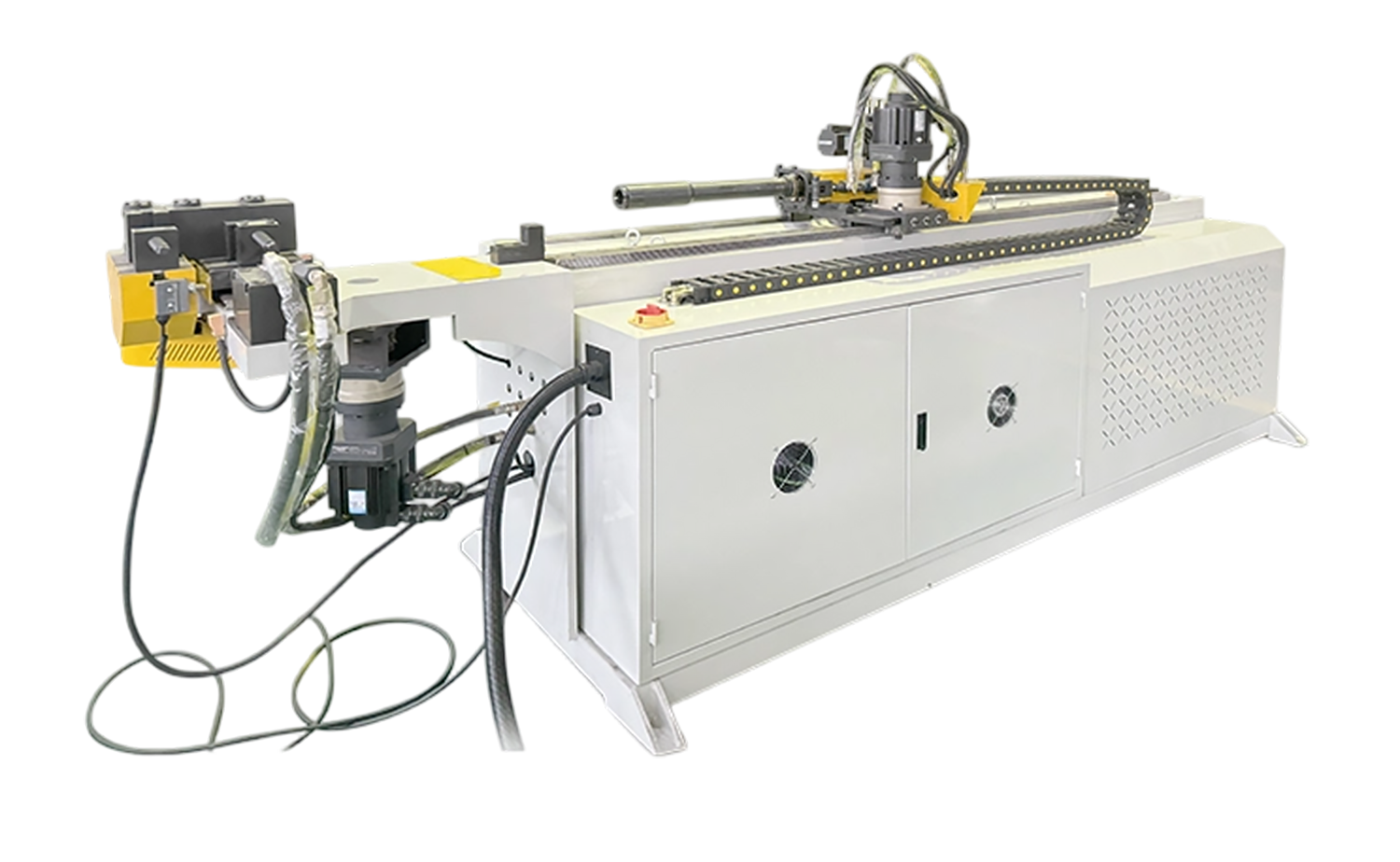
- SS Series Fully Automatic CNC Pipe Bending Machine
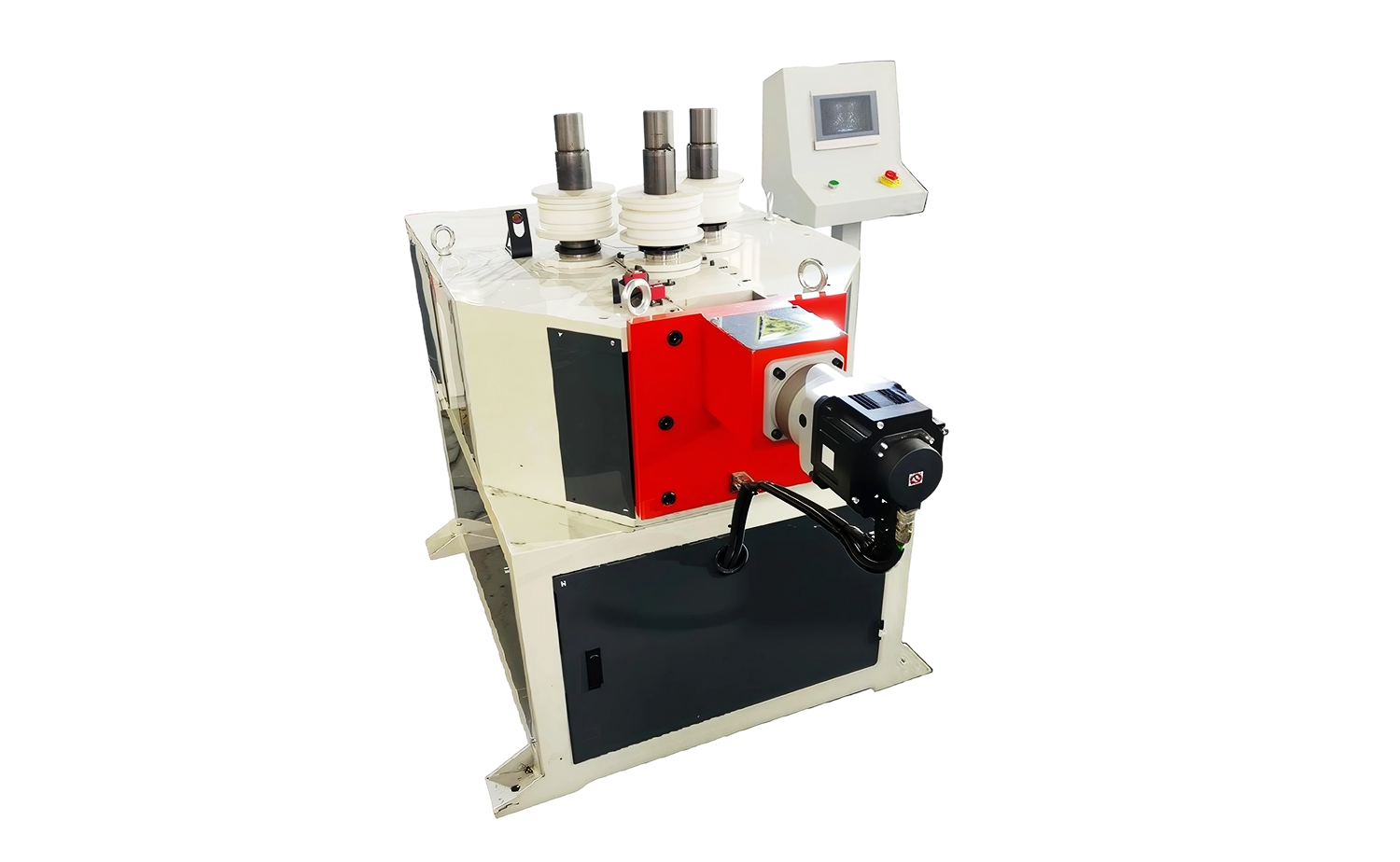
- CNC Series Tube Roll Bending Machine for Metal Profiles
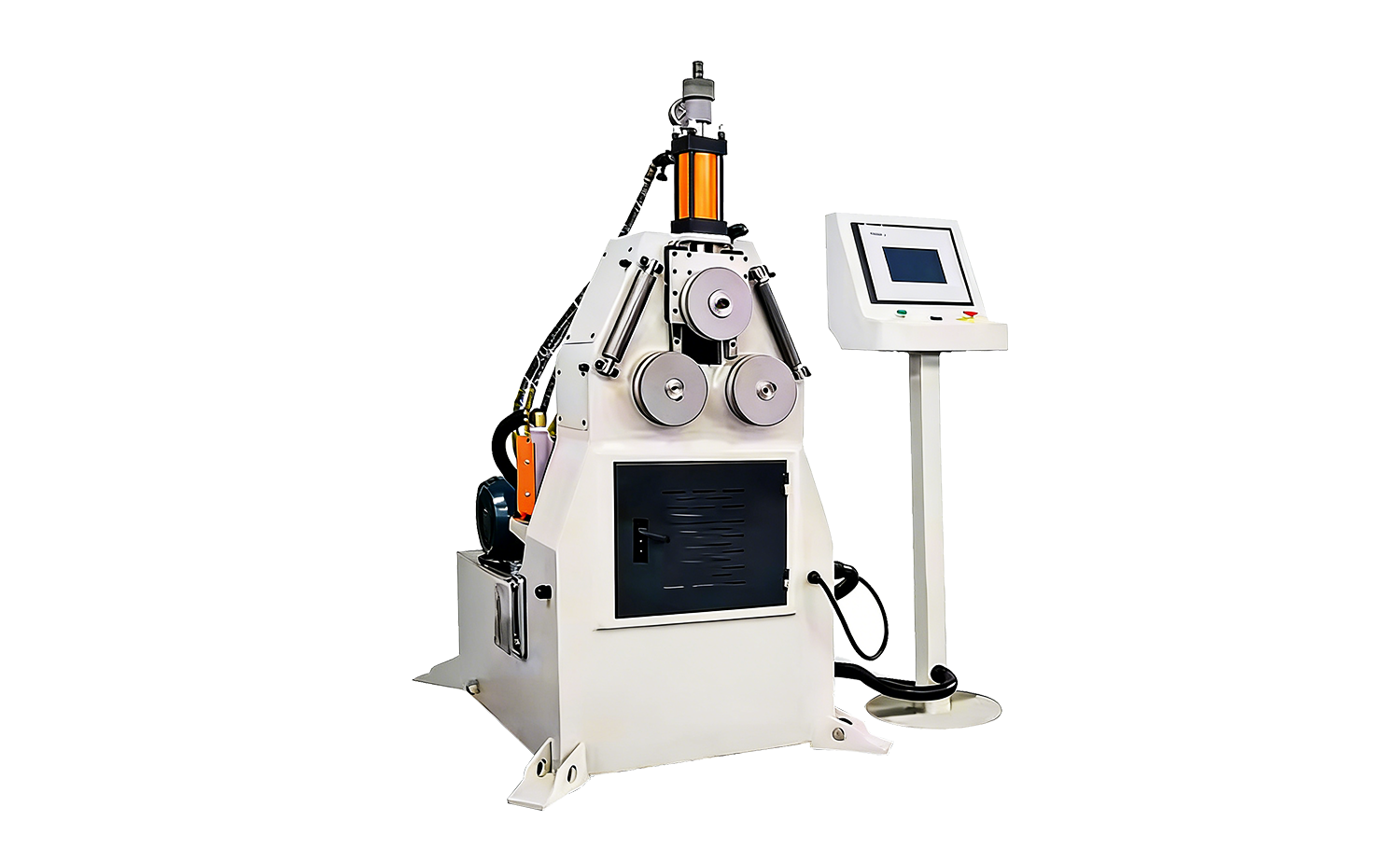
- High Precision CNC Tube Roll Bending Machine
- CNC S Series Fully Automatic Tube Bending Machine with Optional Simulation Function
- CNC Series Tube Roll Bending Machine with Three-Roller Drive
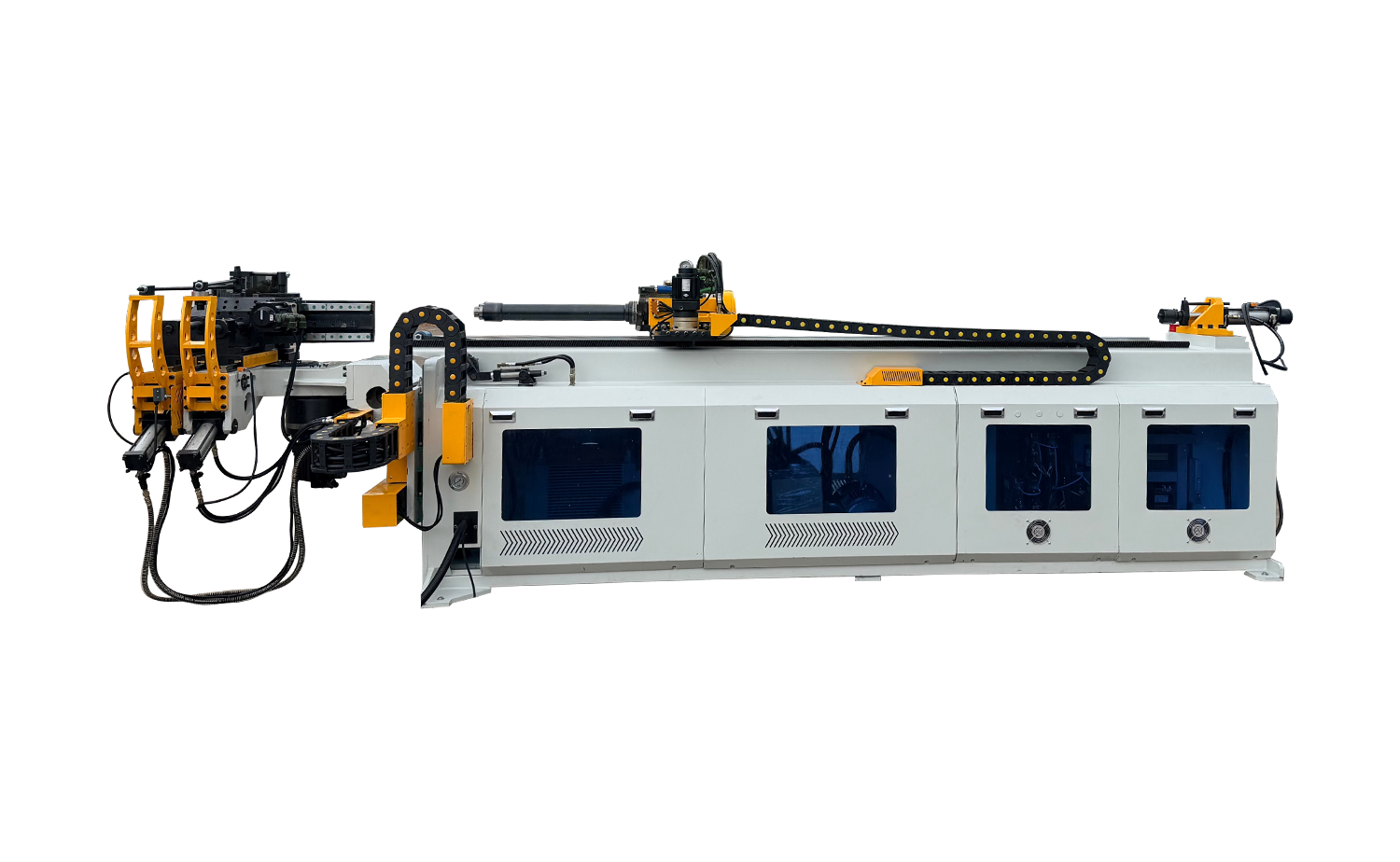
- CNC M Series Fully Automatic Multi-Radius Tube Bending Machine
What is the CNC Pipe Bending Machine manufacturing landscape?
Date:Apr 20, 2026
Content
- 1 Major Manufacturing Regions and Their Profiles
- 2 Leading CNC Pipe Bending Machine Manufacturers
- 3 Technology Differentiation Among Manufacturers
- 4 Industry-Specific Manufacturer Specialisations
- 5 Manufacturer Evaluation Matrix
- 6 Chinese CNC Pipe Bending Machine Manufacturers: A Balanced Assessment
- 7 Total Cost of Ownership: Beyond the Purchase Price
- 8 Emerging Trends Shaping the Manufacturer Competitive Landscape
- 9 Selecting a CNC Pipe Bending Machine Manufacturer: A Structured Process
The global market for CNC pipe bending machines is served by a concentrated group of specialist manufacturers whose engineering legacies span five to seven decades. Unlike general-purpose machine tool builders, CNC pipe bending machine manufacturers operate in a niche defined by the intersection of precision motion control, tooling metallurgy, and deep application-specific process knowledge. The machines they produce — ranging from compact single-axis tube benders to multi-head, multi-stack robotic bending cells — are capital-intensive assets whose performance differences compound over millions of bend cycles and hundreds of product part numbers.
Understanding who the leading CNC pipe bending machine manufacturers are, how they differentiate themselves technically, what factors drive manufacturer selection in different industries, and how to evaluate competing suppliers is therefore a genuinely strategic exercise for any fabrication operation investing in bending capacity. This article provides a structured assessment of the manufacturer landscape, covering regional production centres, technology tiers, industry-specific specialisations, and the criteria that experienced buyers use to make high-confidence sourcing decisions.
Major Manufacturing Regions and Their Profiles
CNC pipe bending machine production is geographically concentrated, with four regions accounting for the overwhelming majority of global output by both unit volume and installed value.
Germany and Western Europe
Germany hosts the highest concentration of premium CNC pipe bending machine manufacturers by technical sophistication and global installed base. German manufacturers have historically led development of all-electric drive architectures, in-process angle measurement systems, and integrated 3D simulation software. The engineering culture in German machine tool manufacturing — characterised by conservative design validation cycles, extensive in-house component production, and long machine service life expectations — produces machines with price points significantly above the global average but with commensurate capability and longevity.
Italy is the second major European producer, with a cluster of manufacturers centred in the Lombardy and Emilia-Romagna regions. Italian CNC bending machine builders have built particular strength in thin-wall tube bending for furniture, automotive interiors, and architectural applications, where surface finish and ovality control are as critical as angular precision.
Japan
Japanese CNC pipe bending machine manufacturers are characterised by exceptional mechanical precision, compact machine footprints, and highly integrated control systems. Japanese builders have dominated the automotive sector supply chain in Asia and have made significant inroads in North American automotive plants through their close relationships with Japanese OEM transplants. Their machines tend toward higher automation density — servo-driven mandrel systems, automatic lubrication, integrated part marking — and tighter out-of-box positioning accuracy compared with equivalently specified European competitors.
United States
American CNC pipe bending machine manufacturers serve a domestic market that spans aerospace, oil and gas, HVAC, and heavy construction. Several US builders have developed particular expertise in large-diameter pipe bending (100 mm – 325 mm OD) for the oil, gas, and power generation sectors, where workpiece mass and bending force requirements are at the upper end of the technology envelope. US manufacturers also have a strong presence in the custom and semi-custom bending system integration market, where standard machine platforms are combined with robotic material handling, vision-based inspection, and factory automation to form complete production cells.
China
Chinese CNC pipe bending machine manufacturers have evolved rapidly from low-cost copies of established European and Japanese designs into credible engineering organisations developing original machine architectures. The domestic Chinese market — which is the world's largest consumer of pipe bending capacity by unit volume, driven by automotive, construction, and appliance manufacturing — has provided a large testing ground for iterative product development. Chinese manufacturers now offer machines at two distinct tiers: entry-level CNC benders with basic programmable control at prices 40–60% below European equivalents, and mid-range machines with multi-axis all-electric drive and graphical simulation that compete directly with European mid-market offerings on specification while retaining a significant price advantage.
Leading CNC Pipe Bending Machine Manufacturers
The following profiles cover the most widely recognised manufacturers by global installed base and technical reputation. Selection for inclusion is based on documented industry presence, export market penetration, and verified technical capability — not marketing claims.
Schwarze-Robitec
Germany
One of Germany's oldest and most technically decorated tube bending machine builders, Schwarze-Robitec is particularly renowned for its NXB series all-electric CNC benders and its BendSim Pro simulation software. Deep specialisation in automotive exhaust and chassis applications; reference supplier to most European OEMs and Tier 1s.
All-electric Multi-stack AutomotiveUnison Ltd.
United Kingdom
Pioneer of all-electric CNC tube bending, Unison introduced the first commercially viable all-electric tube bender in 1994. Its Breeze and Synergy series machines are installed globally across aerospace, medical, and automotive sectors. Unison's Opt2Sim offline programming system is widely regarded as the industry's most capable 3D simulation environment.
All-electric Aerospace SimulationBLM Group
Italy
BLM Group is Europe's largest tube processing equipment manufacturer, offering a complete system from laser cutting to bending to end-forming. Its E-TURN and ELECT series all-electric CNC benders are strong in automotive, furniture, and architectural tube. BLM's LT-FREE freeform bending system is an industry-first technology enabling 3D tube shaping without fixed tooling.
All-electric Freeform bending Full-lineNumalliance
France
Numalliance (formerly Silfax and MFLS merged) specialises in wire and tube bending automation with a strong industrial robot integration offering. Its Dynabend and Vectorbend CNC bending centres are distinguished by their ability to handle both tube and complex wire forms on a single platform, targeting automotive wiring harness and hydraulic line production.
Tube & wire Robotic AutomotiveChiyoda Kogyo
Japan
Japan's most prominent dedicated tube bending machine manufacturer, Chiyoda Kogyo has supplied CNC bending systems to Japanese and international automotive plants since the 1970s. Its MAS and HMT series machines are standard equipment in Toyota, Honda, and Nissan supply chains. Known for high-cycle reliability, compact design, and tight integration with downstream end-forming machines.
Automotive OEM High-cycle CompactHorn Machine Tools
USA
A California-based manufacturer with particular depth in aerospace and defence tube bending. Horn's CNC benders are specified for titanium, Inconel, and aerospace-grade aluminium tube work where material springback variability and traceability are paramount. Also produces mandrel draw bending equipment for HVAC and refrigeration tube production.
Aerospace Exotic alloys DefenceTransfluid
Germany / Italy
Transfluid offers CNC tube bending alongside a comprehensive suite of tube end-forming and assembly equipment, enabling single-source procurement for complete tube processing lines. Its DB series CNC benders are well established in the hydraulic line and fluid power sector, where consistent bend angles in high-strength steel and stainless tube are critical for leak-free assembly.
Hydraulic lines End-forming Full-lineYLM Group
Taiwan
Taiwan's leading tube bending machine manufacturer by export volume, YLM has built a strong reputation for reliable mid-range CNC benders that offer European-comparable specifications at competitive price points. Its all-electric and servo-hydraulic series are installed across HVAC, automotive, and furniture sectors in over 60 countries. Strong after-sales network in Southeast Asia and the Americas.
All-electric HVAC Value-leaderTechnology Differentiation Among Manufacturers
The specification sheets of competing CNC pipe bending machine manufacturers can appear superficially similar — max OD, axis count, bend speed, and program capacity are easy to enumerate. The meaningful technology differentiation lies in dimensions that are harder to quantify but more consequential for production performance.
All-Electric Drive Architecture
The shift from electro-hydraulic to all-electric CNC pipe bending machines represents the most significant technology transition in the industry over the past 20 years. Leading manufacturers — Unison, Schwarze-Robitec, BLM, and YLM among them — now offer primarily all-electric lines for tube diameters up to approximately 120 mm. The advantages of all-electric drive are well documented: faster axis positioning (servo motor response time in milliseconds versus valve-regulated hydraulic response in tens of milliseconds), no hydraulic oil management overhead, lower energy consumption (motors energised only during motion, versus a hydraulic pump running continuously), quieter operation, and superior compatibility with Industry 4.0 data collection architectures.
For large-diameter pipe bending above 120 mm OD, electro-hydraulic actuation remains dominant because the clamping and pressure-die forces required exceed the practical output of ball-screw servo drives at commercially viable cost. The best hydraulic CNC pipe bending machine manufacturers — including Schwarze-Robitec's heavy series and several US builders — use proportional servo valve technology with position-feedback closed-loop control that narrows the performance gap with all-electric systems considerably.
In-Process Angle Measurement and Adaptive Control
Springback — the elastic recovery of the pipe after bending load removal — is the fundamental source of angular error in CNC pipe bending. Its magnitude varies with material grade, heat treatment, wall thickness, bend radius, and even pipe orientation relative to the original coil direction. The most capable CNC pipe bending machine manufacturers address this with in-process angle measurement systems that measure the achieved bend angle while the workpiece is still clamped, compare it to the target, and command a compensating re-bend within the same cycle.
Measurement technologies employed by different manufacturers include contact-type rotary encoders mounted on the bend arm, non-contact laser triangulation sensors positioned at the bend zone, and camera-based vision systems. The cycle-time penalty for in-process measurement is typically 0.5–2 seconds per bend — acceptable in most production environments against the yield improvement benefit of eliminating out-of-tolerance parts before downstream assembly.
Simulation and Offline Programming Software
Every serious CNC pipe bending machine manufacturer now offers offline programming and 3D simulation software, but capability differences are substantial. At the basic level, simulation software previews the bend sequence and checks for tooling collisions. At the advanced level — exemplified by Unison's Opt2Sim and Schwarze-Robitec's BendSim Pro — the software performs full finite-element springback prediction, optimises the bend sequence to minimise cycle time, simulates material flow to predict wall thinning and ovality, and generates a verified LRA (Length–Rotation–Angle) program that can be sent directly to the machine controller without a trial bend.
This simulation capability dramatically reduces first-article qualification time — a critical factor in automotive and aerospace supply chains where program launch timing is contractually binding. Manufacturers whose software ecosystem is mature and continuously updated represent a substantially lower operational risk than those offering simulation as an afterthought.
Multi-Stack and Multi-Head Configurations
The ability to execute complex multi-bend components with varying radii and alternating bend directions without re-chucking the workpiece is a key differentiator for high-mix automotive and aerospace production. Leading manufacturers achieve this through:
- Multi-stack tooling turrets that carry up to six die sets on a rotating magazine, with automatic tool selection under CNC program control — eliminating manual changeover between bends of different radii
- Twin-head machines with both left-hand and right-hand bend heads operating from a common carriage — enabling compound components with alternating bend directions to be completed in a single clamping sequence
- Right/left convertible heads on single-head machines, where the bend head reverses orientation automatically under servo control — a lower-cost alternative to true twin-head architecture for moderate-complexity parts
Key Technical Differentiators — Manufacturer Comparison Framework:
Drive type → All-electric | Electro-hydraulic | Hybrid
Angle feedback → In-process closed-loop | Open-loop + springback table
Simulation depth → FEA springback | Collision-only | None
Tooling capacity → Multi-stack turret | Single-stack | Manual changeover
Head configuration → Twin-head | R/L convertible | Fixed direction
Automation ready → Native robot I/O | Fieldbus | Manual load only
Data connectivity → OPC-UA / Industry 4.0 | Ethernet | Isolated
Drive type → All-electric | Electro-hydraulic | Hybrid
Angle feedback → In-process closed-loop | Open-loop + springback table
Simulation depth → FEA springback | Collision-only | None
Tooling capacity → Multi-stack turret | Single-stack | Manual changeover
Head configuration → Twin-head | R/L convertible | Fixed direction
Automation ready → Native robot I/O | Fieldbus | Manual load only
Data connectivity → OPC-UA / Industry 4.0 | Ethernet | Isolated
Industry-Specific Manufacturer Specialisations
CNC pipe bending machine manufacturers vary substantially in their depth of specialisation by end industry. A manufacturer with strong credentials in automotive exhaust production may have limited process knowledge for aerospace titanium bending — and vice versa. Matching manufacturer specialisation to application is as important as matching machine specifications.
Automotive and Tier 1 Supply Chain
Automotive is the highest-volume application segment and the most demanding in terms of cycle time, program density, and integration with surrounding production systems. CNC pipe bending machine manufacturers targeting this segment — Schwarze-Robitec, BLM, Chiyoda, Numalliance — invest heavily in cycle-time optimisation (all-electric fast positioning, overlap motion sequencing), robotic interface standardisation (FANUC, KUKA, ABB native protocols), and quality documentation (traceability per IATF 16949, statistical process control output from the machine controller).
Aerospace and Defence
Aerospace applications impose the tightest dimensional tolerances — ±0.25° on bend angle and ±0.5 mm on interbend distance in many titanium and Inconel applications — and require full material traceability from raw stock to finished bend. CNC pipe bending machine manufacturers with aerospace credentials (Horn, Unison, Schwarze-Robitec's aerospace division) offer machines with NADCAP process audit support, material heat number tracking in the production database, and software that generates first-article inspection reports in formats acceptable to AS9100-registered quality systems.
Oil, Gas, and Energy
Large-diameter pipe bending for subsea pipelines, offshore topsides, and power plant piping requires CNC machines capable of handling pipes up to 325 mm OD in carbon steel, duplex stainless, and super duplex alloys. Force requirements at this scale — sometimes exceeding 1,500 kN on the pressure die — demand electro-hydraulic actuation with precision servo valve control. Specialist manufacturers in this segment include several German, American, and Italian builders with references in subsea pipeline fabrication and LNG plant construction.
HVAC and Refrigeration
Copper and aluminium tube bending for heat exchangers, refrigerant circuits, and HVAC distribution systems is a high-volume, thin-wall application where ovality control and surface finish protection are the primary technical challenges. Manufacturers serving this segment — YLM, BLM, several Japanese builders — offer CNC benders optimised for copper tube from 6 mm to 54 mm OD with mandrel systems designed for the high D/t ratios (20–40) typical of refrigeration tube.
Manufacturer Evaluation Matrix
The following table provides a structured framework for comparing CNC pipe bending machine manufacturers across the dimensions that most directly affect production outcomes and total cost of ownership.
| Evaluation Dimension | What to Assess | Red Flags |
|---|---|---|
| Application references | Verified installations in your industry with comparable pipe material, OD range, and complexity | Generic "automotive" or "industrial" claims without specific customer or part-type references |
| Drive technology | All-electric vs. hydraulic suitability for your OD range; hybrid availability for transitional sizes | Hydraulic-only offering for ODs below 100 mm where all-electric is the current standard |
| Angle accuracy (claimed) | Specified repeatability (±°) under stated test conditions; whether in-process measurement is standard or optional | Accuracy claims without stated test methodology or independent verification |
| Simulation software | Depth of springback prediction; ability to import your CAD format (STEP, IGES, CATIA); offline program generation | Simulation sold separately at high cost; limited CAD format support; no springback modelling |
| Tooling ecosystem | Open vs. proprietary tooling interface; local tooling supply capability; die manufacturing lead times | Fully proprietary tooling with no competitive sourcing alternative; long die lead times |
| After-sales network | Service engineer locations relative to your plant; spare parts stocking policy; remote diagnostics capability | Single-country service coverage for global manufacturers; parts on 8–12 week lead time |
| Industry 4.0 readiness | OPC-UA or MQTT data output; integration with MES/ERP; production data logging to external systems | Proprietary closed data protocol with no external integration path |
| Machine demonstration | Willingness to demonstrate with your actual pipe stock and target geometry before purchase | Refusal to demonstrate with customer material; demonstration only with machine-optimised test pieces |
| Financial stability | Length of operation, ownership structure, warranty and spare parts commitments | Recent ownership changes without clear continuity commitments; limited warranty coverage |
| Training and support | On-site commissioning training scope; operator and maintenance manuals quality; application engineering support | Remote-only commissioning; translated-only documentation with significant gaps |
Chinese CNC Pipe Bending Machine Manufacturers: A Balanced Assessment
No assessment of the CNC pipe bending machine manufacturer landscape is complete without a candid treatment of Chinese producers, who represent an increasingly significant share of global machine placements particularly in the mid-market segment.
The leading Chinese CNC pipe bending machine manufacturers — including Anhui Cheng Jie Intelligent Equipment, Foshan Seko Machinery, and several Zhejiang-based producers — have made genuine technical progress over the past decade. Their current generation of mid-range all-electric CNC benders incorporates Siemens or Mitsubishi CNC controllers, servo-motor drive trains from established Japanese suppliers, and graphical HMI software that is functionally comparable to European equivalents at the same specification level. For applications in the standard OD range (25 mm – 100 mm), common material grades (mild steel, stainless 304/316, aluminium), and moderate tolerance requirements (±1° angular accuracy), Chinese CNC benders offer a credible price-to-performance proposition.
Where Chinese manufacturers continue to lag their European and Japanese counterparts is in the application engineering depth required for edge-case materials (high-springback superalloys, ultra-thin-wall precision tube), proprietary process knowledge (mandrel geometry optimisation for specific material behaviours), simulation software maturity, and global after-sales infrastructure. For a fabricator bending standard structural tube or HVAC copper, these gaps are largely irrelevant. For an aerospace manufacturer bending titanium hydraulic lines to ±0.3°, they are disqualifying.
Practical guidance: When evaluating Chinese CNC pipe bending machine manufacturers alongside European or Japanese alternatives, request a bending demonstration at the factory using your actual material and target specifications — not a demonstration piece. Compare the first-article results objectively. For many standard applications, the quality gap that existed a decade ago has narrowed substantially. For specialist applications, it has not.
Total Cost of Ownership: Beyond the Purchase Price
CNC pipe bending machines are long-lived assets — 15 to 25 years of productive service life is typical for well-maintained machines from established manufacturers. Purchase price, while significant, is rarely the dominant cost over this horizon. The following TCO elements deserve careful quantification during the manufacturer evaluation process:
- Energy cost: An all-electric CNC bender typically consumes 30–60% less electrical energy than an equivalent electro-hydraulic machine over a production shift. At industrial electricity rates, this represents a measurable annual saving that compounds over the machine's life.
- Tooling cost: A complete die set for a new pipe size (bend die, clamp die, pressure die, wiper die, mandrel) from a premium manufacturer can cost $8,000–$25,000 depending on OD and material. Proprietary tooling systems with no competitive supply alternative can double this cost over the machine's life versus open-standard interfaces.
- Maintenance and downtime: Unscheduled downtime cost — measured as lost production contribution margin per hour — dwarfs any annual maintenance budget. Manufacturers with local service engineer coverage (response in hours, not days) and stocked critical spare parts materially reduce this risk. Request mean time between failure (MTBF) data and unscheduled downtime incident records from reference customers before purchase.
- Software and controller obsolescence: CNC pipe bending machine manufacturers who discontinue controller platform support within the machine's expected life impose costly mid-life controller upgrades. Ask specifically about the manufacturer's controller platform roadmap and historical support duration for legacy systems.
- Scrap rate impact: A machine with superior in-process angle measurement and adaptive control that achieves 0.5% scrap rate versus a basic machine at 2.5% scrap rate generates a cost difference — in material waste and rework labour — that can exceed $50,000 annually in medium-volume production of high-value tube components.
Emerging Trends Shaping the Manufacturer Competitive Landscape
Freeform and Multi-Axis Bending
Freeform tube bending — exemplified by BLM Group's LT-FREE system and similar systems from Schwarze-Robitec and Numalliance — enables 3D tube shaping without fixed tooling by combining translational and rotational motion control with a driven bending head. This technology dramatically reduces tooling investment for complex components and enables shapes that are geometrically impossible with rotary-draw bending. While currently positioned at the premium end of the market, freeform bending systems are expected to penetrate broader segments as unit costs decrease, potentially displacing conventional CNC benders for complex, low-to-medium volume components within a decade.
AI-Assisted Process Optimisation
Several CNC pipe bending machine manufacturers are integrating machine-learning models into their control and simulation software to improve springback prediction accuracy. Unlike traditional empirical springback tables — which require trial bends to populate and are sensitive to material batch variation — ML models trained on production data from thousands of bend cycles can predict springback from first principles for new material lots with substantially higher accuracy. Unison, Schwarze-Robitec, and BLM have published development activity in this area; commercial implementations are beginning to appear in the most recent machine generations.
Integrated Cell Automation and Digital Twin
The standalone CNC pipe bending machine is giving way to the automated bending cell — a system integrating the CNC bender with robotic loading and unloading, automated measuring arms for first-article verification, end-forming equipment, laser marking for traceability, and a supervisory controller that manages the full sequence. CNC pipe bending machine manufacturers who can deliver the complete cell — rather than the machine only — are winning larger contracts in automotive and aerospace. The digital twin of the cell (a real-time virtual model synchronised with actual machine state) is becoming a standard offering from premium manufacturers, enabling predictive maintenance scheduling and production simulation for new program launch.
Selecting a CNC Pipe Bending Machine Manufacturer: A Structured Process
Consolidating the guidance above into a practical decision process, experienced buyers of CNC pipe bending machines typically follow this sequence:
- Define the application envelope: Document the full range of pipe ODs, wall thicknesses, materials, bend radii, angular tolerances, and production volumes that the machine must handle — including five-year projected requirements, not just current production.
- Identify the qualifying manufacturer tier: Match application complexity and tolerance requirements to the appropriate manufacturer tier — premium European/Japanese for aerospace and high-precision work; mid-range European/Taiwanese/Chinese for standard structural and HVAC production. Avoid over-specifying and avoid under-specifying equally.
- Build a shortlist of three to five manufacturers: Prioritise those with documented references in your application segment. Request reference contacts and speak directly with their current customers about reliability, support quality, and software stability.
- Issue a detailed technical RFQ: Specify material grades, OD and wall thickness range, target angular accuracy, simulation software requirements, data connectivity requirements, and service coverage expectations. Request that all responses address each specification point explicitly.
- Conduct factory visits and live demonstrations: Visit the shortlisted manufacturers' facilities, review their production quality systems, and insist on a live bending demonstration with your pipe stock. Evaluate the first-article results against your tolerance specification.
- Model the five-year TCO: Compare energy cost, tooling cost, expected maintenance, and downtime risk across the shortlist. Weight the TCO model appropriately against capital cost based on your organisation's cost-of-capital assumptions.
- Negotiate service commitments contractually: Secure commitments for spare parts availability (minimum stock duration), service response time, and software support timeline in the purchase contract — not just in verbal assurances from the sales process.
The CNC pipe bending machine manufacturer market rewards informed buyers. The performance differences between a well-chosen machine from a manufacturer whose engineering capabilities match the application, and a poorly matched machine purchased on price, compound over years of production in yield rates, scrap costs, downtime incidents, and the capability to take on new product programmes. The manufacturers profiled in this article represent the current state of the art across the relevant technology and application dimensions — but the optimal selection for any specific operation depends entirely on the rigorous application of the evaluation criteria outlined above to that operation's specific production requirements.


Copyright © 2025 Huashun Technology All Rights Reserved.
Custom Precision Tube Forming Machine Manufacturers