
 English
 русский
 Español
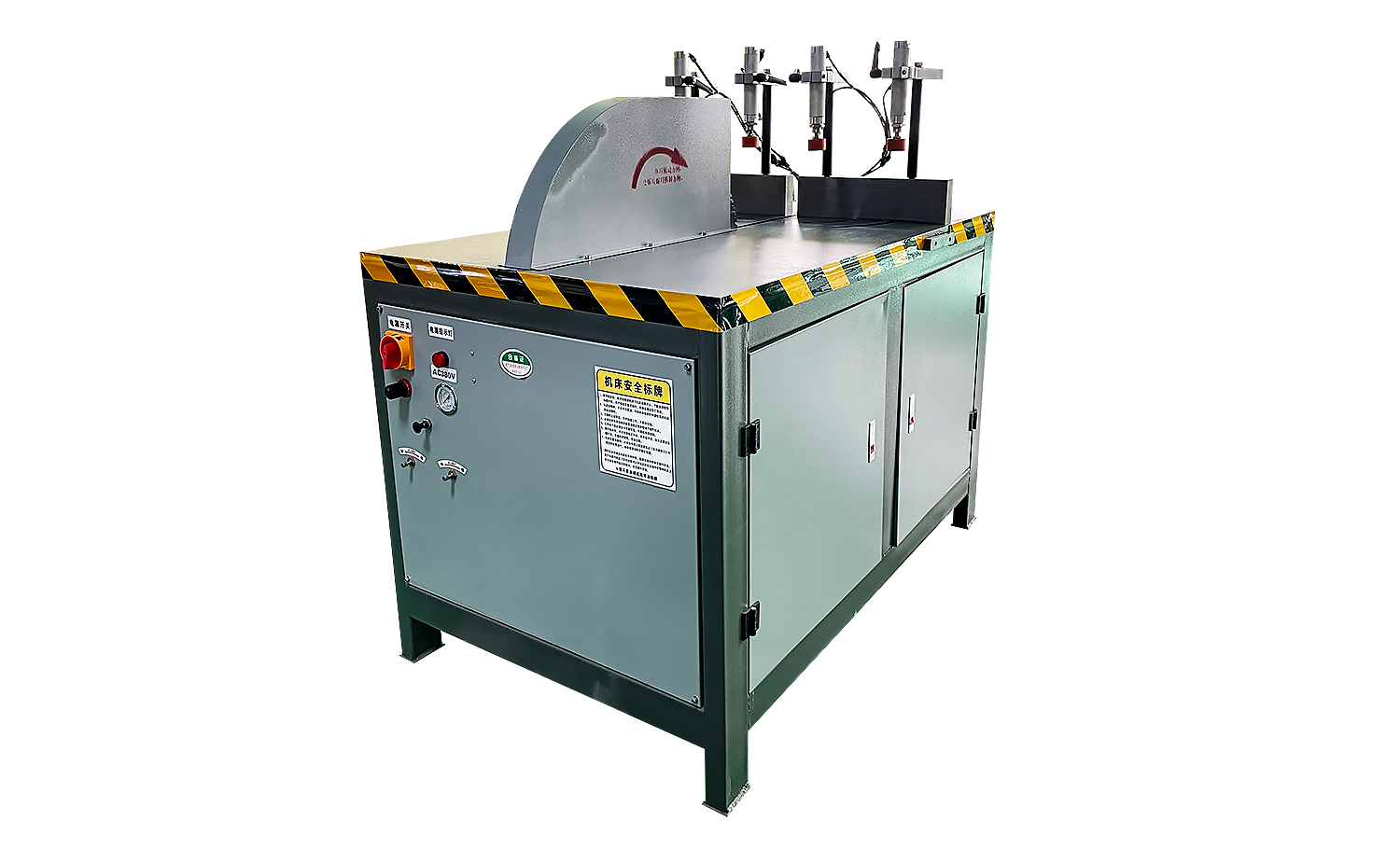
- ES550 Semi-Automatic Aluminum Cutting Machine for Big Profiles and Tubes
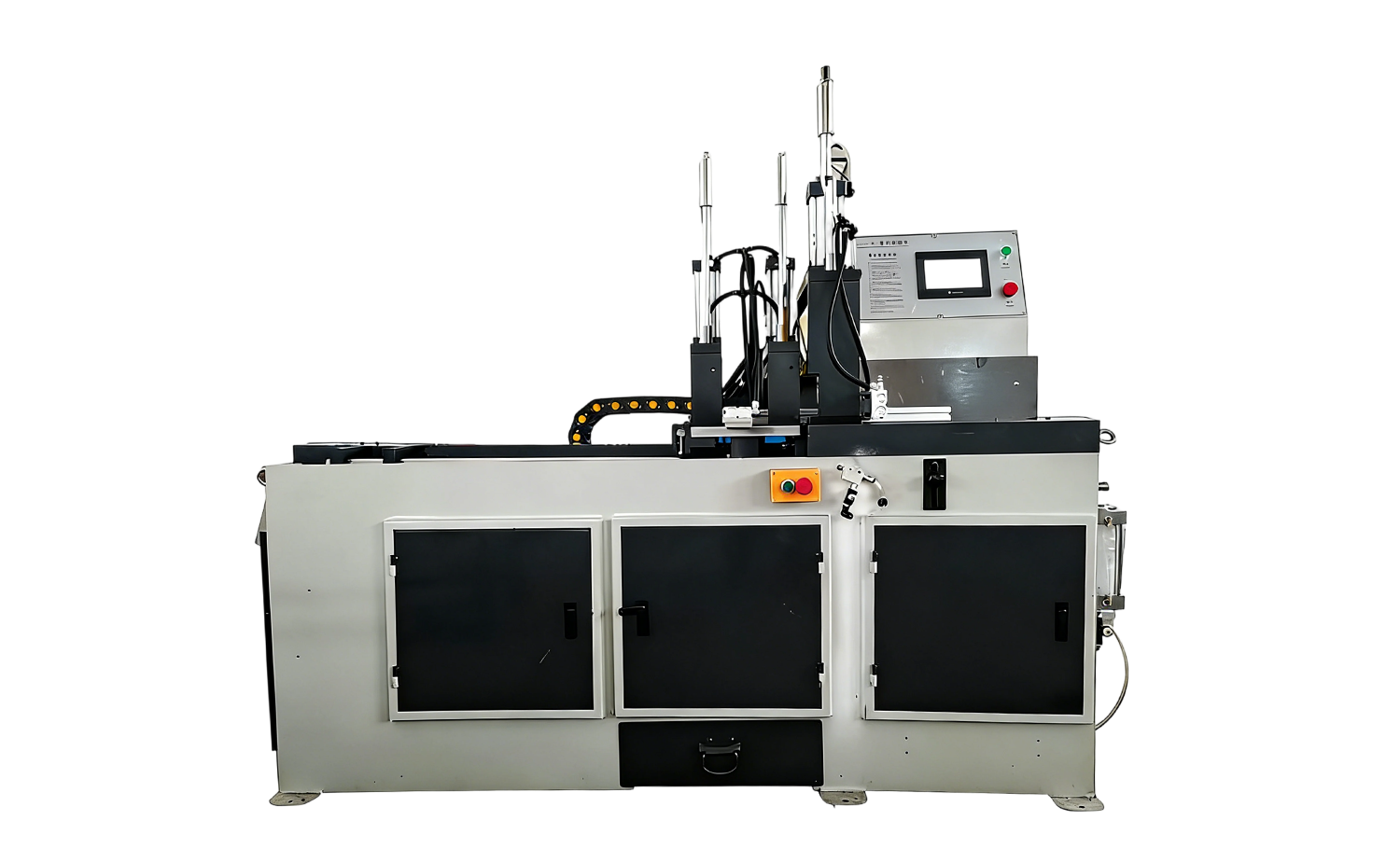
- CNC455 Series Fully Automatic Aluminum and Copper Cutting Machine
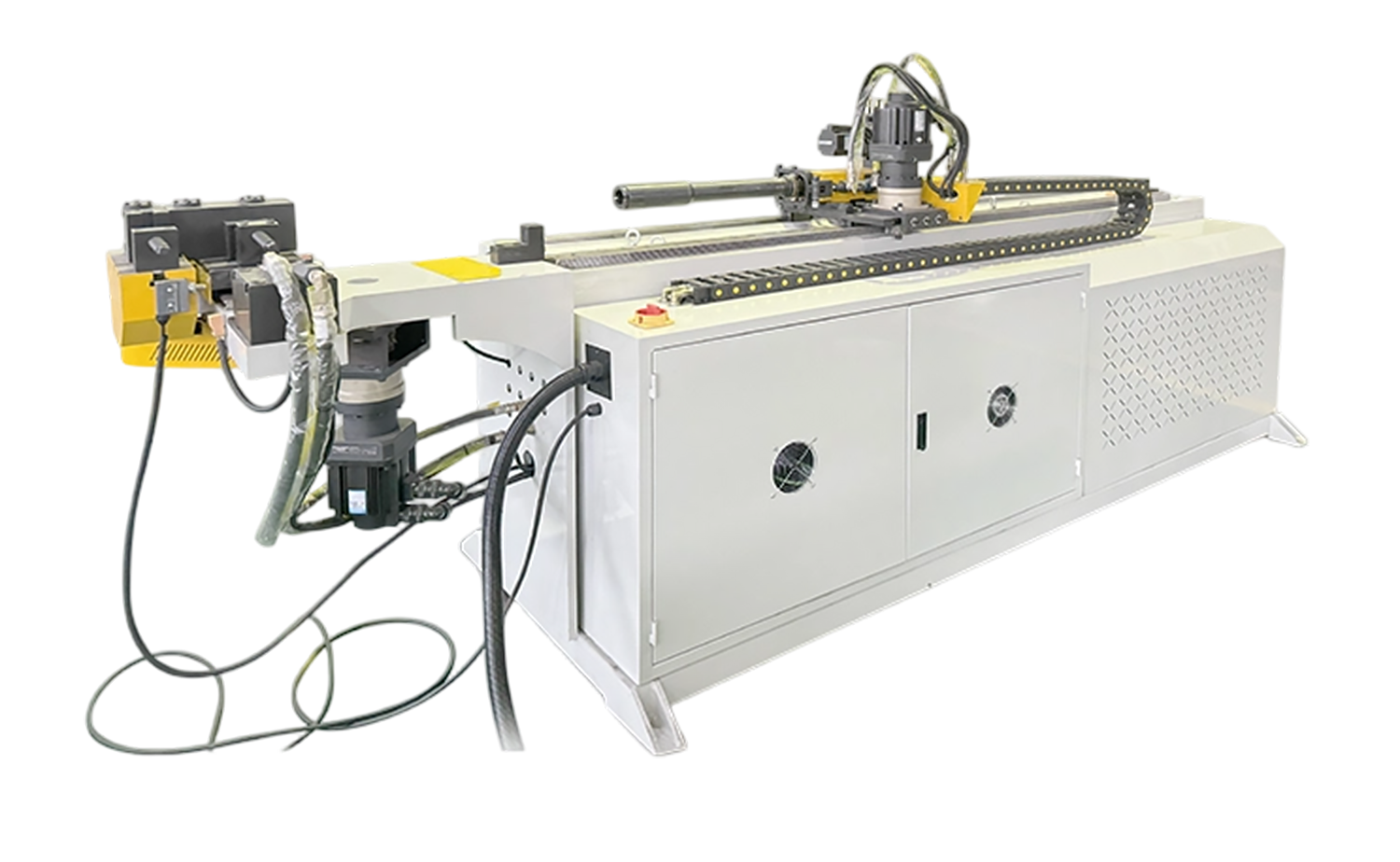
- SS Series Fully Automatic CNC Pipe Bending Machine
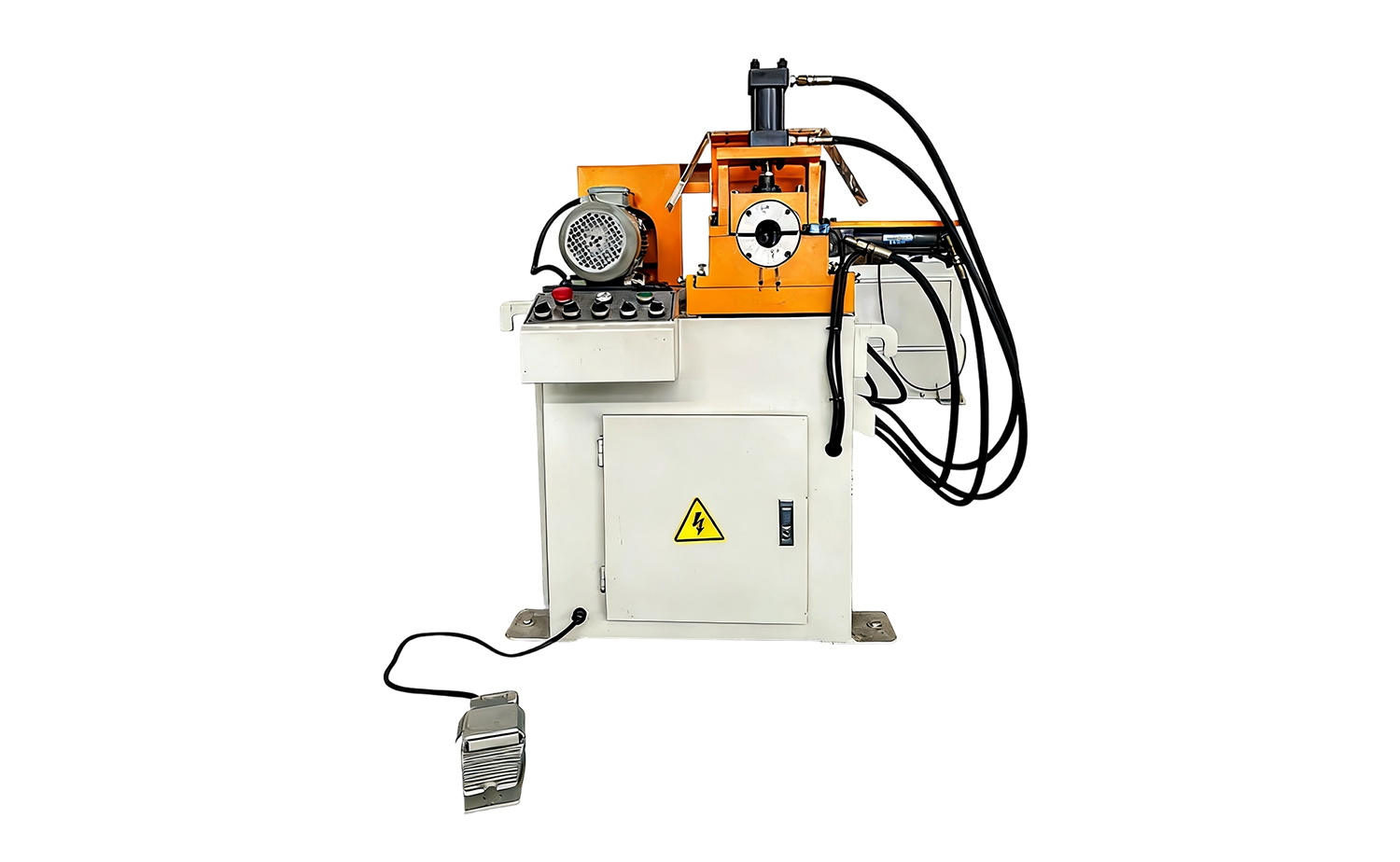
- EF PV1 Series Hydraulic Semi-Automatic Tube Chamfering Machine
- DEF SM Series High Speed Semi-Automatic Double Head Tube Chamfering Machine
- DEF50PVS Servo Tube Chamfering Machine for Short Metal and PVC Tubes
What Is an Automatic Hose Cutter?
Date:Apr 27, 2026
Content
- 1 How Automatic Hose Cutters Work
- 2 Types of Automatic Hose Cutters
- 3 Key Specifications and What They Mean in Practice
- 4 Hose Material Compatibility: Matching Machine to Material
- 5 Drive and Measurement Systems: The Accuracy Foundation
- 6 Throughput Optimisation and Production Integration
- 7 Blade Selection and Maintenance
- 8 Safety Systems and Compliance
- 9 Selecting the Right Automatic Hose Cutter: A Structured Approach
- 10 Maintenance Best Practices for Long Service Life
An automatic hose cutter is a powered cutting machine designed to measure, feed, and sever hose or tubing to precise programmed lengths with minimal operator intervention. Unlike manual hose cutters — which require an operator to position, hold, and actuate a cutting blade for every piece — automatic hose cutting machines accept a continuous feed of hose from a reel or straightener, advance it to a set measurement, and execute the cut cycle automatically, repeating the sequence until the target quantity is reached.
The term covers a wide range of machine types, from compact benchtop units that cut single-layer rubber or PVC hose to industrial production machines capable of processing multi-spiral hydraulic hose at throughput rates exceeding 1,000 cuts per hour. What unites all members of this category is the elimination of manual measurement and individual cut actuation — the two principal sources of dimensional error and operator fatigue in manual hose cutting operations.
Automatic hose cutters are integral to industries where hose assemblies are produced in volume: hydraulic system fabrication, automotive fluid line manufacturing, pneumatic component assembly, agricultural equipment production, marine engineering, and industrial fluid distribution. In each of these sectors, consistent cut length and clean, square cut faces are prerequisite quality requirements — and automatic cutting is the only reliable way to achieve them at production scale.
How Automatic Hose Cutters Work
The fundamental operating sequence of an automatic hose cutter follows a consistent pattern regardless of machine type or cutting mechanism. Understanding this sequence provides the foundation for evaluating machine specifications and selecting the right equipment for a given application.
The Feed-Measure-Cut Cycle
The cycle begins with hose feeding. Drive rollers — typically rubber-coated or knurled steel for grip — pull hose from a reel or coil through a straightening mechanism that removes the set and curvature acquired during storage. The drive rollers are servo-motor or stepper-motor driven, enabling the feed length to be controlled with high repeatability. Encoder feedback from the drive shaft or a separate measuring wheel tracks the exact length of hose advanced and stops the feed mechanism precisely at the programmed cut length.
Measurement accuracy is one of the most critical performance parameters of an automatic hose cutter. High-quality machines achieve feed length accuracy of ±0.5 mm or better over the full programmable range. This precision depends on the quality of the encoder system, the slip characteristics of the feed rollers (different hose materials have different surface friction properties), and whether the machine uses a dedicated measuring wheel independent of the drive rollers — a design feature that eliminates measurement error caused by roller slip.
Once the hose is positioned at the programmed length, the cutting mechanism actuates. The cut stroke is either pneumatic, hydraulic, or electric-servo driven. The hose is clamped upstream of the cut point to prevent movement during the cut stroke, and the blade or rotary cutter passes through the hose cross-section in a controlled, perpendicular motion. The cut piece is ejected or drops into a collection bin, the clamp releases, and the feed cycle restarts immediately.
Modern automatic hose cutters are equipped with programmable controllers — ranging from simple digital displays with keypad entry to full-colour touchscreen HMIs with multi-programme storage — that allow operators to enter cut length, quantity, and cutting parameters. Machines with multiple programme storage can cycle through different cut lengths automatically, producing batch quantities of different hose lengths in sequence without manual reprogramming between batches.
Types of Automatic Hose Cutters
The automatic hose cutter category spans several distinct machine types, each optimised for particular hose materials, diameters, wall thicknesses, and production volume requirements.
Rotary Blade Cutters
Use a circular rotating blade that cuts hose by a scissor or shear action as it closes against a fixed anvil. Produce clean, square cuts on soft and medium-durometer hose. Well suited to PVC, polyurethane, garden hose, and single-braid rubber hose. Blade life is long for soft materials; blade edge degrades faster on reinforced or abrasive-jacketed hose.
Cold-Knife (Guillotine) Cutters
A straight, hardened steel blade descends in a guillotine action through the hose cross-section. Suitable for a wide range of hose diameters and materials including multi-layer rubber and low-pressure hydraulic hose. The blade geometry can be optimised (V-profile, flat, or angled) for different hose constructions. Simple, robust mechanism with low maintenance overhead.
Hot-Knife Cutters
An electrically heated blade melts through thermoplastic hose, simultaneously cutting and sealing the cut face to prevent fibre fraying and fluid wicking. Essential for braided or woven textile-covered thermoplastic hose (nylon, polyester, polypropylene braid). The sealed cut face simplifies subsequent hose assembly operations and is frequently a specification requirement for medical and food-grade tubing.
Saw-Blade Cutters
A high-speed rotating saw blade cuts through hose by abrasion rather than shear. Used for large-diameter, heavy-wall rubber hose and high-pressure hydraulic hose with multiple wire braid or spiral reinforcement layers where blade-type cutters lack sufficient force. Produces a slightly rougher cut face that may require deburring but can handle hose constructions that defeat all other cutting mechanisms.
Laser Cutters
CO₂ or fibre laser cutting systems deliver a focused beam that vaporises hose material at the cut point. Provides extremely clean, sealed cut faces on thermoplastic and rubber hose without blade wear or replacement costs. Capital cost is substantially higher than blade-type machines. Best suited to high-volume production of precision-cut thermoplastic tubing where cut face quality is critical and hose diameter is consistent.
Ultrasonic Cutters
Ultrasonic vibration at 20–40 kHz generates localised heat at the blade–hose interface, enabling the blade to pass through thermoplastic hose with minimal cutting force and a simultaneously sealed cut edge. Particularly effective on thin-wall tubing, multi-layer medical tubing, and flexible thermoplastic hose where conventional blade cutters cause deformation at the cut point due to hose compliance.
Key Specifications and What They Mean in Practice
When evaluating automatic hose cutters, a structured understanding of the key specification parameters — and their practical significance — is essential to avoid both over-specification and under-specification.
| Specification | Typical Range | Practical Impact |
|---|---|---|
| Max. hose OD | 6 mm – 100 mm | Must cover your largest production hose with margin; determines feed roller and clamp jaw sizing |
| Min. cut length | 10 mm – 100 mm | Short minimum cut length enables short-piece production without manual changeover; important for connector stub applications |
| Max. cut length | 999 mm – 99,999 mm | Programmable upper limit; most production requirements fall within 5 m; longer capacity adds flexibility for assembly-line feed hose |
| Length accuracy | ±0.5 mm – ±2 mm | Tighter accuracy reduces off-cuts and rework in assembly; critical for hose assemblies with close-tolerance crimp positions |
| Cutting speed (cycles/hr) | 200 – 2,000+ | Determines throughput capacity; must be matched to downstream crimp and assembly station pace |
| Programme storage | 10 – 999 programmes | More programme slots reduce changeover time in high-mix operations; critical for distribution and assembly shop environments |
| Drive mechanism | Servo / stepper / pneumatic roller | Servo drive offers highest accuracy and repeatability; stepper is adequate for most standard applications; pneumatic roller suits simple cut-to-length only |
| Cutting mechanism | Rotary / guillotine / hot-knife / saw / laser | Must match hose material and construction; see type descriptions above |
| Hose straightener | Roller-type / multi-axis | Effective straightening is prerequisite for measurement accuracy; inadequate straightening causes coil curvature that throws feed length off |
| Control interface | Keypad + LED / Touchscreen HMI | Touchscreen with named programme storage significantly reduces operator error in high-mix shops; simple keypad is sufficient for one or two dedicated cut lengths |
| Output collection | Drop bin / conveyor / bundle tray | Automated collection prevents cut pieces from tangling or kinking; important for longer cut lengths and high-throughput applications |
Hose Material Compatibility: Matching Machine to Material
The single most common sourcing mistake in automatic hose cutter procurement is selecting a machine based on hose outer diameter alone, without accounting for the material construction of the hose. The cutting mechanism that works well for one hose construction may perform poorly or fail entirely on another. The following framework maps hose construction types to appropriate cutting mechanism selection.
PVC, Polyurethane, and Soft Rubber Hose
Single-layer and multi-layer hose constructed from PVC, polyurethane, or soft natural rubber without reinforcement is the easiest category to cut automatically. Rotary blade and guillotine cold-knife cutters both perform well, producing clean, square cut faces with minimal blade wear. These materials are compliant enough that the blade geometry does not need to be optimised for reinforcement cutting, and the cutting force requirements are modest enough to permit high cycle rates — 500 to 1,500 cuts per hour is achievable with appropriate machine sizing.
Textile-Reinforced Thermoplastic Hose
Hose with polyester, nylon, or polyamide braid or spiral reinforcement encased in thermoplastic inner tube and cover is one of the most common automatic cutting applications. The reinforcement braiding frays at the cut face if a cold blade is used, creating a ragged end that complicates fitting insertion and increases the risk of braid wires contaminating the fluid system. Hot-knife cutters solve this problem definitively by melting through the thermoplastic matrix and braid simultaneously, sealing the cut face as it is formed. Ultrasonic cutters achieve the same result at lower temperature with reduced thermal effect on adjacent material — preferable for thin-wall or temperature-sensitive hose constructions.
Single and Double Wire Braid Rubber Hose
Medium-pressure hydraulic hose with one or two layers of helically wound high-tensile steel wire braid presents a more demanding cutting requirement. The wire braid must be severed cleanly without leaving protruding wire strands at the cut face that could prevent fitting insertion or damage the sealing surface during crimping. Cold-knife guillotine cutters with blade geometry optimised for wire reinforcement (typically a V-angle of 30°–45°) handle single-braid construction acceptably. Double-wire braid typically requires a heavier-duty guillotine or a saw-blade cutter to achieve consistent wire severance without blade deformation.
Multi-Spiral Wire Reinforced High-Pressure Hydraulic Hose
Four-spiral, six-spiral, and spiral-plus-braid high-pressure hydraulic hose (SAE 100R9, R12, R13 equivalent constructions) represent the most demanding automatic cutting application. The multiple layers of high-tensile steel wire spiral winding create a total reinforcement cross-section that can require cutting forces of 8 kN to 25 kN depending on hose OD and wire count. Saw-blade cutters are the standard solution for this hose category, using an abrasive or carbide-tipped saw to grind through the wire layers progressively. The resulting cut face has a slightly rough texture compared with blade-type cuts but is structurally clean and acceptable for standard hydraulic hose assembly operations. Some manufacturers also offer hydraulically powered guillotine cutters with hardened blade inserts specifically rated for multi-spiral hose.
Practical guidance: Always specify the hose construction — reinforcement type, number of layers, wire grade — not just the outer diameter and pressure rating when requesting an automatic hose cutter recommendation. Two hoses with identical OD and pressure ratings can have completely different reinforcement constructions requiring different cutting mechanisms. Request a cutting demonstration with your actual hose stock before finalising a machine selection.
Drive and Measurement Systems: The Accuracy Foundation
The length accuracy of an automatic hose cutter is determined almost entirely by the quality of its feed drive and measurement system. Understanding the architecture options enables informed evaluation of manufacturer accuracy claims.
Roller Drive with Encoder Feedback
The most widely used feed architecture uses a pair of opposed drive rollers — one driven, one idler with a spring-loaded contact force — to advance the hose. A rotary encoder mounted on the drive roller shaft generates pulses proportional to roller rotation, which the controller translates to linear feed distance. This arrangement is simple and reliable but subject to roller slip error: if the hose surface is smooth, oily, or the roller contact force is insufficient, the roller turns without proportional hose advancement, generating a measurement error that accumulates across cuts.
Independent Measuring Wheel
Premium automatic hose cutters use a separate measuring wheel — not mechanically connected to the drive rollers — that rides against the hose surface downstream of the drive rollers. The encoder is mounted on this measuring wheel rather than on the drive shaft. Since the measuring wheel applies only light contact force (its sole function is measurement, not feeding), slip is essentially eliminated, and the measured length genuinely reflects actual hose advancement. Machines with independent measuring wheels consistently achieve ±0.5 mm accuracy across the programmable length range; those relying solely on drive roller encoders may degrade to ±1–2 mm under adverse conditions.
Servo Drive vs. Stepper Drive vs. Pneumatic Drive
The drive motor type determines the feed control architecture's responsiveness and overrun behaviour at the end of each feed cycle. Servo drives with closed-loop position feedback offer the highest dynamic accuracy: the controller commands a precise position, the servo confirms it has been reached via encoder feedback, and any overrun is immediately corrected before the cut is commanded. Stepper drives use open-loop position control — the motor advances a commanded number of steps and the controller assumes this translates to the desired hose advancement without feedback confirmation. Stepper drives perform well within their torque envelope and are adequate for most standard hose cutting applications, but can lose steps under high hose resistance (stiff hose, cold conditions) without the controller detecting the error. Pneumatic roller drives are the simplest and least accurate option, suitable only for applications where ±2–5 mm length accuracy is acceptable.
Throughput Optimisation and Production Integration
In production environments where automatic hose cutters are integrated into a hose assembly line alongside crimping machines and fitting insertion equipment, the cutter's throughput rate must be matched to the cycle time of adjacent processes to avoid creating a bottleneck or producing excess cut inventory.
Cycle Time Analysis
The cycle time of an automatic hose cutter comprises: the feed time (length ÷ feed speed), the deceleration and positioning time at the end of feed, the cut stroke time (blade travel plus dwell), the blade retraction time, and the part ejection time. For a 500 mm cut length at 200 mm/s feed speed with a 0.3-second cut cycle, the theoretical minimum cycle time is approximately 2.8 seconds — yielding a theoretical maximum of around 1,280 cuts per hour. In practice, reel change downtime, occasional jams, and quality checks reduce actual throughput by 15–25% from the theoretical maximum.
Coil Feed and Straightening
For continuous automatic operation, the automatic hose cutter must be fed from a hose reel or coil that provides adequate length without frequent changeover. A powered reel uncoiler that maintains controlled back-tension on the hose prevents feed roller slip caused by reel inertia and reduces the effective coil resistance that the drive rollers must overcome. The hose straightener — typically a series of offset rollers arranged in two planes — must be adjusted for the specific hose OD and stiffness to produce a straight feed without imposing excessive drag. Inadequate straightening is a common and underappreciated source of both measurement error and cut face angularity defects.
Downstream Collection and Bundling
Cut hose pieces falling into an open bin can tangle, kink, or coil — particularly for longer pieces — requiring operator intervention to sort and organise before assembly. Production machines for cut lengths above 500 mm benefit from a conveyor or bundling tray that receives cut pieces and organises them in parallel for easy pickup by the assembly operator. Fully automated systems integrate a banding or strapping station after collection to bundle counted quantities automatically.
Typical Automatic Hose Cutter Production Metrics:
Feed speed (standard) → 100 – 500 mm/s
Feed speed (high-speed) → 500 – 1,500 mm/s
Cut cycle time → 0.2 – 1.5 s depending on mechanism and hose OD
Typical accuracy (servo) → ±0.5 mm over 0–5,000 mm range
Typical accuracy (stepper)→ ±1.0 mm standard; ±0.5 mm with measuring wheel
Programme storage → 50 – 999 named programmes (touchscreen HMI)
Blade life (cold knife) → 50,000 – 500,000 cuts depending on material
Blade life (hot knife) → 20,000 – 100,000 cuts (thermoplastic fray seal)
Saw blade life → 5,000 – 30,000 cuts (multi-spiral hydraulic hose)
Feed speed (standard) → 100 – 500 mm/s
Feed speed (high-speed) → 500 – 1,500 mm/s
Cut cycle time → 0.2 – 1.5 s depending on mechanism and hose OD
Typical accuracy (servo) → ±0.5 mm over 0–5,000 mm range
Typical accuracy (stepper)→ ±1.0 mm standard; ±0.5 mm with measuring wheel
Programme storage → 50 – 999 named programmes (touchscreen HMI)
Blade life (cold knife) → 50,000 – 500,000 cuts depending on material
Blade life (hot knife) → 20,000 – 100,000 cuts (thermoplastic fray seal)
Saw blade life → 5,000 – 30,000 cuts (multi-spiral hydraulic hose)
Blade Selection and Maintenance
The cutting blade is the highest-wear consumable in any automatic hose cutter and has a direct impact on cut face quality, dimensional accuracy, and machine downtime. Blade selection and maintenance strategy deserve as much attention as machine specification.
Blade Material and Geometry
For cold-knife guillotine cutters, blade materials range from standard tool steel (D2, H13) for soft hose applications to tungsten carbide-tipped or fully carbide blades for wire-reinforced hose. Blade geometry — particularly the included angle and the face bevel — affects both cut face quality and blade life. A blade with too shallow an angle produces a cleaner initial cut but fatigues faster under repeated wire reinforcement contact. Manufacturers typically supply optimised blade profiles for each hose construction category; using the wrong blade profile is a common cause of premature blade failure and poor cut face quality.
For hot-knife applications, blade temperature control is critical. An under-temperature blade drags through the thermoplastic material rather than melting cleanly, producing a rough, ragged cut face. An over-temperature blade carbonises the cut face and may generate harmful fumes from the hose material. Premium hot-knife cutters use PID temperature controllers with thermocouple feedback to maintain blade temperature within ±5°C of the set point across the full production shift.
Blade Monitoring and Replacement Scheduling
Relying on visual inspection to identify blade wear is unreliable in production conditions — a blade that appears acceptable may already be producing cut faces with angularity or surface quality outside specification. More effective is a condition-based blade replacement schedule based on cut count, verified by periodic cut face measurement. The machine controller's cut counter provides the necessary data; the replacement interval is determined empirically for each hose material and blade type combination and documented in the maintenance plan.
Some automatic hose cutter manufacturers offer machines with automatic blade wear detection — a force sensor or current monitor on the cutting actuator that detects the increased resistance caused by a dulling blade before it degrades cut quality below tolerance. This feature reduces both scrap from missed blade replacement and unplanned downtime from blade failure during production.
Safety Systems and Compliance
Automatic hose cutters operate cutting mechanisms at high speed with significant force — the safety systems protecting operators are therefore a critical specification element, not an afterthought.
- Safety guarding: The cutting zone must be enclosed by a fixed or interlocked guard that prevents operator access during the cut cycle. Photoelectric safety light curtains are increasingly used in place of physical enclosures, providing zonal protection that triggers an immediate stop if the beam is broken during machine operation.
- Two-hand start control: For manually assisted or semi-automatic machines, a two-hand control system requires the operator to depress both start buttons simultaneously, ensuring both hands are clear of the cutting zone before the cut stroke initiates.
- Emergency stop: Clearly marked, accessible emergency stop pushbuttons on all sides of the machine must immediately de-energise all actuators and halt all motion. The E-stop circuit should be hardwired (not software-controlled) to ensure reliable operation even in controller fault conditions.
- Blade change lockout: A mechanical lockout/tagout provision that physically prevents the cutting mechanism from actuating during blade changes is essential. Energy-isolation procedures specific to pneumatic, hydraulic, and electrical energy sources must be documented and accessible at the machine.
- CE / UL compliance: For European and North American markets respectively, the machine should carry CE marking under the Machinery Directive (2006/42/EC) or comply with applicable UL standards, with a conformity declaration and risk assessment available on request.
Safety note: Saw-blade automatic hose cutters generate metal swarf and rubber particulates during cutting. Appropriate chip/swarf guards, extraction systems, and PPE requirements (eye protection, hearing protection) should be specified at the machine procurement stage and documented in the site risk assessment — not retrofitted after installation.
Selecting the Right Automatic Hose Cutter: A Structured Approach
Consolidating the technical and operational factors discussed above into a coherent selection process reduces the risk of a poorly matched machine and the costly consequences — rework, scrap, downtime, and premature replacement — that follow.
- Define the hose specification range: Document all hose types, OD range, wall thickness, reinforcement construction, and material that the machine must process — including future product lines. This single step determines the allowable cutting mechanism types and the required force capacity.
- Establish accuracy requirements: Determine the cut length tolerance required by downstream assembly or customer specifications. For standard hydraulic hose assembly, ±1 mm is typically acceptable; for medical tubing or precision fluid connections, ±0.5 mm or tighter may be required.
- Calculate throughput requirement: Determine the daily cut quantity and match it to machine cycle time capability, accounting for changeover, blade replacement, and reel change downtime. Verify that the selected machine can sustain the required rate over a full production shift, not just in a short-burst demonstration.
- Evaluate the control system: Assess programme storage capacity, HMI usability, and connectivity requirements. For high-mix production with frequent hose type changes, a touchscreen with named programme storage and USB import capability significantly reduces changeover time and operator error.
- Assess total cost of ownership: Factor blade replacement cost and frequency, maintenance requirements, and energy consumption alongside purchase price. A machine with a 20% lower purchase price but three times the blade replacement frequency may have a higher five-year cost than the premium alternative.
- Verify safety compliance: Confirm CE or applicable regional safety marking, request the risk assessment documentation, and verify that the machine's safety features meet the requirements of your local machinery safety regulations and your organisation's internal safety standards.
- Request a demonstration with your hose stock: Any reputable manufacturer or distributor should be willing to demonstrate the machine with your actual hose material, producing samples for measurement against your length tolerance specification. Evaluate cut face quality, measurement consistency across 20–30 consecutive cuts, and ease of setup.
Maintenance Best Practices for Long Service Life
Automatic hose cutters are mechanically straightforward machines, and their service life — typically 10 to 20 years with adequate maintenance — is largely determined by the consistency of routine maintenance rather than the occurrence of major mechanical failures.
The feed roller system is the component most directly affecting cut length accuracy and deserves daily attention. Feed rollers should be inspected for wear, glazing, and rubber hardening at the start of each shift; a glazed roller surface dramatically increases slip and degrades measurement accuracy even when the encoder system is functioning correctly. Roller replacement intervals should be tracked by cut count and verified against length accuracy measurements.
The cutting mechanism — whether blade, saw, or hot-knife — should be inspected and tested against a cut-face quality standard at the beginning of each production shift and at defined cut-count intervals during the shift. Keeping a log of blade replacement dates, cut counts at replacement, and the cut-face quality observation that triggered replacement creates the data needed to optimise the replacement schedule for each specific hose material in production.
Pneumatic circuit maintenance — filter element replacement, lubricator replenishment, actuator seal inspection — is the most common source of gradual performance degradation on pneumatically actuated cutters. Maintaining the compressed air supply within the manufacturer's specified pressure range (typically 5–7 bar) and dew-point specification prevents both actuator performance degradation and corrosion in the cutting mechanism housing.
For machines with CNC or PLC control systems, software backup procedures should be documented and executed regularly. The loss of stored cutting programmes through controller failure without a current backup can result in significant re-programming time — and the loss of empirically optimised parameters that may not be easily reconstructed. Most modern controllers support programme export to USB or network drive; this capability should be utilised routinely as part of standard maintenance practice.


Copyright © 2025 Huashun Technology All Rights Reserved.
Custom Precision Tube Forming Machine Manufacturers